
Why Understanding Your Estate Matters Now
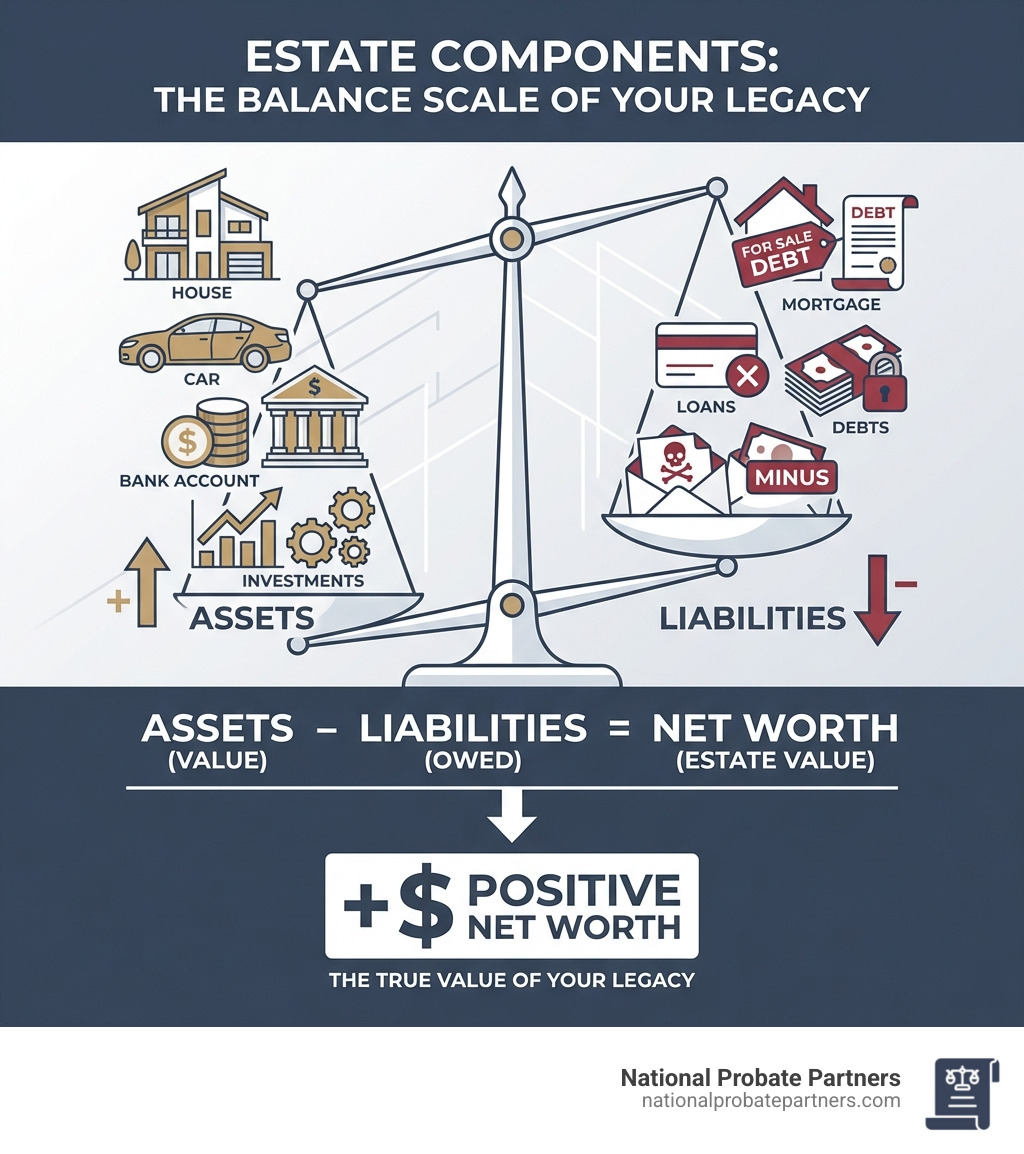
What is estate is a question that often arises when settling a loved one’s affairs. An estate is the total of everything you own at your death—all assets (real estate, bank accounts, investments) minus any debts you owe.
Quick Answer:
- An estate = All assets – All liabilities
- Assets include: Real estate, bank accounts, investments, retirement accounts, vehicles, personal property, business interests
- Liabilities include: Mortgages, loans, credit card debt, unpaid taxes, medical bills
- Net worth: The value of your estate after debts are paid
When someone dies, their estate goes through a legal process called estate administration. This involves settling debts, paying taxes, and distributing the remaining assets to heirs. Understanding what constitutes an estate is the first step, whether you’re an executor, a beneficiary, or planning for your own future.
Many people mistakenly believe estates are only for the wealthy. In reality, anyone who owns property—a home, a car, a bank account—has an estate that needs to be settled. Understanding your estate allows you to plan how your assets will be distributed, minimize taxes, and ensure your wishes are honored, rather than leaving decisions to state laws.
What is an Estate? A Comprehensive Definition
At its core, the term “what is estate” refers to the sum total of an individual’s possessions, interests, and obligations. Legally, an estate is the total property, both real and personal, owned by an individual before distribution through a will or trust. Financially, your estate represents your entire net worth—all assets minus all liabilities. Understanding your estate is vital because it’s the foundation upon which your financial legacy is built and protected. For a more formal perspective, you can refer to the Legal definition of estate from Cornell Law.
The Legal Definition of an Estate
Legally, an estate is a person’s entire net worth, encompassing every asset and financial obligation.
This includes:
- All Property:
- Real Property: Immovable assets like land and houses.
- Personal Property: Movable assets, from cars and jewelry to bank accounts, stocks, and intellectual property.
- Debts and Liabilities: An estate also includes what you owe, such as mortgages, car loans, credit card balances, and unpaid taxes.
This legal definition is critical in two main contexts: bankruptcy, where the estate is assessed to pay debts, and after death, when the estate administration process begins to settle debts and distribute assets according to a will or state law.
Estate vs. Real Estate: Clearing Up the Confusion
It’s easy to confuse “estate” and “real estate,” but they are distinct.
- Real Estate: This term specifically refers to land and any permanent structures on it, like buildings and houses. It is immovable property.
- Estate: This is a much broader legal term. It includes all of a person’s assets—both real estate and personal property—minus their liabilities.
Historically, “estate” often meant large, landed properties. In modern legal and financial terms, however, an estate includes every financial and tangible item you own. Think of it this way: all real estate is part of an estate, but not all of an estate is real estate.
The Anatomy of an Estate: What’s Included and What’s Not

Understanding what is estate means knowing which assets are counted and which are excluded from the legal process of probate. This distinction between “probate assets” and “non-probate assets” is crucial for estate planning and administration.
What is an estate asset?
An estate asset is any property owned by the deceased at their death that typically must go through probate. These assets are distributed according to a will or state law.
Common examples include:
- Bank Accounts: Checking and savings accounts held solely in the deceased’s name.
- Investments: Individually owned stocks, bonds, and mutual funds.
- Retirement Savings: Accounts where no beneficiary is named, or the estate is named as the beneficiary.
- Real Estate: Properties owned solely by the deceased or as a tenant in common.
- Vehicles: Cars, boats, and other titled vehicles.
- Business Interests: Ownership in partnerships, sole proprietorships, or corporations.
- Intellectual Property: Royalties from books, patents, or trademarks.
- Personal Belongings: Jewelry, artwork, furniture, and other household items.
- Debts Owed to the Deceased: Personal loans or outstanding invoices.
Identifying these assets is a key first step in the administration process.
Exceptions: Assets That Bypass Probate
Many assets, known as “non-probate assets,” are designed to transfer directly to beneficiaries, avoiding the often lengthy and public probate process.
These primary exceptions include:
- Jointly Owned Property with Right of Survivorship: Common between spouses, the deceased’s share automatically passes to the surviving owner(s).
- Assets with Beneficiary Designations: Many accounts allow you to name a beneficiary who receives the asset directly.
- Life Insurance Policies: Proceeds are paid directly to the named beneficiaries.
- Retirement Accounts (IRAs, 401(k)s): Funds transfer directly to designated beneficiaries.
- Payable-on-Death (POD) / Transfer-on-Death (TOD) Accounts: Bank or investment accounts that pass directly to a named beneficiary.
- Assets Held in a Trust: Assets placed in a living trust are distributed by the trustee according to the trust’s terms, without court involvement. This is a powerful tool for privacy and efficiency.
- Trust Property (when a trustee dies): Property held by an individual as a trustee is not part of their personal estate and remains governed by the trust’s terms.
Strategic use of these tools can significantly streamline the transfer of your legacy.
Estate Administration: The Journey After a Loved One Passes
When a loved one passes, the legal and financial process of estate administration begins. This is where the definition of what is estate moves from concept to a tangible process of settling affairs and distributing assets. Estate administration involves winding up a person’s financial dealings and transferring their property to inheritors, often with court oversight. Our firm, National Probate Partners, specializes in navigating these complexities for families in Texas, Arizona, and nationwide.
The Role of the Executor or Estate Trustee
The executor (or estate trustee/personal representative) is central to this process. This individual has a fiduciary duty to act in the best interests of the estate and its beneficiaries.
Key responsibilities include:
- Winding up the deceased’s affairs (closing accounts, notifying agencies).
- Paying all legitimate debts and filing final tax returns.
- Collecting, managing, and valuing all estate assets.
- Distributing the remaining property to beneficiaries as directed by a will or state law.
- Obtaining formal appointment from the probate court to act with legal authority.
Given the legal obligations, many executors seek professional guidance to fulfill their duties correctly.
Probate Explained: The Court’s Role in Estate Settlement
Probate is the court-supervised legal process that takes place after someone dies. Its purpose is to ensure the orderly transfer of property from the decedent to the beneficiaries.
Key functions of probate include:
- Validating the Will: The court confirms the will is authentic and legally binding.
- Overseeing the Process: The court provides a structured environment, ensuring the executor’s actions are transparent and proper. This protects creditors and beneficiaries from mismanagement.
- Appointing a Representative: The court formally appoints the executor or, if there’s no will, an administrator.
- Resolving Claims: Creditors are given a formal opportunity to make claims, ensuring debts are settled before assets are distributed.
Probate laws vary by state. A Probate Lawyer can provide guidance specific to your situation.
Distribution: With a Will (Testate) vs. Without a Will (Intestacy)
How an estate is distributed depends on whether the deceased left a valid will.
- With a Will (Testate): If a person dies “testate,” the will acts as a legal roadmap. The executor must follow its instructions to distribute property to the named beneficiaries. A will allows you to specify who inherits your assets and who cares for minor children.
- Without a Will (Intestacy): If a person dies “intestate,” the state’s intestacy laws dictate how assets are distributed. These laws establish a hierarchy of heirs, typically prioritizing the surviving spouse and children, followed by other relatives. The state essentially provides a default will, which may not align with the deceased’s actual wishes.
Planning for the Future: Taxes and Your Legacy
Understanding what is estate isn’t just about what you own; it’s about planning for its future, which includes navigating taxes and preserving your legacy for loved ones.
Understanding Estate and Inheritance Taxes
Taxes can be a significant concern when passing on wealth. It’s important to know the difference between the main types.
- Federal Estate Tax: This is a tax on the transfer of property at death. However, it only applies to estates exceeding a very high exemption amount ($12,920,000 per person in 2023). As a result, very few estates are subject to it. You can find more Information on estate tax from the IRS.
- State Estate Tax: Some states levy their own estate taxes with lower exemptions. Fortunately, neither Arizona nor Texas currently imposes a state estate tax.
- Inheritance Tax: This tax is paid by the beneficiaries who receive an inheritance. Only a handful of states have this tax, and neither Arizona nor Texas is among them.
Despite the high federal exemption, tax planning remains a critical part of a comprehensive estate plan, especially for those with significant assets.
What is estate planning and why is it crucial?
Estate planning is the process of arranging for the management and disposal of your estate in preparation for incapacity or death. It’s about taking control to ensure your wishes are honored.
Estate planning is crucial for several reasons:
- Control Asset Distribution: You decide who gets what and when, ensuring your loved ones are provided for as you intend.
- Minimize Taxes and Expenses: A well-crafted plan can reduce or eliminate estate taxes and avoid the costs and delays of probate.
- Appoint Guardians: You can designate who will care for your minor children.
- Plan for Incapacity: It includes documents like powers of attorney that allow someone to manage your affairs if you become unable to do so.
- Avoid Family Disputes: A clear plan prevents confusion and potential conflicts among your heirs.
Without an estate plan, state laws will make these critical decisions for you. Planning provides peace of mind, knowing your family and your legacy are protected.
Frequently Asked Questions about Estates
We understand that the concept of an estate can bring up many questions. Here are concise answers to some of the most common inquiries.
What is the difference between a will and a trust?
This is a crucial distinction in estate planning.
- Will: A will is a legal document stating your final wishes for asset distribution and guardianship of children. It only takes effect after death and generally requires your estate to go through the court process of probate.
- Trust: A trust is a legal entity that holds assets for beneficiaries. It can be active during your lifetime. Assets in a trust are managed by a trustee and can be distributed to beneficiaries after your death without going through probate, offering more privacy and control.
While a will is essential, a trust provides a more comprehensive way to manage and distribute an estate.
How long does it take to settle an estate?
The timeline varies from a few months to several years, depending on several factors:
- Estate Complexity: Simple estates with few assets and clear beneficiaries are settled fastest.
- Asset Types: Diverse or hard-to-value assets (like businesses or real estate in multiple states) take longer to manage.
- Probate and Taxes: Formal probate proceedings and the requirement to file an estate tax return can add significant time.
- Disputes: Any challenges to the will or claims from creditors will cause delays.
An experienced executor can help steer the process efficiently, but patience is often required.
What happens if someone dies without a will?
When someone dies without a will (or “intestate”), their estate is distributed according to the intestacy laws of their state of residence. It’s a myth that the state takes all the property.
Instead, state law provides a default distribution plan based on a hierarchy of relatives. Typically, the surviving spouse and children are first in line to inherit. If there are none, assets pass to parents, siblings, or more distant relatives.
The problem is that this default plan may not reflect your actual wishes. A will is the only way to ensure your assets are distributed exactly as you intend.
Conclusion
Understanding what is estate is about grasping the full scope of your financial life and taking steps to protect your legacy. Your estate is everything you own and owe. The process involves administration, probate, and taxes, but proactive planning gives you control.
By creating a plan, you control how your assets are distributed, minimize burdens on your family, and ensure your wishes are honored. It is one of the most thoughtful gifts you can give your loved ones. Don’t leave your legacy to chance.
To learn more about how we can help you with estate planning or probate administration in Texas, Arizona, or anywhere in the United States, please Learn more from an experienced probate lawyer. We are here to provide the compassionate, expert guidance you need.