
What Is a Breach of Trust — and Why It Matters in Estate Administration
Breach of trust is a legal term for when a trustee fails to follow the duties set out in a trust agreement, by law, or under equity. In plain terms, it means someone who was given power over another person’s assets misused that power.
Here’s a quick overview:
| Aspect | Key Facts |
|---|---|
| What it is | A trustee’s failure to act in the beneficiaries’ best interests |
| Types | Intentional, negligent, or constructive |
| Examples | Theft, self-dealing, poor recordkeeping, unauthorized distributions |
| Civil remedies | Compensation, trustee removal, surcharges, injunctions |
| Criminal consequences | Up to 14 years imprisonment in Canada under the Criminal Code |
When you’re already dealing with the loss of a loved one, discovering that the person managing their estate may have acted improperly can feel overwhelming. Grief, family tension, and legal complexity all arrive at once.
Trust law exists precisely to protect you in that situation. It places strict legal obligations on trustees — and gives beneficiaries real tools to fight back when those obligations are broken.
This guide explains what a breach of trust means legally, what to watch for, and how to protect yourself and your family’s assets.
Defining a Legal Breach of Trust
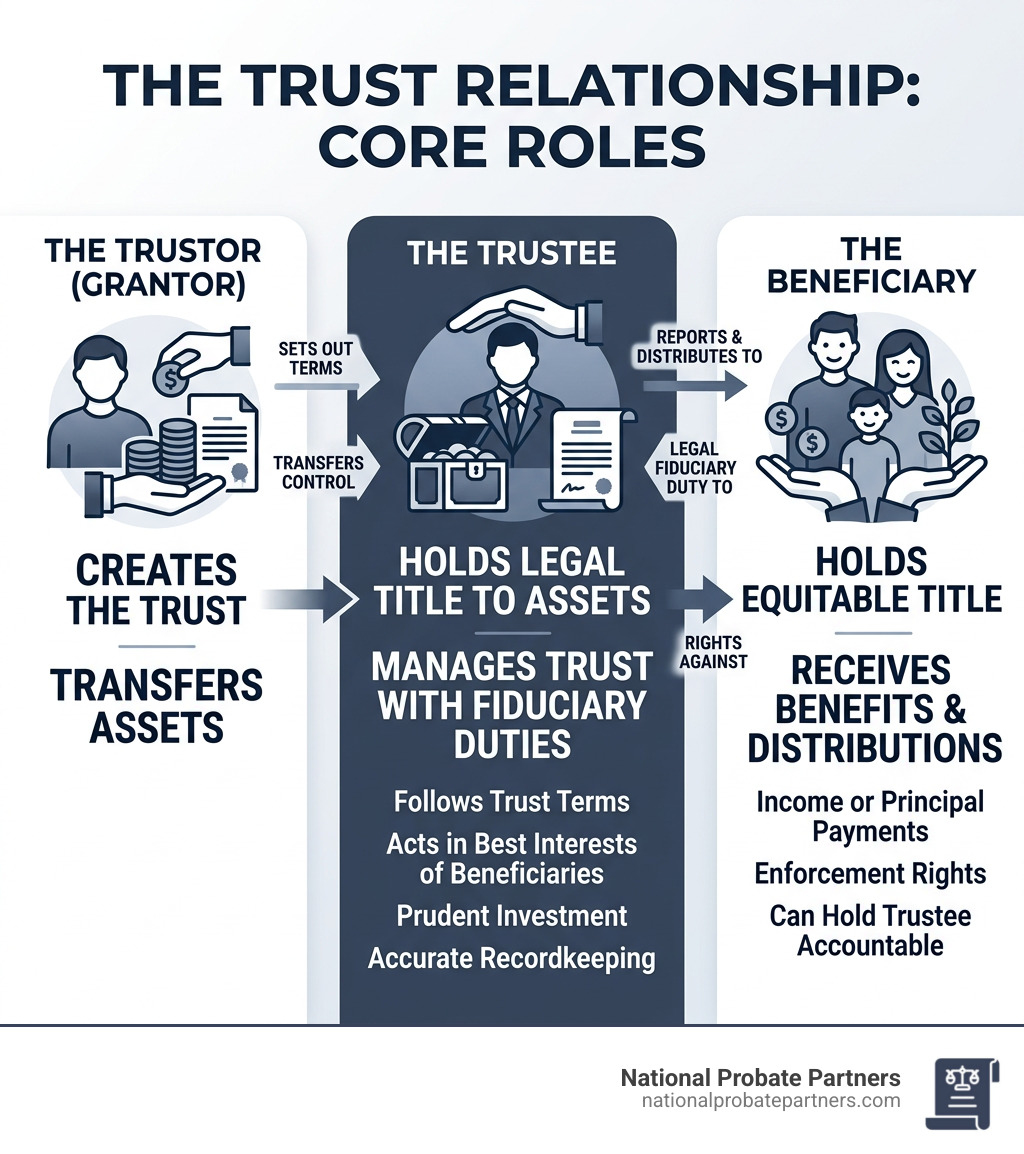
At its core, a breach of trust occurs when a trustee fails to comply with the duties imposed upon them by the trust instrument, by statute, or by the general law of equity. When a person creates a trust, they are essentially handing over the “keys” to their property to a trustee. This creates a fiduciary relationship—the highest standard of care recognized by the law.
In this relationship, the trustee is not the “owner” in the traditional sense; they are a steward. If they use that property for their own benefit, ignore the rules written in the trust document, or fail to protect the assets, they have committed a breach. This isn’t just about stealing money (though it certainly includes that). It covers any act or omission that deviates from what a loyal, prudent trustee should do.
Equity law, which originated in the historical Courts of Chancery, views these violations seriously. Because beneficiaries are often in a vulnerable position—relying on the trustee to provide for their education, housing, or retirement—the law provides powerful remedies to set things right.

Intentional vs. Negligent Breach of Trust
Not every breach of trust looks the same. We generally categorize them based on the trustee’s state of mind and the nature of the mistake:
- Intentional Breach: This is the “villain” scenario. It involves deliberate harm, such as embezzlement, fraud, or self-dealing (where the trustee sells trust property to themselves at a discount). In these cases, the trustee knows they are breaking the rules and does it anyway for personal gain.
- Negligent Breach: This is often the “oops” scenario, but it is no less damaging. It occurs when a trustee is careless. Examples include poor recordkeeping, failing to diversify investments, or missing deadlines that result in tax penalties. Even if the trustee didn’t mean to cause harm, their failure to exercise a “duty of care” makes them liable.
- Misappropriation: This specifically refers to the unauthorized use of trust funds. Even if a trustee “borrows” money with the intention of paying it back, it is still a breach.
Constructive Breach of Trust and De Facto Duties
Sometimes, a court will step in even if there isn’t a formal, signed trust document. This is known as a constructive breach of trust.
If someone is in a “de facto” position of trust—meaning they are acting as a trustee and managing property for someone else—the court may impose fiduciary duties on them. If that person then uses the property for their own benefit, the court can declare a “constructive trust.” This is an equitable remedy designed to prevent unjust enrichment. Essentially, the court says, “You shouldn’t have that money, so we are going to legally pretend you are holding it in trust for the rightful owner until you give it back.”
Duties of a Trustee and Signs of Misconduct
To understand a breach, we must first understand the “job description” of a trustee. A trustee’s primary role is one of absolute loyalty. They must put the beneficiaries’ interests above their own at all times.
Key duties include:
- The Duty of Loyalty: Avoiding any conflict of interest.
- Prudent Investment: Managing assets as a “reasonably prudent person” would, which usually involves diversifying investments to minimize risk.
- Duty to Inform: Keeping beneficiaries updated on the status of the trust.
- Asset Segregation: Never “commingling” trust assets with their own personal bank accounts.
Understanding these roles is vital, especially when navigating the role of a trust administration lawyer, who helps ensure these duties are met.
Identifying a Breach of Trust in Estate Administration
How do you know if something is wrong? While some trustees are openly dishonest, many breaches are discovered through subtle red flags. Common signs of misconduct include:
- Lack of Transparency: If you ask for a report on the trust’s value and the trustee gets defensive or remains silent, that is a major warning sign.
- Unauthorized Distributions: Seeing money go to people or causes not mentioned in the trust document.
- Conflicts of Interest: The trustee hiring their own struggling business to perform work for the trust at inflated rates.
- Failure to Account: A trustee should be able to account for every penny. If the math doesn’t add up, a breach is likely occurring.
The Financial and Emotional Impact of Fiduciary Failure
A breach of trust isn’t just a legal “paper” problem; it has real-world consequences.
- Financial Fallout: Estate depletion can happen quickly if a trustee makes high-risk “gambles” with the stock market or siphons off funds.
- Emotional Distress: These cases often involve family members. The sense of betrayal when a sibling or parent mismanages an inheritance can cause permanent damage to relationships.
- Litigation Costs: Once a breach is suspected, the costs of hiring forensic accountants and attorneys to untangle the mess can further shrink the estate.
Civil Remedies and Criminal Consequences
If a breach of trust is proven, the legal system has several ways to fix the situation. Most cases are handled in civil court, where the goal is to make the beneficiaries “whole” again.
Common Civil Remedies:
- Equitable Compensation: The trustee is ordered to pay money back to the trust to restore it to the position it would have been in if the breach never happened.
- Surcharges: This is a specific court order holding the trustee personally financially responsible for losses.
- Trustee Removal: The court kicks the trustee out and appoints a successor.
- Account of Profits: If a trustee made a profit from their breach (like using trust money to start a successful business), the court can order them to give all those profits to the beneficiaries.
Civil vs. Criminal Comparison
| Feature | Civil Case | Criminal Case |
|---|---|---|
| Goal | Restore the trust / Compensate beneficiaries | Punish the offender / Deter others |
| Burden of Proof | Preponderance of the evidence (More likely than not) | Beyond a reasonable doubt |
| Result | Money damages, removal, injunctions | Fines, probation, or jail time |
| Initiated By | The Beneficiaries | The Government (Prosecutor) |
Criminal Breach of Trust and Potential Jail Time
While most trust disputes stay in civil court, a breach of trust can become a crime if there is an “intent to defraud.”
Under Section 336 of the Canadian Criminal Code, anyone who is a trustee and converts trust property to an unauthorized use with the intent to defraud is guilty of an indictable offense. The penalties are severe: a maximum of 14 years in prison.
To secure a criminal conviction, the Crown must prove a “serious and marked departure” from the standard of conduct expected of a trustee. Because criminal cases require such a high burden of proof and consume significant government resources, they are rarer than civil lawsuits. However, for egregious cases of theft and embezzlement, jail time is a very real possibility.
How Courts Determine Causation and Liability
Courts don’t just look at the mistake; they look at the result. This often involves the “but-for” test: But for the trustee’s breach, would the loss have happened?
In cases of misappropriation (taking money), the liability is often “strict.” This means the trustee is responsible for the loss regardless of their excuses. In cases of negligent administration (like a bad investment), the court will examine whether the loss was a direct result of the trustee’s lack of care or simply a general market downturn that would have affected any prudent investor.
How Beneficiaries Can Protect Their Interests
You don’t have to wait for a disaster to protect your assets. Being proactive is the best defense against a breach of trust.
Steps to Take if You Suspect a Breach of Trust
If your “gut feeling” says something is wrong, follow these steps:
- Gather Evidence: Save every email, letter, and bank statement.
- Demand a Formal Accounting: Most jurisdictions allow beneficiaries to demand a written report of all trust activity.
- Consult a Professional: Reach out to an experienced firm like us at National Probate Partners. We can help you determine if the trustee’s actions meet the legal definition of a breach.
- Petition the Court: If the trustee refuses to cooperate, we can ask a judge to compel them to provide information or even suspend their powers temporarily.
Defenses and Relief for Trustees
It is important to note that trustees are human, and not every investment loss is a breach. Trustees have several potential defenses:
- Beneficiary Consent: If you gave the trustee written permission to take a specific action, you usually cannot sue them for it later.
- Exculpatory Clauses: Some trust documents contain “hold harmless” clauses that protect trustees from liability for simple negligence (though these rarely protect against intentional fraud).
- Statutes of Limitations: There are strict time limits for filing a claim. If you wait too long after discovering a breach, you may lose your right to sue.
- Laches: This is a legal concept where a court may dismiss a claim if the beneficiary waited an unreasonable amount of time to bring the case, causing prejudice to the trustee.
Frequently Asked Questions about Trustee Misconduct
Can a trustee be held personally liable for financial losses?
Yes. Through a “surcharge,” a court can order a trustee to use their personal bank accounts, sell their personal property, or use their own assets to pay back the trust for losses caused by their misconduct.
How long do beneficiaries have to file a claim?
This varies by state and the nature of the breach. Generally, the “discovery rule” applies, meaning the clock starts ticking when you knew (or should have known) about the breach. In many cases involving fraud, the timeline may be extended, but it is always best to act immediately.
Can a trustee be removed without a court order?
Sometimes. If the trust document itself contains a provision for removing a trustee (for example, by a majority vote of the beneficiaries), you may not need a judge. Additionally, a trustee can always choose to resign voluntarily. However, if the trustee refuses to leave, a judicial petition is usually necessary.
Conclusion
A breach of trust can feel like a deep personal betrayal, but the law provides a clear path forward. Whether the issue is a simple mistake in recordkeeping or a complex scheme to defraud the estate, you have the right to hold fiduciaries accountable.
At National Probate Partners, we specialize in navigating these complex waters. From our bases in Texas and Arizona, we provide compassionate, personalized legal advocacy to clients nationwide. We understand that protecting your family’s legacy is about more than just money—it’s about justice and peace of mind.
If you suspect a trustee is not acting in your best interest, don’t wait for the assets to disappear. Protect your assets with an experienced probate lawyer today and ensure your loved one’s wishes are truly honored.