
What Does It Actually Cost to Make a Will?
How much does a will cost is one of the most common questions people ask when they start thinking about estate planning — and the answer varies more than you might expect.
Here’s a quick snapshot of what you’ll likely pay depending on the method you choose:
| Method | Typical Cost |
|---|---|
| Free online will-maker | $0 |
| Handwritten (holographic) will | $0 |
| Printable templates | $0 – $50 |
| DIY will kit | $15 – $50 |
| Paid online will service | $50 – $300 |
| Estate planning attorney | $300 – $5,000+ |
The range is wide. A simple online tool might cost nothing. A full attorney-drafted estate plan for a complex estate can run $10,000 or more.
Most people fall somewhere in the middle. The average cost of creating a will through an online service is around $160. Hiring an attorney for a simple will typically runs $300 to $1,000 as a flat fee.
But cost isn’t the only factor that matters. A cheap will that doesn’t hold up in court can cost your family far more in probate fees, legal disputes, and stress.
Only 26% of Americans have a formal estate plan — even though 69% agree that planning is important. Cost concerns are one of the biggest barriers. This guide breaks down every option so you can make the right call for your situation and your budget.
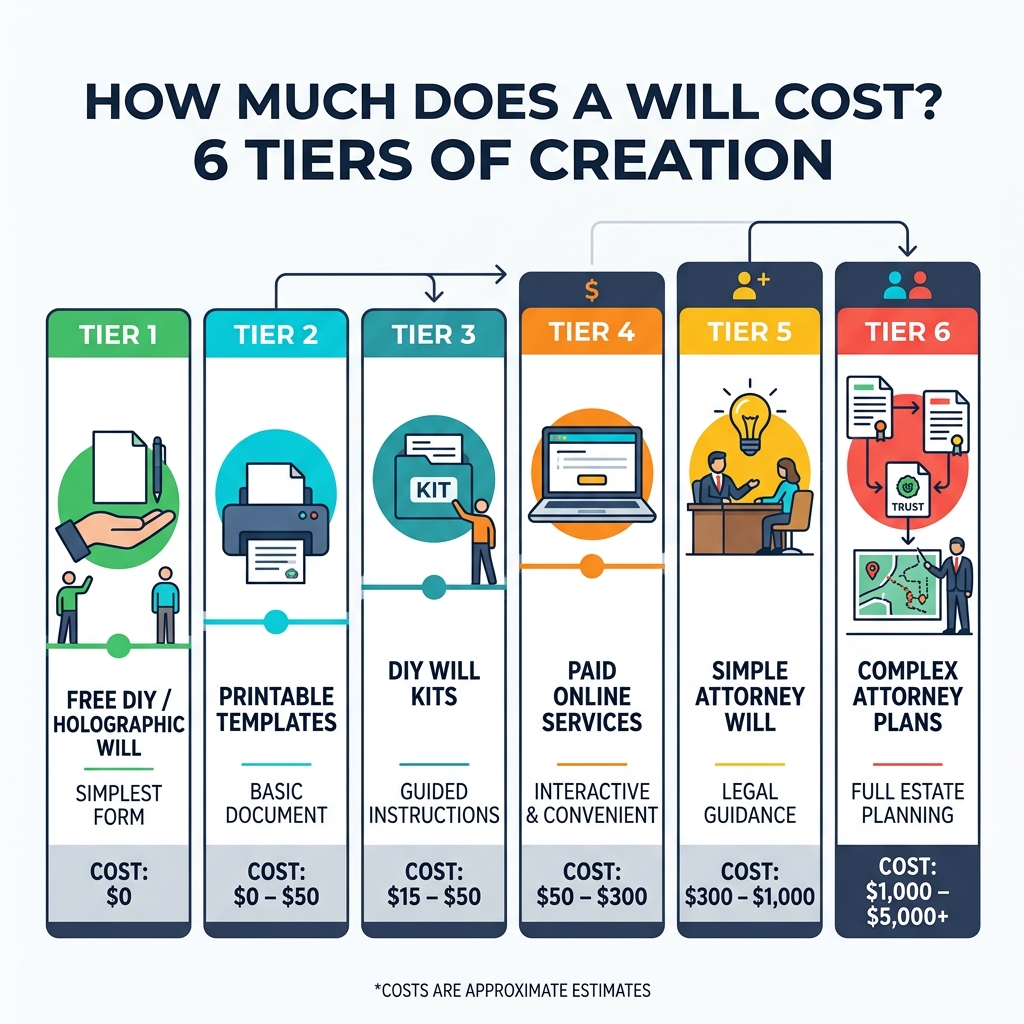
How much does a will cost terms at a glance:
How Much Does a Will Cost? A Breakdown of 6 Popular Options
When we look at the question of how much does a will cost, we find that the market has evolved significantly. You no longer have to choose between “nothing” and “a small fortune.” There are now several tiers of service tailored to different needs and estate sizes.
1. Free Online Will-Makers
There are reputable services that offer legally binding documents for $0. These platforms are often supported by non-profits or use a “freemium” model where the basic will is free, but they charge for more complex documents like trusts. These are excellent for individuals with very straightforward assets—say, a bank account and a car—who want to ensure their belongings go to a specific person without spending a dime.
2. Handwritten (Holographic) Wills
Technically, this costs the price of a piece of paper and a pen. However, we must caution you: while free, holographic wills are not recognized in all states. In Arizona and Texas, they can be valid if they meet very specific criteria (like being entirely in the testator’s handwriting), but they are the most frequently contested documents in probate court.
3. Printable Templates and DIY Kits
You can find these at major retailers like Amazon or Walmart for $15 to $50. These kits provide a “fill-in-the-blank” experience. While slightly more structured than a handwritten note, they often lack the state-specific nuances required to make them ironclad.
4. Paid Online Will Services
This is the “middle ground” that many Americans choose. For an average of $160 (ranging from $50 to $300), these services provide a guided interface that asks you questions and generates a document based on your answers. Some even offer a year of free updates or a brief review by a legal professional for an additional fee.
5. Hiring an Estate Planning Attorney (Flat Fee)
For those who want professional eyes on their legacy, many attorneys offer a flat fee for a “simple will.” In Texas and Arizona, this typically ranges from $300 to $1,000. This usually includes a consultation, the drafting of the document, and a formal signing ceremony with the required witnesses and a notary.
6. Comprehensive Attorney Planning (Hourly or Complex)
If you have a large estate, a business, or a blended family, you’ll likely move into hourly billing. Attorney hourly rates average around $391, though they can range from $100 to $500 depending on the firm’s experience and location (like Scottsdale or Corpus Christi). A complex estate plan involving multiple properties and tax-reduction strategies can cost between $1,000 and $5,000+, or even up to $10,000 for high-net-worth individuals.
Factors That Influence the Price of Your Estate Plan

Why is there such a massive gap between $160 and $5,000? It rarely comes down to just the paper the will is printed on. Several variables shift the needle on how much does a will cost.
Estate Complexity
If your plan is “I leave everything to my spouse, and if they are gone, to my two kids,” your cost will be on the lower end. However, complexity increases the price quickly. Common “complexity triggers” include:
- Blended Families: Ensuring children from a previous marriage are protected while providing for a current spouse requires careful, custom drafting.
- Business Interests: Passing down a family business involves succession planning and potentially different types of trusts.
- Special Needs Provisions: If a beneficiary has a disability, you need specific language to ensure their inheritance doesn’t disqualify them from government benefits.
Geographic Location and Professional Experience
Where you live matters. An attorney in a high-cost area like Scottsdale, Arizona, may have higher overhead than one in a smaller Texas town, reflecting in their fees. Furthermore, you pay for expertise. An attorney who graduated from a top-tier law school and has practiced estate law for thirty years will charge more than a general practitioner who drafts the occasional will between traffic court cases.
Asset Value and Tax Planning
While the federal estate tax threshold is high (currently $13.61 million for individuals), many people still seek professional help to minimize other taxes or avoid the costs of probate. For instance, in Florida, the average home value is approximately $382,000. For many families, their home is their largest asset. Protecting that equity from being eaten up by court fees is a primary driver for investing in a more robust (and expensive) plan.
Recent Trends
As mentioned, only 26% of Americans have a formal plan. This low adoption rate often leads to “intestacy,” where state law decides who gets your assets. The cost of an attorney-led plan is often a fraction of what a family spends in legal fees trying to fix the mess left behind when there is no will.
The Hidden Costs of DIY Wills and Online Templates
The “cheap” option can sometimes be the most expensive mistake you ever make. When considering how much does a will cost, you must factor in the “risk cost.”
Legal Invalidity and Execution Errors
Every state has strict rules about how a will must be executed. For example, Texas law requirements dictate that the person making the will must be of sound mind, at least 18 years old, and the document must be signed in the presence of at least two credible witnesses who are at least 14 years old.
If you use a DIY kit and forget to have the witnesses in the room at the same time, or if one of your witnesses is also a beneficiary, the entire will could be thrown out. When a will is invalidated, your estate falls into “intestacy,” meaning the state’s default rules take over—which might be the exact opposite of what you wanted.
The Cost of Probate Litigation
A DIY will is much easier to challenge in court. If a disgruntled relative believes the “fill-in-the-blank” form was signed under duress or that you didn’t understand what you were signing, they can file a contest. Is That Will Valid? Exploring the Grounds for a Contest is a question that often leads to years of expensive litigation, potentially costing your estate tens of thousands of dollars in lawyer fees—far more than the $1,000 you might have saved by not hiring a professional.
“One-Size-Fits-All” Doesn’t Fit Anyone
Online templates are often generic. They may not account for specific state statutes regarding community property (important in Texas and Arizona) or how to properly disinherit someone. A lawyer provides the “why” behind the “what,” ensuring your specific intentions are translated into language the court must respect.
Beyond the Will: Additional Documents and Ongoing Maintenance
A last will and testament is usually just one piece of the puzzle. When people ask how much does a will cost, they are often surprised to learn that a “will” is rarely enough to keep their family out of court.
The Power of Trusts
A will tells the court where to send your assets after you die, but it doesn’t avoid probate. A revocable living trust, however, can bypass the court system entirely. While a trust costs more upfront—often $1,200 to $1,500 for a simple one, and up to $5,000+ for complex versions—it can save your family $10,000+ in probate costs later. To understand which is right for you, see our guide on Trust vs Probate: What’s the Difference and Why It Matters.
Essential Ancillary Documents
A comprehensive estate plan usually includes:
- Durable Power of Attorney: Appoints someone to handle your finances if you become incapacitated.
- Healthcare Directive (Living Will): Outlines your wishes for medical treatment.
- Guardianship Designations: Crucial for parents with minor children.
Bundling these documents with a will often brings the total price to the $1,000 – $3,000 range, but it provides “incapacity planning” that a standalone will cannot offer.
Ongoing Maintenance and Updates
Your life isn’t static, and your will shouldn’t be either. You should review your plan every 3 to 5 years or after major life events (marriage, divorce, birth of a child, or a significant change in assets).
- Codicils: This is a legal amendment to an existing will. It’s cheaper than rewriting the whole document but must be signed and witnessed with the same formality as the original will.
- Notarization Fees: While not always required for validity, a “self-proving affidavit” (which requires a notary) makes the probate process much faster. Notarization fees by state are generally low, typically $5 to $15 per signature.
Keeping your documents in a secure location and ensuring your named beneficiary in a will knows where they are is a “free” but vital part of the process.
Frequently Asked Questions About Will Costs
How much does a will cost for a simple estate?
For a straightforward estate, you can expect to pay between $300 and $1,000 for an attorney-drafted will. If you choose a reputable online service, the average cost is around $160. Many firms offer flat-fee packages that include a will, power of attorney, and healthcare directive for a predictable price. If you aren’t sure if your estate qualifies as “simple,” check out our resource: How Do I Know If I Need a Probate Lawyer?
Can I create a legally valid will without a lawyer?
Yes. Under the Sixth Amendment, you have the right to represent yourself, which includes drafting your own legal documents. As long as the will meets your state’s specific requirements—usually being in writing, signed by you, and witnessed by two disinterested adults—it is legally binding. However, the risk of technical errors is high. Ensuring you follow notarization requirements can help, but it doesn’t replace legal advice.
How much does a will cost to update or amend?
If you use a subscription-based online service, updates might be included in your annual fee (often $20–$50/year). If you return to an attorney, they may charge a small flat fee for a codicil or an hourly rate to restate the will. Generally, expect to pay $100 to $500 for minor updates. For more on what to expect in the coming years, read Hiring a Probate Lawyer in 2026: What You Need to Know.
Conclusion: Investing in Peace of Mind
At National Probate Partners, we see the aftermath of “cheap” wills every day. We’ve helped families across Texas and Arizona navigate the complexities of probate, and we can tell you from experience: the most expensive will is the one that doesn’t work.
When you ask how much does a will cost, try to look beyond the immediate price tag. A professional estate plan is an investment that protects your spouse from homelessness, your children from legal battles, and your legacy from being taxed or spent on court reporters.
Whether you are in Scottsdale, Corpus Christi, or serving in the Armed Forces abroad, we are here to provide the personalized, compassionate service you need to resolve complex challenges. From simple wills to everything you need to know about ancillary probate, our goal is to help you avoid future probate hurdles before they start.
Don’t let the fear of cost stop you from protecting what matters most. Start your plan today—it’s the best gift you can leave your loved ones.