
Why Finding Special Needs Trust Attorneys Near Me Is One of the Most Important Decisions You’ll Make
If you’re looking for special needs trust attorneys near me, here’s a quick guide to get you started:
How to find a qualified special needs trust attorney near you:
- Search the Special Needs Alliance directory for vetted attorneys in your state
- Look for attorneys with a CELA (Certified Elder Law Attorney) designation
- Check ACTEC (American College of Trust and Estate Counsel) for peer-elected fellows with 10+ years of experience
- Ask specifically about experience with SSI, Medicaid, and your state’s disability agency rules
- Schedule a consultation to confirm they handle the specific trust type you need
Planning for a loved one with a disability is hard. It’s emotional. And the legal side can feel completely overwhelming.
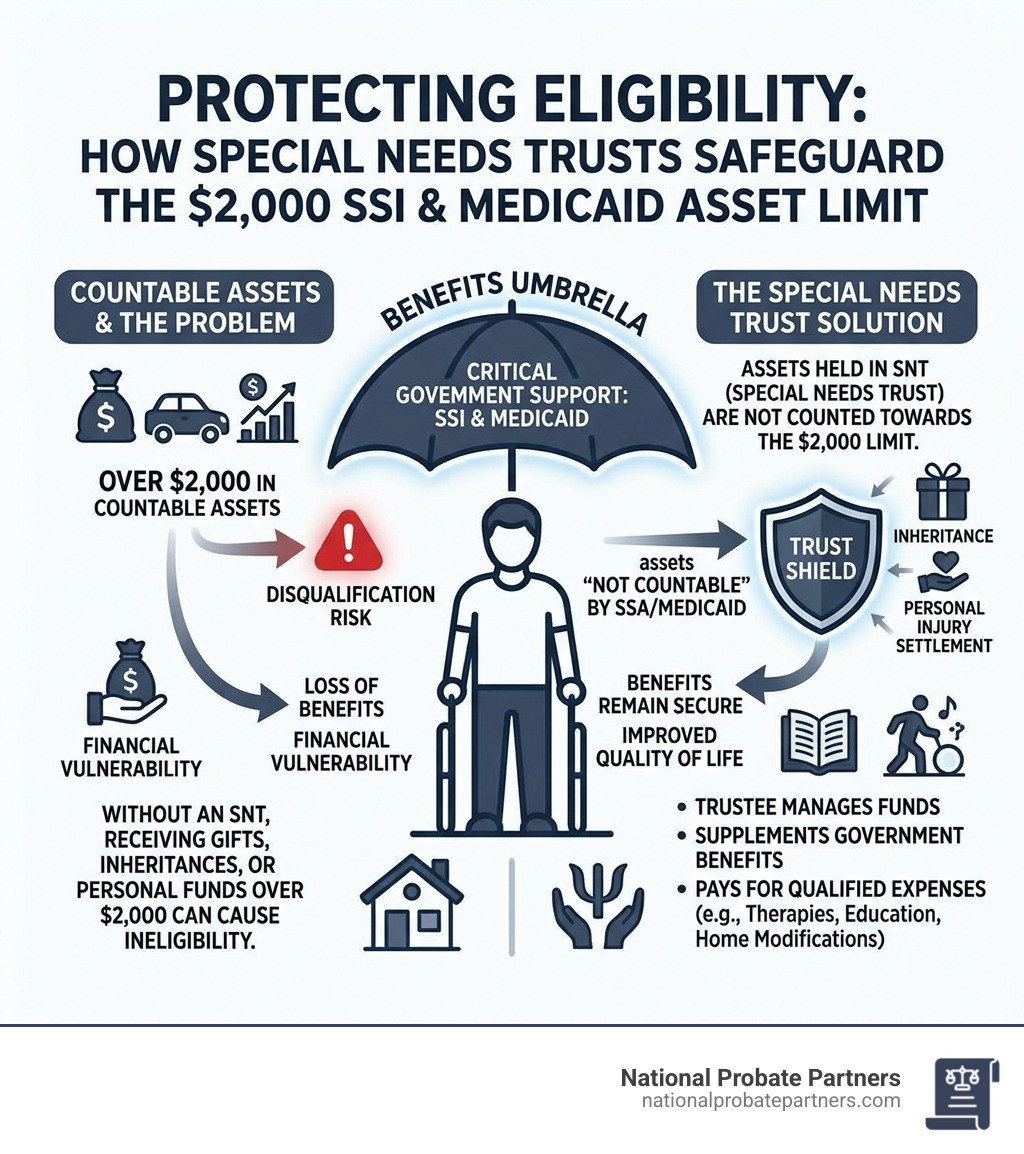
Here’s the core problem: if a person with a disability receives more than $2,000 in countable assets, they can lose access to critical government benefits like SSI and Medicaid. That means a well-meaning inheritance — or even a gift — can accidentally disqualify someone from the very programs keeping them healthy and supported.
A special needs trust (SNT) solves this. It holds assets for the person with a disability without those assets counting against them for benefit eligibility. But only if it’s set up correctly.
That’s why the attorney you choose matters enormously. This isn’t standard estate planning. It’s a specialized area where one drafting mistake can have lifelong consequences.
This guide walks you through everything you need to know — from the types of trusts available, to what to look for in an attorney, to the questions you should ask before signing anything.
Simple special needs trust attorneys near me glossary:
Understanding Special Needs Trusts and Government Benefit Eligibility

When we talk about special needs planning, we are really talking about a delicate balancing act. On one hand, you want your loved one to have the best quality of life possible. On the other, the government has very strict rules about how much “wealth” a person can have while receiving assistance.
As of April 2026, the resource limit for Supplemental Security Income (SSI) and Medicaid remains a mere $2,000 for an individual. This includes cash, bank accounts, and even certain types of property. If a person’s “countable resources” exceed this tiny threshold, their monthly checks and medical coverage can be cut off immediately. Considering that intellectual or developmental disabilities affect approximately 7.39 million people in the United States, this is a massive issue for millions of families.
A Special Needs Trust (SNT) is a legal tool designed to hold those assets so they don’t count toward that $2,000 limit. It’s important to understand Trust vs Probate: What’s the Difference and Why it Matters when setting these up. While probate is a public court process that happens after death, a trust is a private agreement that can provide protection right now.
How Special Needs Trust Attorneys Near Me Protect Your Benefits
The primary goal of searching for special needs trust attorneys near me is to find someone who knows how to “supplement, not supplant.”
Government programs like SSI provide for basic food and shelter, while Medicaid covers essential medical care. However, these programs rarely cover “quality of life” items like:
- Advanced dental work or specialized therapies.
- Computers, electronic equipment, and internet services.
- Transportation, including modified vehicles.
- Travel and recreation.
- Educational expenses and vocational training.
An expert attorney ensures that the trust language is airtight so that the Social Security Administration (SSA) doesn’t view the trust funds as “income.” If the trust is drafted poorly, the SSA might decide the beneficiary has the power to spend the money themselves, which triggers an immediate disqualification from benefits.
Types of Special Needs Trusts and When to Use Them

Not all trusts are created equal. Depending on where the money comes from and who is setting it up, your attorney will recommend one of three main structures.
Choosing the Right Structure with Special Needs Trust Attorneys Near Me
- Third-Party Special Needs Trusts: This is the “gold standard” for family planning. It is funded with money belonging to someone other than the person with the disability (like parents or grandparents). Because the money never belonged to the beneficiary, there is no Medicaid payback requirement when the beneficiary passes away. The remaining funds can go to siblings or other charities.
- First-Party (Self-Settled) Trusts: These are funded with the beneficiary’s own money—perhaps from a personal injury settlement or a direct inheritance they accidentally received. These trusts must include a “Medicaid payback” provision, meaning that when the beneficiary dies, the state must be reimbursed for any medical assistance paid out during their lifetime.
- Pooled Trusts: These are managed by non-profit organizations. They combine the resources of many beneficiaries for investment purposes but maintain separate accounts for each person. These are often great options for smaller amounts of money or for families who don’t have a reliable person to serve as a trustee.
Comparing ABLE Accounts and Special Needs Trusts
You may have heard about ABLE (Achieving a Better Life Experience) accounts. These are fantastic tools, but they aren’t a replacement for a trust. In 2024, the annual contribution limit for an ABLE account was $18,000, and as we move into 2026, these accounts remain a popular way for working individuals with disabilities to save.
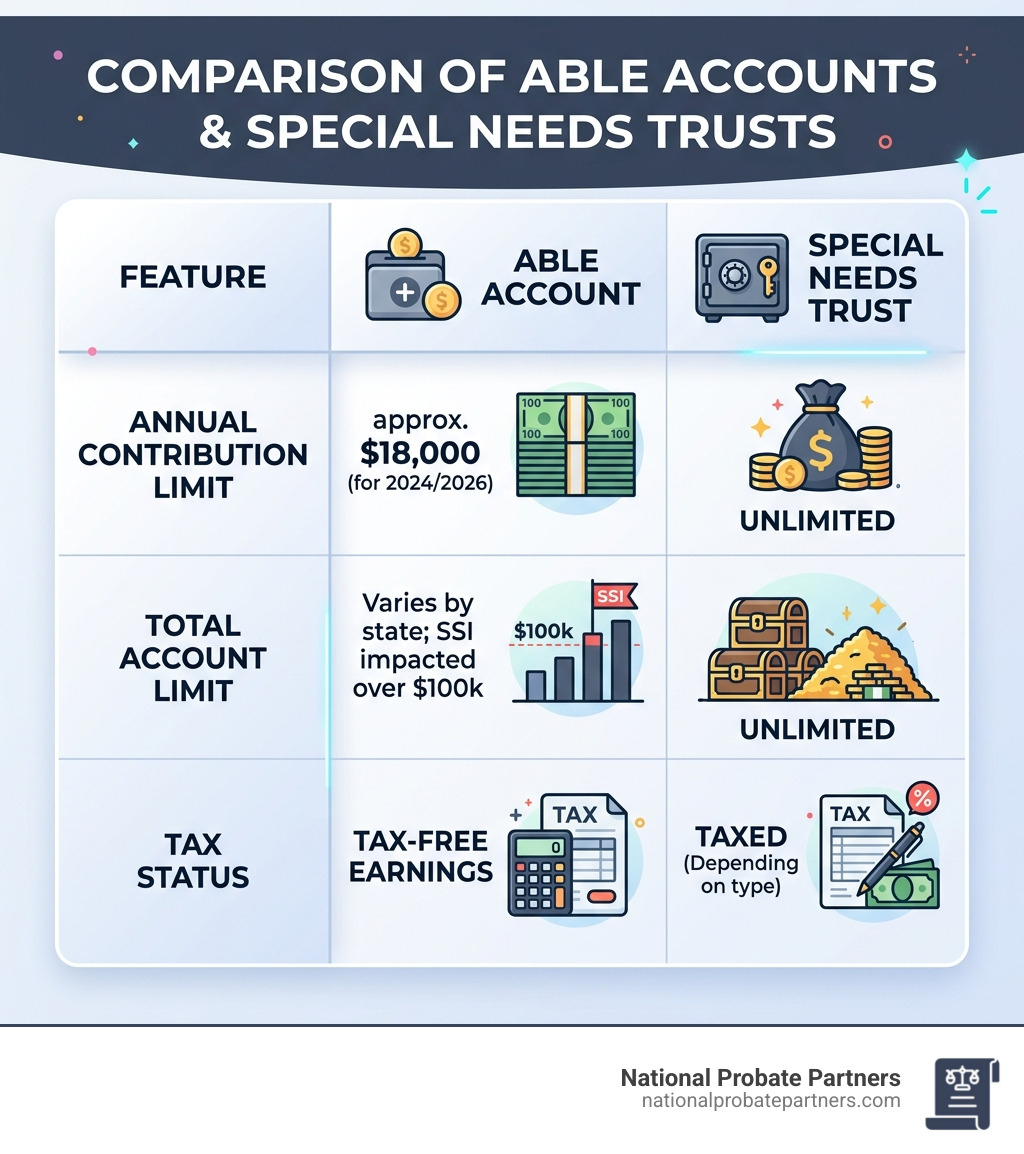
| Feature | ABLE Account | Special Needs Trust |
|---|---|---|
| Annual Limit | $18,000 (approx. for 2024/2026) | Unlimited |
| Total Limit | Varies by state; SSI impacted over $100k | Unlimited |
| Tax Status | Tax-free earnings | Taxed (depending on type) |
| Payback | State may claim remaining funds | No payback (Third-Party) |
| Best Use | Daily expenses, small savings | Inheritances, settlements, long-term care |
Our expert opinion is that while ABLE accounts are great for “pocket money” and short-term goals, they are typically less advantageous than a trust for large inheritances due to their lower limits and Medicaid payback rules.
Key Qualities to Look for in Special Needs Trust Attorneys Near Me
When you start your search, you aren’t just looking for any lawyer who writes wills. You need a specialist. Special needs law is a sub-specialty of elder law and estate planning that requires constant education.
Evaluating Experience and Regional Expertise
Laws regarding Medicaid and disability services aren’t just federal; they are highly regional. For example, if you are in Texas or Arizona, the way the state agencies handle waitlists and “waiver” programs can differ significantly.
Look for these credentials:
- CELA (Certified Elder Law Attorney): This is the “Board Certification” for this field. It means the lawyer has passed a rigorous exam and has a proven track record.
- ACTEC Fellows: The American College of Trust and Estate Counsel is an elite group of peer-elected attorneys. Becoming a Fellow isn’t easy; it requires over 10 years of experience and substantial contributions to the field of trust law.
- Special Needs Alliance (SNA): Membership in this national organization indicates the attorney is part of a network that shares the latest updates on disability law.
Beyond the Trust: Comprehensive Planning and Advocacy
A trust is just one piece of the puzzle. A truly great special needs lawyer will help you look at the “Whole Life” plan. This is where Beyond Probate: The Role of a Trust Administration Lawyer becomes vital. They don’t just set up the document; they help the person in charge (the trustee) manage it correctly for years to come.
Essential Services Provided by Special Needs Lawyers
- Guardianship and Its Alternatives: When a child turns 18, they are legally an adult. Even if they have a significant disability, parents no longer have the automatic right to make medical or financial decisions for them. An attorney can help you navigate guardianship or “Supported Decision-Making” agreements.
- Special Education Law: Ensuring your child receives a “Free and Appropriate Public Education” (FAPE) through an Individualized Education Program (IEP) or Section 504 plan.
- Transition Planning: Helping families prepare for the “cliff” that happens when a student ages out of the school system at 21 or 22 and needs to move into adult services or day programs.
- Katie Beckett Waivers: In states like Georgia and others, these waivers allow children with significant disabilities to qualify for Medicaid regardless of their parents’ income.
Navigating Costs and Common Mistakes in Special Needs Planning
How much does it cost? This is the most common question we hear. Generally, setting up a special needs trust can range from $2,000 to $5,000 or more, depending on the complexity. While that might seem steep, the cost of not having one—losing tens of thousands of dollars in medical benefits—is much higher.
Avoiding Pitfalls in Trust Administration
Once the trust is created, you must manage it perfectly. This is why we recommend reading The Essential Trust Administration Accounting Handbook for Modern Fiduciaries.
Common mistakes include:
- Directly Paying for Food or Rent: If the trust pays for the beneficiary’s groceries or mortgage directly, the SSA may reduce the beneficiary’s SSI check by about one-third.
- Giving Cash to the Beneficiary: Never give the beneficiary cash from the trust. The trust should pay third-party vendors directly for goods and services.
- Improper Funding: Forgetting to change the beneficiary designations on life insurance policies or 401(k)s so they point to the trust instead of the individual.
To avoid these, it’s critical to have a deep Understanding Breach of Trust and How to Protect Your Assets. A trustee who breaks the rules can be held personally liable.
Frequently Asked Questions About Special Needs Trust Attorneys Near Me
Can I still receive SSI if I work while having a trust?
Yes! Working is actually encouraged. However, you must stay under the “Substantial Gainful Activity” (SGA) limit. The money you earn from a job is considered “earned income” and will affect your SSI check, but the money held in your Special Needs Trust does not count as income or a resource, provided the trustee pays for things directly.
What happens to a special needs trust when the beneficiary turns 18?
Age 18 is a massive milestone. This is when “parental deeming” ends—meaning the government no longer looks at the parents’ income to determine if the child qualifies for SSI. Even if the child was denied benefits at age 10 because the parents made too much money, they should apply again at 18. This is also the time to ensure the Special Needs Trust is fully funded and that legal authority (like guardianship or power of attorney) is established.
How do I find reputable special needs attorneys in my local area?
Aside from the directories mentioned in the introduction, look for attorneys who offer a “confidential consultation.” During this meeting, ask:
- “How many special needs trusts have you drafted in the last year?”
- “Do you handle the administration and accounting training for trustees?”
- “Are you familiar with the specific rules for Medicaid in my state (e.g., Texas or Arizona)?”
Conclusion
At National Probate Partners, we know that your search for special needs trust attorneys near me isn’t just about finding a lawyer—it’s about finding peace of mind. Whether you are in Scottsdale, Arizona, or Corpus Christi, Texas, the goal is the same: ensuring your loved one is cared for long after you are gone.
Planning for the future doesn’t have to be a solo journey. By combining a properly drafted trust with tools like ABLE accounts and clear guardianship plans, you can build a safety net that lasts a lifetime. If you’re ready to take the next step, check out these 5 smart ways to find a guardianship attorney you’ll wish you knew sooner to round out your transition team.
Your family’s legacy and your loved one’s quality of life are worth the effort of planning today.