
What Is Guardianship for Children — and Do You Need It?
Guardianship for children is a court-ordered legal arrangement where an adult who is not the child’s parent is given the authority to care for and make decisions on behalf of a minor.
Here’s a quick overview of the key facts:
- Who it’s for: Children whose parents are unable to care for them due to death, illness, incarceration, or other serious circumstances
- What it covers: Medical decisions, school enrollment, housing, and day-to-day care
- Who can file: Any responsible adult (relative or non-relative) who is 18 or older
- How long it lasts: In most states, guardianship ends automatically when the child turns 18
- Cost to start: Varies by state — for example, $216 in Idaho and $225 in California for guardianship of the person
- Is it permanent? No — unlike adoption, guardianship does not end parental rights
If a child you love needs legal protection and a parent can no longer provide it, guardianship may be the right path forward. But the process involves courts, paperwork, hearings, and strict deadlines — and the stakes are high.
This guide walks you through everything you need to know: what guardianship actually means, when it’s necessary, how to file, what your responsibilities will be, and what alternatives exist. Whether you’re a grandparent, aunt, uncle, family friend, or anyone else stepping up for a child, you’ll find clear and practical answers here.
One important note before we dive in: guardianship laws vary significantly from state to state. The general framework is similar across the country, but specific forms, fees, timelines, and requirements differ. Always verify the rules that apply in your state.
Common guardianship for children vocab:
Understanding Guardianship for Children and How It Works
To navigate guardianship for children, we first need to get the lingo right. In legal terms, the child is often called the “ward,” and the person asking the court for authority is the “petitioner.” Once the court approves the request, the petitioner becomes the “guardian.”
A common point of confusion is how guardianship differs from other arrangements like adoption or custody. While they all involve caring for a child, they have very different legal “weights.”
| Feature | Guardianship | Adoption | Legal Custody | Foster Care |
|---|---|---|---|---|
| Parental Rights | Suspended, not terminated | Permanently terminated | Usually shared/modified | Usually maintained |
| Duration | Until age 18 (usually) | Permanent (for life) | Until age 18 or court order | Temporary |
| Supervision | Annual court reports | Minimal post-adoption | Varies by court order | High state oversight |
| Inheritance | No automatic right | Same as biological child | No automatic right | None |
According to Mass.gov, guardianship is a legal process that grants the authority to care for and make decisions for a child, whereas NYcourts.gov notes that the choice of court often depends on whether the child has financial assets or just needs physical care.
When is Guardianship Necessary?
Guardianship isn’t something the court grants lightly. We usually see it become necessary when parents are “suspended by circumstances.” This doesn’t mean the parents are “bad” people; it simply means they are currently unable to provide the necessary care.
Common scenarios include:
- Parental Incapacity: Serious physical or mental illness.
- Incarceration: If a parent is serving time and no other parent is available.
- Military Deployment: Long-term overseas service where the parent cannot provide daily care.
- Substance Abuse: When addiction prevents a safe home environment.
- Death: When both parents pass away without a surviving legal guardian.
As we discuss in our guide on Who Gets the Kids and the Cash If You Can’t Decide, having a plan in place can prevent the court from having to make these tough calls without your input.
Types of Guardians: Person vs. Estate
Not all guardianships are created equal. Depending on the child’s needs, the court might appoint a guardian for the “person,” the “estate,” or both.
- Guardian of the Person: This is the most common type. You are responsible for the child’s physical care, education, and medical consent. You stand “in the shoes of the parent.”
- Guardian of the Estate: This is strictly about money. If a child inherits a large sum (often over $10,000, depending on the state) or receives a settlement, a guardian of the estate is appointed to manage those funds. This role comes with a heavy “fiduciary duty,” meaning you must manage the money solely for the child’s benefit and provide strict accounting to the court.
The courts explain that while a guardian of the person handles the child’s daily life, a guardian of the estate is held to very strict financial rules to ensure the child’s future is protected.
The Legal Process: Filing for Guardianship of a Minor

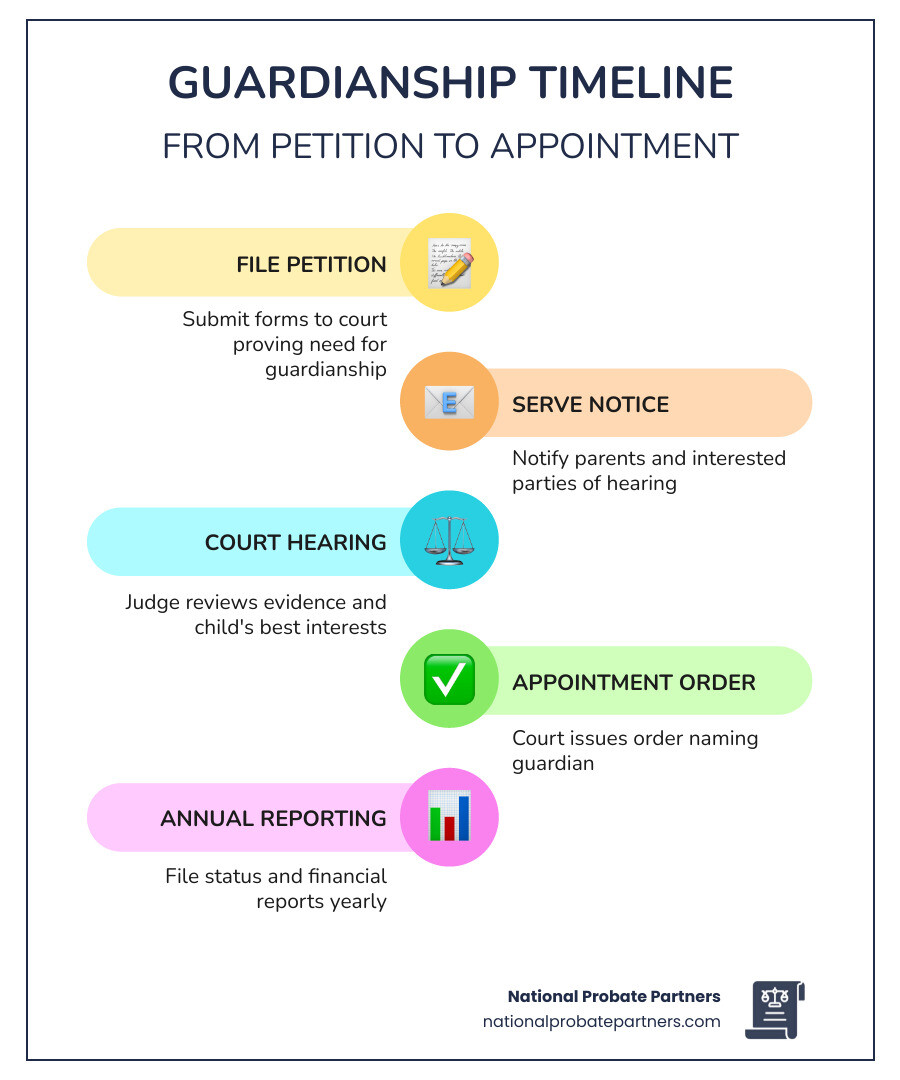
Ready to start? The process begins with filing a Petition for Appointment of Guardian. You’ll likely need to file this in the probate or family court in the county where the child lives.
The Utah Courts outline a standard set of documents you’ll need to prepare:
- The Petition: The formal request explaining why guardianship is needed.
- Notice of Hearing: A document informing all interested parties (parents, grandparents, siblings) about the court date.
- Consent Forms: If the parents agree, they can sign these to speed up the process.
- Background Checks: Most courts require the proposed guardian to undergo a criminal background check.
Filing Fees and Financial Considerations
Justice, unfortunately, isn’t free. Filing fees can be a hurdle, but they vary by location. In Idaho, you might look at a $216 fee, while California charges roughly $225 for a guardianship of the person and $450 if you are also managing an estate.
If these costs are out of reach, don’t panic. Most states offer “fee waivers” for those who meet certain income requirements (indigent status). As we’ve noted in our look at Navigating Elder Guardianship in Texas, financial transparency is key when dealing with the court system.
Parental Consent and Contested Cases
The smoothest path is “voluntary relinquishment,” where parents sign a consent form agreeing to the guardianship. However, things get complicated if a parent objects.
In a contested case, the court uses the “best interests of the child” standard. This means the judge will look at the child’s safety, stability, and emotional well-being rather than just the biological bond. If a parent is found “unfit” or their rights are “suspended,” the court may grant the guardianship over their objection. According to Courts.ie, even in cases of disagreement, the child’s welfare remains the “first and paramount consideration.”
Rights and Responsibilities: What Does a Guardian Actually Do?
Once the judge signs the “Letters of Guardianship,” you have the legal authority to act. This is a big deal! You now have the same power a parent has to:
- Enroll the child in school and attend parent-teacher conferences.
- Consent to medical, dental, and psychiatric treatment.
- Decide where the child lives (though moving out of state usually requires court permission).
- Provide for the child’s religious and social upbringing.
The Connecticut Probate User Guide emphasizes that guardianship is a “trust of the highest character.” You aren’t just a babysitter; you are the child’s legal protector.
Ongoing Court Supervision and Reporting
Winning the court case is just the beginning. Most courts require guardians to file an Annual Report on the Condition of the Ward. This report tells the judge how the child is doing, where they are going to school, and if their medical needs are being met.
If you are a guardian of the estate, you’ll also need to file an Annual Accounting. This is a detailed list of every penny that came in and went out of the child’s accounts. Failing to file these reports on time (usually within a 30-day window of your appointment anniversary) can result in your removal or legal penalties. This is why Guardianship Law Firm Selection is so important; you want a team that helps you stay compliant.
Special Considerations for Diverse Situations
Some cases have extra layers of legal requirements:
- Native American Children: The Indian Child Welfare Act (ICWA) applies if the child is a member of or eligible for membership in a federally recognized tribe. This involves specific notice requirements to the tribe.
- Children with Disabilities: If a child has severe disabilities, you might need to apply for “adult guardianship” before they turn 18. A common recommendation is the “17 3/4 age rule”—filing four months before their 18th birthday to ensure there is no gap in legal protection.
- Unaccompanied Minors: For children arriving in the country without parents, specialized European Union systems and U.S. programs exist to provide temporary oversight.
Alternatives to Full Court-Ordered Guardianship
Guardianship is a “heavy” legal tool. Sometimes, a “lighter” option is better, especially for short-term needs.
Power of Attorney for Caregivers
A Power of Attorney (POA) for Caregiving allows a parent to delegate parental powers to another adult without going to court.
- Pros: It’s fast, cheap, and doesn’t require a judge.
- Cons: It’s temporary (often limited to 6 or 12 months) and the parent can revoke it at any time.
- Best for: Short-term military deployment or a parent’s brief hospital stay.
Military OneSource often recommends these for service members. However, be aware that some schools or hospitals may insist on a full court order for long-term situations.
Testamentary Appointments and Godparents
Many people believe that naming someone as a “godparent” in a religious ceremony gives them legal rights. It does not.
To ensure your choice of guardian is respected, you must make a “testamentary appointment” in a valid will or trust. While the court still has the final say (based on the child’s best interests), they give great weight to the parents’ written wishes. Without a will, the court will look to biological relatives first, which might not be what you wanted. You can learn more about the specific Texas requirements at TexasLawHelp.org.
Frequently Asked Questions about Guardianship for Children
How do I find a guardianship for children attorney?
Finding the right legal help is crucial. You want someone who specializes in probate and family law, not a generalist. Look for firms with experience in your specific county, as local court rules can be quirky. We’ve put together a guide on 5 Smart Ways to Find a Guardianship Attorney You’ll Wish You Knew Sooner to help you vet your options.
How does guardianship for children end?
In most cases, guardianship ends automatically on the child’s 18th birthday (the “age of majority”). It can also end if:
- The child is adopted.
- The court determines the guardianship is no longer necessary (e.g., the parent has recovered and is now fit).
- The guardian or the child passes away.
The Maricopa County Superior Court notes that a formal “Petition to Terminate” is often required to officially close the case with the court.
Can a non-relative become a legal guardian?
Yes! The court’s primary concern is finding a “responsible adult.” While relatives are often preferred, a family friend, neighbor, or even a dedicated caregiver can be appointed. If the child is 14 or older, they often have the right to “nominate” their preferred guardian, which the court will strongly consider. According to the Texas Estates Code, the court will always prioritize the child’s safety and best interests above all else.
Legal Help from National Probate Partners
Stepping up to provide guardianship for children is one of the most selfless things an adult can do. It provides a child with the stability, safety, and legal protection they need to thrive when their parents cannot be there.
At National Probate Partners, we understand that the legal system can feel like a maze, especially when you are already dealing with a family crisis. From our home base in Texas to our offices in Arizona and beyond, we provide the compassionate, expert representation needed to resolve complex probate and guardianship challenges. We help you handle the paperwork and the court hearings so you can focus on what matters most: the child in your care.
If you’re ready to take the next step or just have more questions, don’t navigate this alone. Check out our guide on 5 Smart Ways to Find a Guardianship Attorney You’ll Wish You Knew Sooner and let us help you secure a brighter future for the child you love.