
What Qualifications and Credentials Should a Trust Attorney Possess?
When seeking a trust fund attorney, the first step is to ensure they possess the right qualifications and credentials. This isn’t just about having a law degree; it’s about specialized expertise that directly impacts the security of your assets and the future of your heirs.
A qualified trust attorney should have a strong foundation in:
- Specialized Legal Education and Experience: Look for attorneys whose practice focuses primarily on estate planning, trusts, and probate law. This specialization indicates a deep understanding of the intricate legal landscape.
- State Bar Admission and Good Standing: Verify that the attorney is licensed to practice law in your state (e.g., Arizona or Texas) and is in good standing with the state bar association. This confirms their legal authority and adherence to ethical standards.
- Board Certification or Specialization: Some states offer board certification in specific legal areas. For instance, the State Bar of Arizona certifies specialists in Estate and Trust Law. This designation signifies an attorney has met rigorous standards for experience, ethics, and knowledge in their field. While the exact numbers vary by state, generally only a small percentage of attorneys achieve this high level of specialization, demonstrating exceptional expertise.
- Continuous Legal Education (CLE): The laws governing trusts and estates are constantly evolving. A dedicated trust attorney will regularly engage in CLE to stay current on new regulations, tax laws, and best practices.
- Professional Affiliations: Membership in prestigious organizations like the American College of Trust and Estate Counsel (ACTEC) indicates a commitment to excellence and peer recognition in the field. ACTEC Fellows are considered leaders in trusts and estates law. You can explore valuable resources from such organizations, including An Estate Planning Video Library, to better understand the complexities involved.
- Understanding of State-Specific Laws: Trust and estate laws can vary significantly from one state to another. An attorney practicing in Arizona or Texas, for example, must have a thorough grasp of the specific statutes, court procedures, and tax implications relevant to those states.
- Experience with Complex Financial Instruments and Tax Strategies: Protecting significant assets often involves navigating complex financial structures and minimizing tax burdens. Your attorney should be well-versed in strategies for estate, gift, and income tax minimization, as well as handling various investment vehicles.
How Can I Verify a Trust Attorney’s Experience and Track Record?
Once you identify potential candidates, it’s crucial to verify their experience and track record. This due diligence helps ensure you’re entrusting your legacy to a competent and reliable professional.
Here’s how we recommend verifying an attorney’s background:
- Check State Bar Association Websites: Your state’s bar association website is an invaluable resource. You can typically search for an attorney by name to confirm their license status, view any disciplinary actions, and sometimes find information about certifications. For example, the Estate & Trust Law Certified Specialists | State Bar of Arizona page provides a list of certified specialists in Arizona.
- Review Professional Profiles and Firm Websites: Attorneys often highlight their experience, specializations, and testimonials on their professional profiles and firm websites. Look for case studies (anonymized, of course) or descriptions of situations similar to your own that they have successfully handled.
- Ask for References: With their permission, an attorney may be able to provide references from past clients. Speaking with former clients can offer insights into the attorney’s communication style, professionalism, and effectiveness.
- Inquire About Specific Experience: During your consultation, don’t hesitate to ask about their experience with situations that directly relate to your needs. This could include special needs planning, business succession, managing multi-state assets, or navigating specific family dynamics.
- Assess Longevity and Firm Stability: A firm with a long-standing presence and a stable team often indicates reliability and a commitment to long-term client relationships. This is particularly important for estate planning, which may require updates and administration over many years.
What Key Services Does a Trust Attorney Offer for Asset Protection and Heir Care?
A qualified trust attorney offers a comprehensive suite of services designed to protect your assets and ensure your heirs are cared for according to your wishes. These services go far beyond simply drafting a will; they involve strategic planning to navigate complex legal and financial landscapes.
Here are the key services we provide and that you should expect from a trust attorney:
- Drafting and Establishing Various Types of Trusts: This is the core function. Attorneys create different trusts, such as revocable living trusts, irrevocable trusts, special needs trusts, and charitable trusts, each tailored to specific goals. We can help you understand the nuances of these instruments.
- Asset Protection Strategies: A trust attorney can implement strategies to shield your assets from potential creditors, lawsuits, and even the financial implications of divorce, ensuring your wealth remains intact for your intended beneficiaries. For more on this, see our article on Understanding Breach of Trust and How to Protect Your Assets.
- Probate Avoidance Planning: By utilizing trusts and other tools, an attorney can help structure your estate to bypass the often lengthy, public, and costly probate court process, allowing for a quicker and more private transfer of assets to your heirs.
- Incapacity Planning: This involves preparing for a time when you might be unable to make financial or healthcare decisions for yourself. Tools like durable powers of attorney and advance healthcare directives are crucial components.
- Medicaid Eligibility Planning and Asset Protection: For those concerned about long-term care costs, an attorney can help structure assets to meet Medicaid income and asset limits, protecting your wealth while ensuring access to necessary care.
- Special Needs Planning: If you have beneficiaries with disabilities, a trust attorney can establish Special Needs Trusts (SNTs) to provide for their financial well-being without disqualifying them from essential government benefits.
- Legacy Wealth Transfer and Business Succession Planning: For business owners or those with substantial wealth, an attorney can develop strategies for the smooth transfer of your business or significant assets across generations, minimizing taxes and potential family disputes.
- Tax Minimization Strategies: Expert trust attorneys employ legal strategies to minimize estate, gift, and income taxes, maximizing the inheritance that passes to your heirs.
- Trust Administration and Fiduciary Guidance: After a trust is established or when a grantor passes away, an attorney can guide trustees through their legal duties, ensuring proper asset management and distribution. Learn more about this in Beyond Probate: The Role of a Trust Administration Lawyer.
What are the Advantages and Disadvantages of a Revocable Living Trust?
A revocable living trust is a popular estate planning tool, but it’s important to understand both its benefits and drawbacks to determine if it’s right for your situation.
Advantages:
- Probate Avoidance: Assets held in a properly funded revocable living trust generally bypass the probate court process, saving time, money, and maintaining privacy.
- Privacy: Unlike a will, which becomes a public record during probate, the details of a revocable living trust remain private.
- Control Over Asset Distribution: You can specify exactly how and when your assets are distributed to your heirs, even setting conditions or staggered distributions over time.
- Incapacity Management: If you become incapacitated, your chosen successor trustee can immediately step in to manage your assets without court intervention, avoiding the need for a potentially costly and public guardianship proceeding.
- Multi-State Property Handling: If you own property in multiple states, a revocable trust can help avoid separate probate proceedings in each state.
Disadvantages:
- Requires Funding: A trust is only effective if assets are formally transferred (retitled) into the name of the trust. This process, known as “funding,” requires effort and can be overlooked.
- No Immediate Creditor Protection: During your lifetime, assets in a revocable trust are generally still accessible by your creditors, as you retain control over them.
- No Estate Tax Savings: Assets in a revocable living trust are still considered part of your gross estate for federal estate tax purposes. While trusts can be structured to include tax avoidance techniques, the revocable nature itself doesn’t inherently save estate taxes compared to a will.
- Higher Initial Cost: Setting up a comprehensive revocable living trust typically costs more upfront than drafting a simple will. However, this initial investment often saves significantly more in probate fees and costs down the line.
- No Court Supervision: While avoiding probate is an advantage, it also means there’s no court oversight of the trust administration unless a beneficiary or trustee initiates a challenge. For a deeper dive into the mechanics of revocable trusts, you can refer to resources like the Ohio State Bar Association’s Law Facts: Revocable Trusts. While the principles are similar, state laws can vary, so always consult with an attorney licensed in your jurisdiction.
How Does a Trust Attorney Help with Medicaid Eligibility and Special Needs Planning?
Navigating government benefit programs like Medicaid and ensuring the well-being of special needs beneficiaries requires highly specialized legal knowledge. A trust attorney plays a critical role in these areas.
For Medicaid Eligibility, an attorney can:
- Structure Assets: They can strategically structure your assets to meet the strict income and resource limits required for Medicaid eligibility, particularly for long-term care.
- Navigate the “Look-Back” Period: Medicaid has a five-year “look-back” period for asset transfers. An attorney understands these rules and can help plan transfers to avoid penalties or advise on strategies if a crisis arises within this period.
- Establish Specialized Trusts: This includes creating Medicaid Asset Protection Trusts (MAPTs) or Qualified Income Trusts (QITs, also known as Miller Trusts). These irrevocable trusts are designed to hold assets or income so they are not counted for Medicaid eligibility, while still providing for the individual’s needs.
- Advise on Spend-Down Strategies: If assets exceed limits, an attorney can guide you through permissible “spend-down” strategies, such as prepaying funeral expenses, paying off debts, or improving a healthy spouse’s non-countable assets.
For Special Needs Planning, an attorney can:
- Create Special Needs Trusts (SNTs): These highly specialized trusts allow individuals with disabilities to receive inheritances, lawsuit settlements, or other assets without losing eligibility for means-tested government benefits like Supplemental Security Income (SSI) and Medicaid.
- Ensure Proper Trust Language: The language in an SNT is critical to comply with federal and state laws. An attorney ensures the trust is drafted correctly to protect benefits and provide for the beneficiary’s supplemental needs.
- Advise on Funding and Administration: They can guide families on how to properly fund and administer the SNT, ensuring compliance and effective management for the beneficiary’s lifetime.
How Do I Effectively Find a Qualified Trust Attorney Near Me?
Finding a qualified trust attorney “near me”—whether you’re in Scottsdale, Arizona, Corpus Christi, Texas, or serving in the Armed Forces—requires a strategic approach. Given that we assist clients nationwide with probate and estate planning needs, we understand the importance of finding experienced guidance regardless of your specific location.
Here’s how to effectively search for the right professional:
- Utilize State Bar Association Referral Services: State bar associations often provide referral services that can connect you with attorneys specializing in estate planning and trusts in your area. This is a reliable starting point.
- Search for Board-Certified Specialists: As mentioned, board certification is a strong indicator of expertise. Look for attorneys who are certified specialists in Estate Planning, Trust, and Probate Law within your state. For example, the State Bar of Arizona offers a directory of such specialists.
- Check Online Directories and Legal Platforms: Websites like Avvo, Lawyers.com, and FindLaw allow you to search for attorneys by specialization and location, often including client reviews and attorney profiles. While useful, always cross-reference information with official bar association sites.
- Ask for Recommendations: Your trusted financial advisors, CPAs, or even other attorneys (who specialize in different areas) are excellent sources for referrals. They often work with estate planning attorneys and can recommend someone they respect.
- Consider Firms with a Strong Local Presence: A firm with a strong presence in your community (e.g., Scottsdale, Arizona, or Corpus Christi, Texas) will have an in-depth understanding of local court procedures, property laws, and community resources, which can be invaluable.
What Local Resources or Directories Are Best for Finding Trust Attorneys?
To pinpoint the best trust attorneys in your vicinity, leverage these resources:
- State Bar Association Websites: These are your primary official source. For instance, the State Bar of Arizona provides directories of certified specialists. Similarly, the State Bar of Texas offers referral services and attorney search tools.
- National Academy of Elder Law Attorneys (NAELA): If your needs involve elder law or long-term care planning, NAELA’s directory can help you find attorneys specializing in these areas.
- American College of Trust and Estate Counsel (ACTEC) Directory: ACTEC Fellows are highly experienced and recognized leaders in the field. Their directory can help you find top-tier professionals.
- Online Legal Directories: Platforms like Avvo, Lawyers.com, and FindLaw allow you to filter by practice area and location, often providing client reviews and attorney bios.
- Local Estate Planning Councils: These are professional organizations for estate planning professionals (attorneys, financial advisors, CPAs). Their membership lists can be a great source for finding qualified individuals.

What Essential Questions Should I Ask During an Initial Consultation?
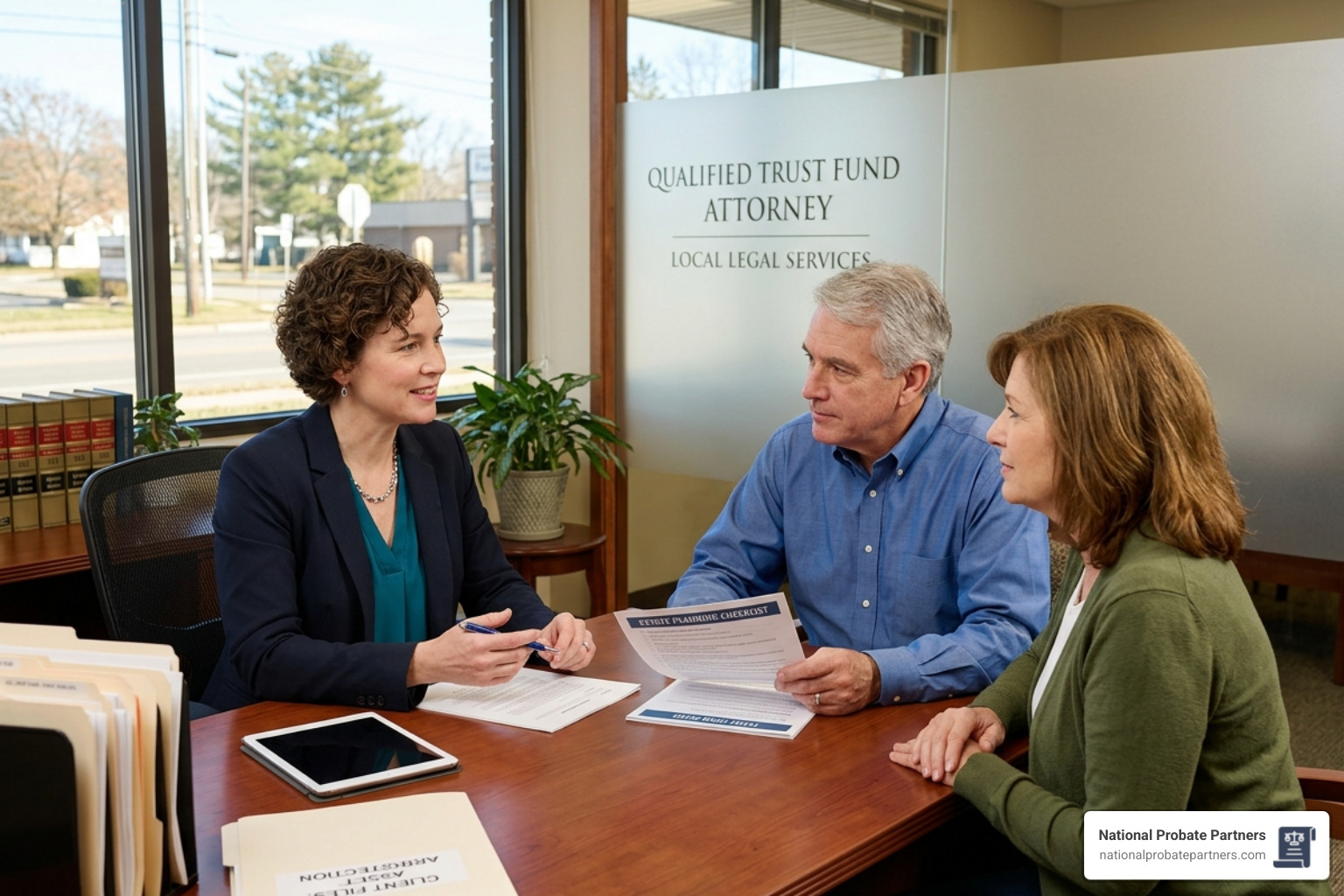
The initial consultation is your opportunity to interview potential trust attorneys. Coming prepared with a list of questions will help you assess their expertise, communication style, and whether they are the right fit for your needs.
Here are 10 essential questions we recommend asking:
- What is your specific experience with cases similar to mine? (e.g., if you have a family-owned business, special needs beneficiaries, or a high net worth).
- What are your fees, and how are they structured? (e.g., hourly, flat fee, retainer, and what services are included).
- What is your approach to estate planning and client communication? (How often will you be updated? What’s the typical timeline?).
- Who else in your firm will be involved in my case? (Will I work directly with you, or will associates or paralegals handle parts of my plan?).
- How often should my estate plan be reviewed and updated? (What are your recommendations for maintaining the plan over time?).
- Can you explain the differences between a will and a trust for my specific situation? (Which do you recommend and why?).
- How do you handle potential conflicts of interest, especially if representing multiple family members?
- What documents should I bring to our next meeting, or to get started?
- What are the potential challenges or complexities you foresee in my unique situation?
- Do you also handle trust administration and probate, or do you refer those services out? (This indicates a comprehensive understanding of the entire process).
What Are the Typical Costs and Fee Structures for a Trust Attorney?
Understanding the cost of hiring a trust attorney is a significant consideration. Fees can vary widely based on several factors, and transparency is key.
Here are the typical fee structures you might encounter:
- Hourly Rates: This is common for complex or ongoing matters, such as trust administration, litigation, or highly customized planning that requires extensive research or negotiation. Hourly rates can range significantly based on the attorney’s experience and geographic location.
- Flat Fees: Many attorneys offer flat fees for standard estate planning packages, such as drafting a will, revocable living trust, powers of attorney, and advance directives. This provides cost predictability for clients.
- Retainer Agreements: For certain projects, an attorney might require an upfront retainer, which is then drawn down as work is performed.
Factors influencing fees include:
- Complexity of the Estate: A simple estate plan for a young couple with modest assets will cost less than a sophisticated plan for a high-net-worth individual with multiple businesses, real estate, and complex family dynamics.
- Attorney’s Experience and Specialization: Highly experienced or board-certified attorneys often command higher fees, reflecting their specialized knowledge and track record.
- Geographic Location: Legal fees can vary by region. For example, costs in a major metropolitan area like Dallas, Texas, might differ from those in a smaller community.
- Scope of Services: The more extensive the services required (e.g., drafting multiple trusts, complex tax planning, business succession), the higher the overall cost.
It’s important to view the initial cost of a comprehensive trust plan not as an expense, but as an investment. While it might be higher than a simple will, a well-crafted trust often saves your family significant money, time, and emotional distress in the long run by avoiding costly and lengthy probate proceedings. For more insights into legal costs, you can review our article on How Much Does a Probate Lawyer Cost?.
What Red Flags Should I Watch For When Choosing a Trust Attorney?
While finding the right trust attorney is paramount, it’s equally important to recognize potential red flags that could indicate a less-than-ideal partnership. Being aware of these warning signs can save you considerable stress, time, and money in the future.
Here’s what we advise you to watch out for:
- Lack of Specialization in Trusts and Estates: If an attorney claims to be a “jack of all trades” practicing in many unrelated areas of law, they likely lack the deep, current expertise required for effective trust and estate planning. This specialized field demands focused attention.
- Unwillingness to Discuss Fees Transparently: A reputable attorney should be upfront and clear about their fee structure. If they are vague, avoid discussing costs, or pressure you to commit without a clear understanding of the financial implications, proceed with caution.
- High-Pressure Sales Tactics or Unrealistic Promises: Be wary of attorneys who use aggressive sales techniques, promise guaranteed outcomes, or suggest overly complex strategies that seem too good to be true. Ethical attorneys focus on realistic planning and managing expectations.
- Lack of Professional Certifications or Affiliations: While not every good attorney is board-certified or an ACTEC Fellow, a complete absence of professional recognition or involvement in relevant legal communities can be a red flag, especially for complex cases.
- Poor Communication or Unresponsiveness: Your initial interactions should give you a sense of their communication style. If they are consistently slow to respond, difficult to reach, or fail to explain things clearly, imagine how frustrating it might be during a critical planning or administration phase.
- Negative Reviews or Disciplinary Actions: Always check state bar association websites for any disciplinary history. Online reviews can also provide insights, but remember to consider them in context. Consistent negative feedback, however, is a serious concern.
- “One-Size-Fits-All” Solutions: Your estate plan should be unique to your circumstances. An attorney who suggests generic, templated solutions without thoroughly understanding your assets, family dynamics, and goals is unlikely to provide effective protection or care for your heirs.
- Firms with High Turnover or Instability: Estate planning is often a long-term relationship. A firm with frequent staff changes or a history of instability might not be able to provide the consistent support and institutional knowledge needed over many years, potentially leaving your family in a difficult position if the primary attorney leaves or retires.
Frequently Asked Questions about Trust Attorneys
Why Do Young Couples Need an Estate Plan?
Many young couples mistakenly believe estate planning is only for the wealthy or elderly. However, for young couples, especially those with children, an estate plan is crucial. It allows you to designate legal guardians for your minor children, ensuring they are cared for by someone you trust if something were to happen to both parents. It also provides for their financial support and education. For unmarried partners, an estate plan is vital to ensure assets are designated according to your wishes, as intestacy laws (dying without a will) may not recognize your partner’s rights.
Are Trusts Only for Wealthy People?
Absolutely not. This is a common misconception. While trusts are powerful tools for high-net-worth individuals, they are increasingly beneficial for people across various income levels. Trusts offer advantages like probate avoidance, privacy, and control over asset distribution, which are valuable to almost anyone with assets they wish to protect and pass on efficiently. Whether you have a modest home and savings or a complex portfolio, a trust can be a highly customizable tool to meet your specific estate planning goals.
What is the Difference Between a Trust and Probate?
The primary difference lies in how assets are managed and distributed after your passing. A trust is a legal arrangement where you (the grantor) transfer assets to a trustee (an individual or institution) to hold and manage for the benefit of your designated beneficiaries, according to the terms you set. When properly funded, assets in a trust avoid probate.
Probate is the legal process through which a deceased person’s will is proven valid, their assets are gathered, debts paid, and remaining assets are distributed to heirs. It is a court-supervised process that can be public, time-consuming, and costly, often involving significant legal fees and court costs. By using a trust, you can bypass this process, allowing for a quicker, more private, and often less expensive transfer of your legacy to your heirs. To understand this distinction further, we invite you to read our article: Trust vs Probate: What’s the Difference and Why It Matters.
Conclusion
Finding the right trust fund attorney is a pivotal decision for your financial security and your family’s future. By asking the right questions, verifying credentials, understanding their services, and being aware of potential red flags, you can confidently select a qualified professional.
A skilled trust attorney will not only protect your assets but also ensure your legacy is preserved and your heirs are cared for according to your wishes. Don’t delay this crucial planning; take the actionable steps outlined here to secure your peace of mind today.