
Understanding the Probate Trust Attorney: Your Guide Through Estate Settlement
A probate trust attorney is a state-licensed lawyer who specializes in helping families settle estates after someone dies. They guide executors, trustees, and beneficiaries through the complex legal processes of probate and trust administration, ensuring assets are properly distributed, debts are paid, and legal requirements are met.
What a Probate Trust Attorney Does:
- Probate Administration – Guides executors through court-supervised estate settlement, including filing documents, paying creditors, and distributing assets
- Trust Administration – Advises trustees on managing trust assets and distributing them to beneficiaries without court involvement
- Estate Planning – Creates wills, trusts, and other documents to help clients avoid probate and minimize taxes
- Dispute Resolution – Represents beneficiaries or fiduciaries in contested matters, will challenges, and family conflicts
- Tax Guidance – Handles estate tax returns, inheritance tax issues, and tax planning strategies
- Beneficiary Rights – Helps heirs enforce their rights to distributions and accounting information
When someone dies, their estate must be settled—either through probate court or through trust administration. This process can be overwhelming for families dealing with grief while facing legal deadlines, creditor claims, and potential disputes among heirs.
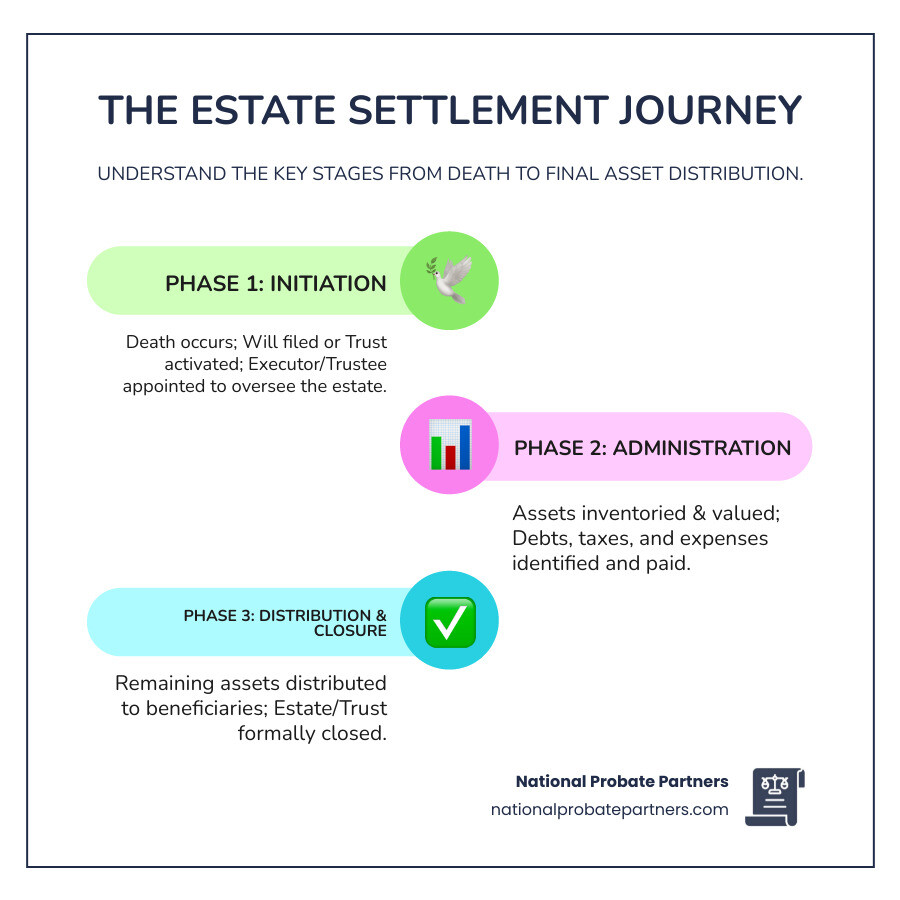
The probate process typically takes six months to a year, though complex or contested estates can take much longer. During this time, an executor or administrator must inventory assets, pay debts and taxes, file court documents, and distribute remaining property to beneficiaries. A trust, by contrast, allows assets to pass directly to beneficiaries without court supervision, but still requires careful administration by a trustee.
Many people wonder if they truly need an attorney or if they can handle estate settlement themselves. While small, simple estates may not require legal help, most families benefit from professional guidance—especially when dealing with high-value estates, business interests, family disagreements, or complex tax situations.
Since 1978, firms specializing in estate planning and probate have helped clients steer these challenging transitions. Attorneys with over 30 years of experience understand the nuances of state laws, court procedures, and the emotional dynamics that arise during estate settlement.
Probate vs. Trust Administration: The Core Distinction
When a loved one passes away, their assets must be managed and distributed according to their wishes or the law. This process typically involves either probate or trust administration. While both settle an estate, they operate under different frameworks with unique implications for privacy, cost, and timeline. Understanding these differences is crucial, and a probate trust attorney is an invaluable guide.
The Probate Process: A Court-Supervised Journey
Probate is the court-supervised legal process that validates a deceased person’s Will (if one exists) and oversees asset distribution. Most steps are public record and require judicial oversight. If someone dies without a Will (dying “intestate”), the court appoints an administrator and distributes assets according to state law.
The probate process typically involves:
- Validating a Will: The court officially recognizes the deceased’s last Will as legitimate.
- Executor Appointment: The court formally appoints an executor (named in the Will) or an administrator (if no Will) as the estate’s personal representative to manage its affairs.
- Public Record: All filings, inventories, and distributions become part of the public record. This means anyone can access information about the estate’s assets, debts, and beneficiaries.
- Creditor Notification: The personal representative must formally notify creditors of the deceased’s passing, allowing them to file claims against the estate.
- Court Oversight: The court reviews and approves actions taken by the personal representative, from asset valuation to final distribution. This oversight can be a safeguard but also adds time and complexity.
While the general steps are similar across states, specific laws and procedures vary significantly. For instance, in Texas, probate can be relatively straightforward if a Will provides for independent administration, minimizing court involvement. However, without such provisions or a Will, the process can become more cumbersome. Our probate trust attorneys are deeply familiar with Arizona and Texas probate laws, helping to streamline the process where possible.
Trust Administration: A Private Affair
In contrast to probate, trust administration typically occurs outside of court supervision. A trust is a legal arrangement where a trustee holds and manages assets for the benefit of designated beneficiaries. Because the assets are already held by the trust, they generally bypass the probate court entirely upon the grantor’s death.
Key aspects of trust administration include:
- Trustee Duties: The trustee manages trust assets according to the trust document’s terms, which includes investing assets, paying expenses, and distributing to beneficiaries.
- Following Trust Terms: The trust document guides administration, detailing how and when to distribute assets.
- Asset Management: The trustee ensures the trust’s assets are properly maintained and managed, often working with financial advisors.
- Distribution to Beneficiaries: Assets are distributed directly to beneficiaries as specified in the trust, typically without court approval.
- Avoiding Court: A primary benefit of a trust is avoiding the lengthy, public probate process. This offers significant privacy for the family and the estate’s assets.
- Fiduciary Responsibility: Like an executor, a trustee is a fiduciary with a legal and ethical obligation to act in the beneficiaries’ best interests.
Understanding the benefits of trusts, such as privacy and potentially faster distribution, is a cornerstone of proactive estate planning. For more information on whether a Will or a Trust is right for you, you can explore resources like Will vs. Trust: Which Do You Need? Differences and Cost .
Comparing the Two Processes
To help clarify the distinctions, here’s a comparison of probate and trust administration:
| Feature | Probate Administration | Trust Administration |
|---|---|---|
| Legal Basis | State laws and court rules | Trust document (private contract) |
| Oversight | Court-supervised | Private, usually no court supervision |
| Privacy | Public record | Private |
| Cost | Can be higher due to court fees, attorney fees, etc. | Potentially lower; upfront cost of creating trust |
| Timeline | Can be lengthy (6 months to several years) | Generally faster, as court delays are avoided |
| Fiduciary | Executor (or Personal Representative/Administrator) | Trustee |
| Asset Control | Court-controlled until distribution | Trustee manages assets according to trust terms |
| Dispute Resolution | Court litigation | Often resolved through mediation or arbitration (if specified in trust) |
Key Services of a Probate Trust Attorney
A probate trust attorney offers a comprehensive suite of services that span the entire lifecycle of an estate, from proactive planning to post-mortem administration and dispute resolution. Our firm, with its deep roots in estate planning, probate, and trust law since 1978, provides experienced and compassionate guidance, particularly for high net worth clients and complex family situations in Arizona and Texas.
Guiding Estate and Trust Administration
Whether an estate goes through probate or trust administration, there are numerous critical steps that require meticulous attention. Our probate trust attorneys guide personal representatives and trustees through these responsibilities:
- Asset Inventory and Valuation: We assist in identifying, gathering, and accurately valuing all estate or trust assets, from real estate and bank accounts to personal belongings and business interests. This can involve ordering appraisals and ensuring a complete picture of the decedent’s wealth.
- Paying Debts and Taxes: The attorney ensures that all legitimate debts, including mortgages, credit card balances, and medical bills, are properly paid from the estate. They also steer the complex world of estate, inheritance, and income taxes, ensuring all necessary tax returns are filed and liabilities are met.
- Filing Court Documents: In probate cases, we handle all necessary court filings, petitions, and appearances, ensuring compliance with state-specific deadlines and procedures. This minimizes the burden on the executor and prevents costly delays or errors.
- Managing Estate Accounts: Attorneys advise on setting up and managing estate or trust bank accounts, ensuring that funds are properly segregated and accounted for throughout the administration process.
- Final Asset Distribution: Once all debts and taxes are settled, we oversee the accurate and timely distribution of remaining assets to beneficiaries, in accordance with the Will or trust document. This can involve retitling assets, transferring property, and providing final accountings.
- Working with Financial Advisors: We often collaborate closely with a client’s other professional advisors, such as financial planners and accountants, to ensure a holistic approach to estate management. This interdisciplinary approach helps streamline asset transfer while minimizing tax and transfer costs, time, and complexity.
Proactive Estate Planning to Avoid Future Issues
One of the most powerful services a probate trust attorney offers is proactive estate planning. Our goal is to help you transfer your wealth in a way that achieves your goals while minimizing taxes and transfer costs. This foresight can prevent many of the issues that necessitate probate litigation down the line.
Our services include:
- Drafting Wills: A Will is a foundational document that outlines your wishes for asset distribution and guardianship of minor children. While some online services offer DIY Wills, we emphasize the importance of professional drafting to avoid pitfalls and ensure legal validity.
- Creating Trusts: Trusts are versatile tools that can help you avoid probate, protect assets, provide for specific beneficiaries (e.g., those with special needs), and minimize estate taxes. We design various types of trusts, such as revocable living trusts, irrevocable trusts, and charitable trusts, custom to your unique situation. For more on avoiding probate through trusts, refer to How to Avoid Probate .
- Powers of Attorney and Advanced Directives: These documents allow you to designate trusted individuals to make financial and healthcare decisions on your behalf if you become incapacitated, ensuring your wishes are honored without court intervention.
- Tax Planning Strategies: We integrate sophisticated tax planning into your estate plan, leveraging strategies like generation-skipping transfer trusts and charitable giving to minimize federal estate and gift taxes. For high net worth clients, this is particularly critical.
- Guidance on Choosing the Right Estate Planning Tools: We educate our clients thoroughly about their options, empowering them to make informed decisions and be fully involved in their plans.
How a Probate Trust Attorney Helps Beneficiaries
Beneficiaries often find themselves in a vulnerable position after a loved one’s death, navigating grief while trying to understand their inheritance rights. A probate trust attorney acts as a crucial advocate, ensuring their interests are protected and they receive what they are entitled to.
We help beneficiaries by:
- Enforcing Inheritance Rights: We ensure that the executor or trustee adheres to the Will or trust terms and distributes assets correctly. If there are delays or improper actions, we can intervene to protect your rights.
- Demanding Accountings: Beneficiaries have a right to receive regular accountings of how estate or trust assets are being managed. We can demand these accountings and review them for any discrepancies or misuse of funds.
- Challenging Trustee or Executor Actions: If a trustee or executor is suspected of mismanagement, improper investments, or a breach of fiduciary duty, we can initiate legal action to hold them accountable. This could include seeking their removal or recovering misappropriated assets.
- Ensuring Fair Treatment: We ensure that beneficiaries are treated fairly and receive all information they are entitled to, particularly in cases where there might be family conflict or a lack of transparency.
- Interpreting Legal Documents: Wills and trusts can be complex. We help beneficiaries understand the legal language and implications of these documents, clarifying their rights and expectations.
Resolving Disputes and Contested Matters
Unfortunately, estate settlement can sometimes lead to disputes among family members, beneficiaries, or fiduciaries. These conflicts can be emotionally charged and legally complex. Our probate trust attorneys are skilled in resolving these contested matters, whether through negotiation, mediation, or litigation.
Common issues and disputes include:
- Will Contests: Challenges to the validity of a Will, often based on claims of undue influence, mental incapacity of the testator, fraud, duress, or mistake.
- Undue Influence Claims: Allegations that someone improperly pressured or manipulated the deceased into creating or changing their Will or trust.
- Breach of Fiduciary Duty: Claims against an executor or trustee for mismanaging assets, self-dealing, or failing to act in the best interests of the beneficiaries.
- Family Conflicts: Disputes over the interpretation of a Will or trust, disagreements about asset distribution, or conflicts arising from blended families.
- Intentional Interference with Inheritance: A claim where a person’s inheritance was reduced or eliminated due to someone else’s wrongful actions, such as destroying a Will.
Our firm handles these sensitive situations with a blend of legal acumen and compassionate understanding, striving for resolutions that honor the deceased’s wishes while minimizing family discord. We are adept at representing beneficiaries in contested matters and negotiating settlements, as well as providing litigation services when necessary.
Hiring an Attorney: When Is It Necessary and What Are the Costs?
Navigating the aftermath of a loved one’s passing is never easy. The legal and financial complexities of settling an estate can add significant stress. While some might consider handling it themselves, there are clear scenarios where the expertise of a probate trust attorney is not just helpful, but essential.

Scenarios That Demand Professional Help
“Do I need a lawyer for probate?” is a common question. The answer often depends on the complexity of the estate and the relationships among the heirs. While you can often manage the probate process on your own, retaining an attorney is advisable in many situations.
You should consider hiring a probate trust attorney if:
- High-Value or Complex Estates: Estates with substantial assets, diverse investments (e.g., stocks, bonds, real estate, cryptocurrency), or business interests often require specialized legal and tax knowledge.
- Complex Assets or Beneficiary Designations: If assets are hard to value, located in multiple states, or have unclear beneficiary designations.
- Family Disagreements or Contentious Beneficiary Relationships: Disputes among heirs, will contests, or suspicions of undue influence can quickly escalate without legal intervention. Our attorneys can represent beneficiaries in contested matters and help negotiate settlements.
- Invalid or Unclear Wills/Trusts: If the validity of a Will is questionable, or if a trust document is ambiguous or poorly drafted, legal interpretation and potential court action may be necessary.
- Business Ownership: If the deceased owned a business, ensuring its smooth transition or dissolution requires careful legal planning to protect its value and avoid disruption.
- Out-of-State Property: If the deceased owned property in a state other than their primary residence (e.g., an Arizona resident owning a vacation home in Texas), this often triggers ancillary probate proceedings, requiring legal guidance in both states.
- Significant Debts or Creditor Claims: Managing creditor claims and ensuring all debts are properly paid can be complicated, especially if the estate’s solvency is an issue.
- Minors or Special Needs Beneficiaries: Establishing and managing trusts for beneficiaries who are minors or have special needs requires careful legal structuring to protect their interests and ensure proper financial oversight.
As a firm with a national reach and local expertise in Arizona and Texas, we are equipped to handle these complex situations, providing the guidance needed to steer the legal landscape efficiently.
Understanding Attorney Fee Structures
The cost of hiring a probate trust attorney can vary significantly based on the state, the complexity of the estate, and the attorney’s fee structure. It’s crucial to have a clear understanding of these costs upfront.
Common fee structures include:
- Hourly Rates: The attorney charges a set hourly rate for their time. This is common for complex or unpredictable cases.
- Flat Fees: For more straightforward probate or trust administration cases, an attorney might charge a single, fixed fee for their services. This provides cost predictability for clients.
- Statutory Percentage Fees: In some states, attorney fees for probate are determined by a statutory schedule, usually a percentage of the estate’s value. For example, some states have specific percentages for different estate value tiers. While Texas and Arizona do not have statutory fee schedules like some other states, attorneys’ fees must always be “reasonable” and are subject to court approval in probate cases.
It’s important to ask potential attorneys about their fee structure during your initial consultation. Our firm aims for transparency and clarity regarding all costs, ensuring you understand what to expect. For a deeper dive into what you need to know about probate lawyer costs, you can consult resources like How Much Does a Probate Lawyer Cost?.
Why Experience Matters for a Probate Trust Attorney
Choosing an experienced probate trust attorney can make a world of difference in the efficiency and outcome of your case. Our firm’s attorneys boast over 30 years of individual experience, which translates into tangible benefits for our clients.
Experience brings:
- Familiarity with Judges and Courts: An experienced attorney knows the local court systems and may be familiar with the preferences and procedures of specific judges in Arizona and Texas. This can lead to smoother processes and fewer unexpected problems.
- Efficiency in Process: Seasoned attorneys can steer the probate or trust administration process more efficiently, anticipating potential issues and addressing them proactively, thus saving time and money.
- Navigating Complex Tax Laws: Estate and inheritance tax laws are intricate and frequently change. Experienced attorneys have the expertise to minimize tax liabilities and ensure compliance. They can also assist with post-mortem planning, including the use of disclaimers to optimize tax outcomes.
- Strategic Dispute Resolution: When disputes arise, an experienced attorney can offer strategic guidance, whether through negotiation, mediation, or litigation, often achieving more favorable outcomes while preserving family relationships where possible.
- Minimizing Errors: The probate and trust administration processes involve numerous deadlines and complex legal requirements. An experienced attorney’s attention to detail significantly reduces the risk of costly errors.
- Peace of Mind: Perhaps most importantly, knowing that a seasoned professional is handling the complexities allows you to focus on healing and family during a difficult time.
Frequently Asked Questions
We understand that you likely have many questions about probate, trusts, and the role of an attorney. Here are some of the most common inquiries we receive:
How long does the probate or trust administration process take?
The duration of probate or trust administration varies significantly depending on several factors:
- Estate Complexity: Simple estates with few assets and no disputes might conclude faster. Complex estates with diverse assets, business interests, or multiple beneficiaries can take longer.
- State Laws: While the general process is similar, state-specific requirements in Arizona and Texas can influence timelines.
- Contested Matters: If there are disputes, such as a Will contest or challenges to a trustee’s actions, the process can be extended significantly, sometimes for years.
- Tax Issues: Estates subject to federal estate taxes or complex state tax filings may require additional time.
Typically, the whole probate process takes six months to a year. However, each case is an individual situation, and some probates might take far longer, especially if disputes arise. Trust administration, by avoiding court involvement, often proceeds more quickly than probate, assuming there are no internal disputes among beneficiaries or the trustee.
Can an attorney help if I live in a different state than the deceased?
Yes, absolutely! Our firm is a national probate coordination firm, and we regularly assist clients who live in a different state than the deceased. This is a common scenario, especially in today’s mobile society.
If the deceased owned property in a state where they were not a resident, it might require a process called ancillary probate in that other state. Our probate trust attorneys can:
- Steer Ancillary Probate: We can guide you through the process of opening and managing probate in Arizona or Texas, even if you reside elsewhere.
- Provide Nationwide Service: As a national firm, we can coordinate with local counsel in other states if necessary, ensuring all legal requirements are met across jurisdictions.
- Offer Virtual Consultations: We provide virtual consultations, making it convenient for out-of-state clients to receive expert legal advice without needing to travel.
Our goal is to resolve complex probate challenges efficiently for clients nationwide, regardless of their physical location.
What is the difference between an executor and a trustee?
While both an executor and a trustee are fiduciaries responsible for managing assets for beneficiaries, their roles, authority, and oversight differ fundamentally:
Executor (or Personal Representative/Administrator):
- Appointed by: A Will names an executor, but the appointment must be formally approved by a probate court. If there’s no Will, the court appoints an administrator.
- Manages: Assets that pass through probate (i.e., those solely in the deceased’s name without a beneficiary designation).
- Oversight: Operates under the supervision of the probate court.
- Role: Gathers assets, pays debts and taxes, and distributes probate assets according to the Will or state intestacy laws.
- Duration: The role typically ends once the probate process is complete and the estate is closed by the court.
Trustee:
- Named in: The trust document itself.
- Manages: Assets that have been formally transferred into the trust.
- Oversight: Generally operates privately, outside of court supervision (unless there’s a dispute requiring judicial intervention).
- Role: Manages and distributes trust assets according to the specific terms and conditions outlined in the trust document.
- Duration: The role can be ongoing for many years, especially for trusts designed to benefit beneficiaries over an extended period (e.g., until they reach a certain age or for special needs).
Understanding these distinct roles is vital for proper estate planning and administration.
Conclusion: Your Partner in Navigating Estate Complexities
The passing of a loved one is a profoundly challenging time, often compounded by the intricate legal and financial tasks of settling their estate. Whether facing the public process of probate or the private administration of a trust, the journey can be overwhelming without expert guidance.
Our probate trust attorneys are here to be your steadfast partners, offering the clarity, expertise, and compassionate support needed to steer these complexities. We recap our commitment to you:
- Comprehensive Expertise: We explain the roles of executors and trustees, distinguishing between court-supervised probate and private trust administration.
- Proactive Planning: We emphasize the power of proactive estate planning, crafting Wills, trusts, and other documents to avoid future issues and secure your family’s legacy.
- Advocacy and Resolution: We stand by beneficiaries, ensuring their rights are protected, and skillfully resolve disputes, from Will contests to fiduciary breaches.
- Experienced Guidance: With decades of experience, our attorneys bring efficiency, strategic insight, and peace of mind to every case, whether in Arizona, Texas, or for clients across the nation.
At National Probate Partners, we pride ourselves on our experienced team and our commitment to providing personalized, compassionate service. We understand the emotional weight you carry, and we are dedicated to resolving your probate challenges efficiently, allowing you to focus on what matters most.
Securing your family’s legacy and ensuring your loved one’s wishes are honored doesn’t have to be a daunting task. With the right legal partner, you can steer these waters with confidence. Contact us today!