
Why Working With a Trust Will Lawyer Could Be the Most Important Decision You Make
A trust will lawyer helps you create legally valid documents that protect your assets, provide for your family, and avoid costly court processes after you die.
Here’s what a trust and will attorney can do for you:
- Draft a legally valid will that names your beneficiaries, guardians for minor children, and executor
- Create a revocable living trust to keep your estate out of probate court
- Reduce probate costs — on a $1 million California estate, combined probate fees can exceed $46,000
- Plan for incapacity with powers of attorney and healthcare directives
- Advise on state-specific laws like California’s Proposition 19 and AB 565 (effective 2026)
- Update your plan after major life events like marriage, divorce, or the birth of a child
You’ve spent years building something worth protecting. A home. Savings. A business. A family. But without the right legal documents in place, the people you love could face months of court delays, unexpected fees, and painful family conflict — at the worst possible time.
Most people put off estate planning because it feels complicated or morbid. But the real risk is waiting too long.
The stakes are real. If you die without a will or trust in California, your assets are distributed according to state intestate succession laws — not your wishes. Unmarried partners receive nothing. Distant relatives may inherit before the people you care about most.
A qualified trust and will attorney cuts through that complexity. They know the laws in your state, they know what can go wrong, and they know how to build a plan that holds up when it matters most.
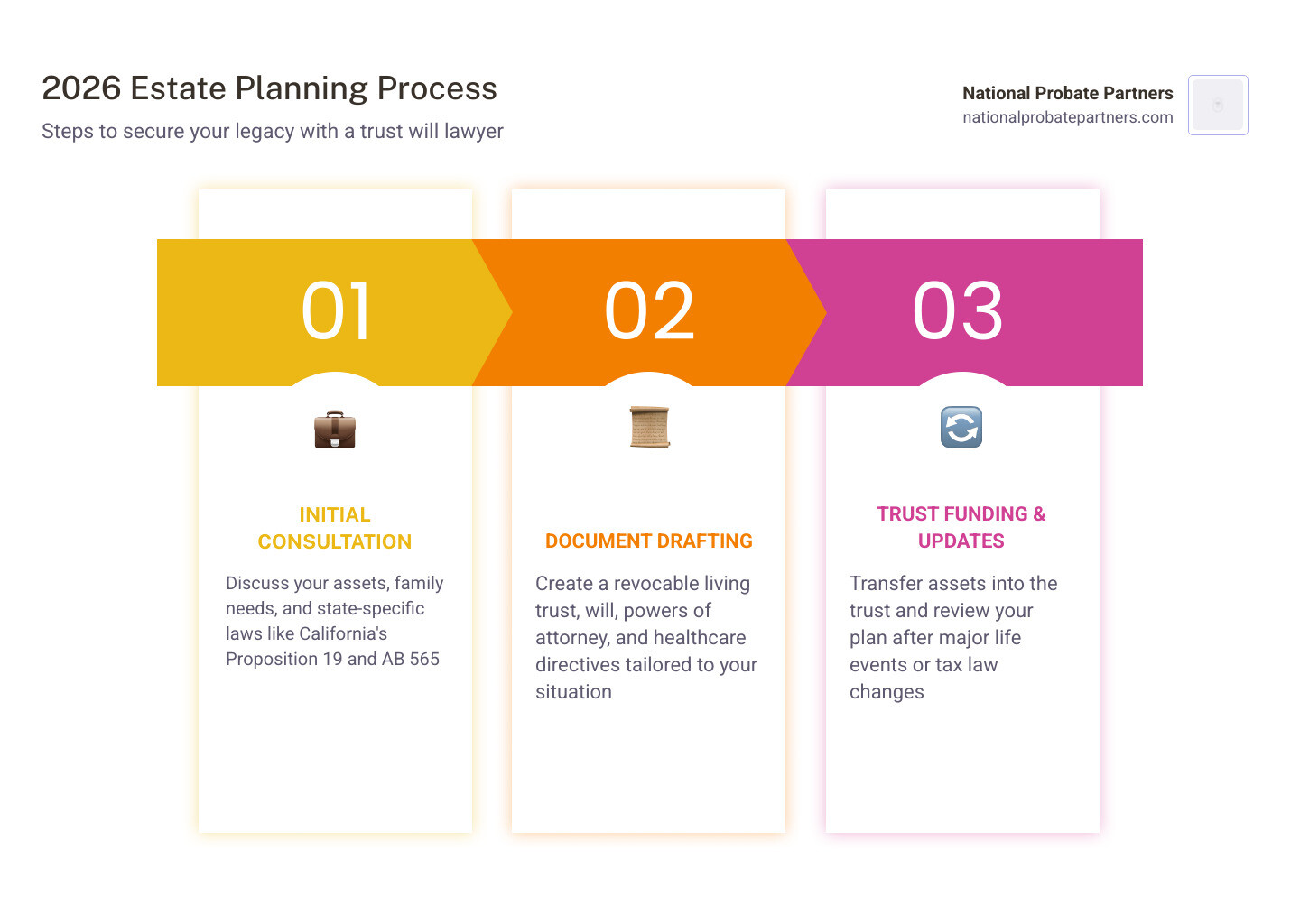
Trust will lawyer terms simplified:
Understanding the Difference: Will vs. Trust
One of the first questions we hear at National Probate Partners is: “Do I need a will or a trust?” It’s a bit like asking if you need a raincoat or an umbrella—sometimes you need both to stay dry.
A Last Will and Testament is a document that outlines who gets your stuff and who will look after your minor children. It only takes effect after you pass away. The catch? A will usually has to go through probate court. This is a public process where a judge oversees the distribution of your assets. It can be slow, expensive, and since it’s a public record, anyone can see what you owned and who you left it to.
A Revocable Living Trust, on the other hand, is like a “bucket” for your assets. You own the bucket while you’re alive, but you also name a successor trustee to take over if you become incapacitated or pass away. The magic of a trust is that it generally avoids probate entirely. Your family can distribute assets in weeks rather than years, and they can do it in private.
Comparison Table: Wills vs. Trusts
| Feature | Last Will and Testament | Revocable Living Trust |
|---|---|---|
| Effective Date | Only after death | Immediately upon signing/funding |
| Probate Required? | Yes, for most assets | No, if properly funded |
| Privacy | Public record | Private document |
| Incapacity Planning | No | Yes, manages assets if you’re ill |
| Cost | Cheaper upfront, expensive later | More expensive upfront, saves later |
To dig deeper into which option fits your family’s needs, check out our guide on Trust vs. Probate: What’s the Difference and Why It Matters.
Why You Need a Qualified Trust Will Lawyer Over DIY Templates
In May 2026, the internet is flooded with “do-it-yourself” legal templates. While these might seem like a bargain, they are often a “buy now, pay later” trap for your heirs.
Estate planning is not a one-size-fits-all product; it is a specialized legal service. In California, for example, only 0.6% of attorneys are Certified Specialists in Estate Planning, Trust, and Probate Law. This designation means the lawyer has undergone rigorous testing and has a proven track record of expertise.
When you work with a professional trust will lawyer, you aren’t just paying for paper. You are paying for:
- Legal Validity: Ensuring your documents meet strict state requirements (like having the right number of disinterested witnesses).
- Customization: Addressing unique family dynamics, such as blended families or special needs beneficiaries.
- State-Specific Compliance: Laws in Texas and Arizona differ significantly from those in other states. A template might miss a crucial local statute that renders your entire plan invalid.
For those looking for the gold standard, the Best Texas Trusts and Estates Lawyers are often those who treat estate planning as a relationship rather than a transaction. Before you sign with anyone, make sure to ask these 10 Questions Before Hiring a Trust Attorney.
The Role of a Trust Will Lawyer in Incapacity Planning
Estate planning isn’t just about what happens when you’re gone; it’s about what happens if you’re still here but can’t speak for yourself. A comprehensive plan created by a trust will lawyer includes “living” documents:
- Durable Power of Attorney: This gives someone you trust the legal authority to handle your finances—pay your mortgage, manage your taxes, and access your bank accounts—if you become incapacitated.
- Advance Healthcare Directive: This tells doctors what kind of medical treatment you want (or don’t want) if you can’t communicate.
- HIPAA Authorization: Without this, your loved ones might be barred from even getting an update on your condition from hospital staff due to privacy laws.
If you’re wondering about the nitty-gritty details of these roles, our The Ultimate Probate Lawyer FAQ 2025 Edition covers the most common concerns.
Navigating State-Specific Laws: California and Texas in 2026
If you live in California or Texas, you’re dealing with some of the most complex estate laws in the country. In 2026, staying updated is vital for protecting your home’s value.
California’s Proposition 19 and AB 565
California residents must be wary of Proposition 19. This law significantly changed how property taxes are reassessed when a home passes from parent to child. As of 2025, the inflation-adjusted exclusion is approximately $1.1 million. If your family home has appreciated beyond that, your children could face a massive property tax hike unless the trust is structured perfectly.
Furthermore, AB 565 (effective in 2026) now allows for “virtual representation.” This means that in certain trust matters, minors or unborn beneficiaries can be represented by someone with a similar interest, streamlining court processes and reducing the need for expensive court-appointed guardians.
The High Cost of Probate
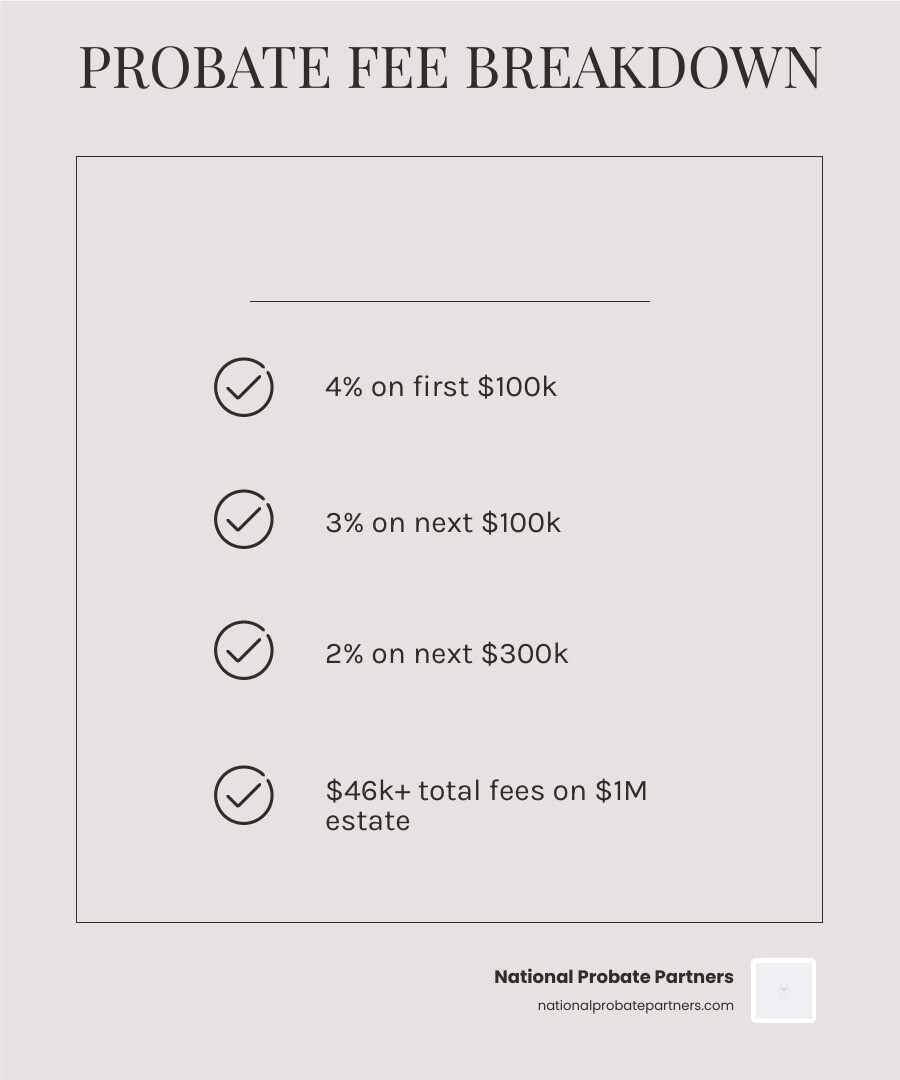
Why do we emphasize avoiding probate? Look at the numbers. California probate fees are set by statute:
- 4% of the first $100,000
- 3% of the next $100,000
- 2% of the next $300,000
- 1% of the next $500,000
For a $1 million estate, the combined attorney and executor fees exceed $46,000. On a $500,000 home, the attorney fees alone can hit $13,000. A trust will lawyer usually charges a fraction of that to set up a trust that avoids these costs entirely.
If you are in the Southwest, consulting Estate & Trust Law Certified Specialists via the State Bar of Arizona can help ensure your plan is compliant with local regulations in Scottsdale and beyond.
Avoiding Common Pitfalls in Trust Administration
Creating a trust is only half the battle; you also have to “fund” it. We often see families come to us with a beautiful trust document, but the house and bank accounts were never actually retitled into the name of the trust. If an asset isn’t in the trust, it’s likely headed for probate court.
Choosing the Right Successor Trustee
Your successor trustee has a fiduciary duty to act in the best interest of your beneficiaries. This is a heavy burden. When choosing a trustee, consider:
- Financial Literacy: Can they manage investments and taxes?
- Availability: Do they have the time to handle months of paperwork?
- Diplomacy: Can they handle “that one cousin” who is going to complain about the distribution?
For a deeper dive into these responsibilities, see our A Comprehensive Guide to Trust Administration for Every Trustee.
How a Trust Will Lawyer Prevents Breach of Trust
A “breach of trust” occurs when a trustee fails to follow the rules of the trust or the law—whether by accident or on purpose. This might involve self-dealing, failing to provide accountings, or poorly investing trust assets.
A trust will lawyer acts as the guardrail. We help trustees understand The Essential Trust Administration Accounting Handbook and ensure that Trust Beneficiary Rights are protected. By providing legal oversight, we prevent family feuds before they start. You can learn more about these protections in our article on Understanding Breach of Trust and How to Protect Your Assets.
Frequently Asked Questions about Estate Planning
How often should I update my will or trust?
We recommend a review every 3 to 5 years. However, you should call your trust will lawyer immediately after “Major Life Events,” which we like to call the “5 Ds”:
- Death of a beneficiary or trustee.
- Divorce (yours or a beneficiary’s).
- Decades (time flies, and laws like Prop 19 change).
- Dollars (a significant inheritance or change in asset value).
- Diagnosis (new healthcare needs).
What are the risks of dying without a plan in California?
If you die “intestate” (without a plan), the state of California decides who gets your assets. This often leads to:
- Family Conflict: Siblings fighting over sentimental items or the family home.
- Court Delays: Probate can take 12 to 24 months, during which assets may be frozen.
- High Fees: As mentioned, statutory fees can eat up 5% or more of your estate’s gross value.
Can I change a revocable trust after it is created?
Yes! That is why it is called “revocable.” As the grantor, you maintain full control. You can add or remove assets, change beneficiaries, or even scrap the whole thing and start over (though a “restatement” is usually easier). In 2026, flexibility is key as tax laws continue to evolve.
Conclusion
Securing your legacy shouldn’t feel like a burden. At National Probate Partners, we specialize in turning complex legal requirements into simple, actionable plans. Whether you are in Scottsdale, Arizona, Corpus Christi, Texas, or serving in the Armed Forces abroad, our team is dedicated to providing compassionate, expert guidance.
Don’t leave your family’s future to chance or the default whims of state law. A properly structured estate plan is a gift of peace and clarity to the people you love most.
Ready to take the first step? Secure your future with a probate lawyer today and ensure your legacy is protected for generations to come.