
Why Finding the Right Guardianship Attorney Matters More Than You Think
A Guardianship attorney helps families steer one of the most difficult legal processes: obtaining court authority to make decisions for a loved one who can no longer manage their own affairs. Whether you’re facing a parent with dementia, an adult child with disabilities, or a minor who has inherited assets, this specialized attorney is essential.
A guardianship attorney’s role includes filing court petitions, gathering medical evidence of incapacity, preparing care and financial management plans, representing you in court, and advising on the ongoing duties of a guardian. This is a critical role, especially as the number of adults over 65 is projected to reach 98 million by 2060, with Alzheimer’s cases expected to nearly double by 2050.
When someone becomes incapacitated without having prepared a Power of Attorney, families must turn to the courts. Guardianship proceedings are complex and result in the removal of significant rights from an individual. The court declares someone legally incompetent and assigns another person to make choices on their behalf.
The attorney you choose will determine whether this process protects your loved one’s dignity or becomes a nightmare of family conflict and legal expenses. This guide will walk you through five smart strategies to find a Guardianship attorney who understands both the legal complexities and the emotional weight of your situation.
Understanding Guardianship: The “Why” and “What” Before the “Who”
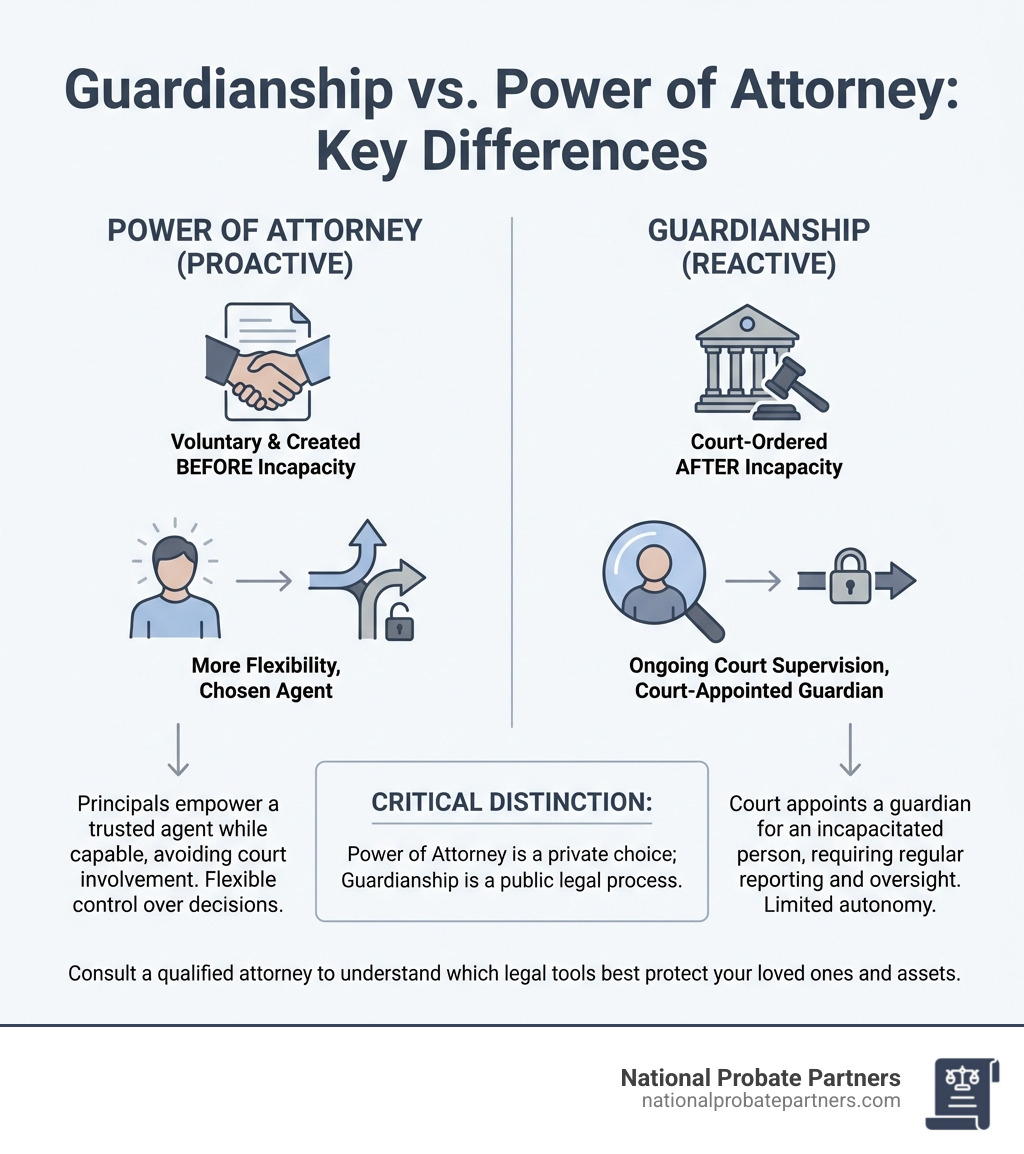
At National Probate Partners, we know this journey is emotionally charged and legally intricate. A crucial first step is understanding the difference between guardianship and a power of attorney.
A Guardianship attorney is needed when an individual becomes incapacitated and has not previously executed a Power of Attorney. A Power of Attorney is a proactive document where a capable person (the “principal”) designates a trusted agent to make decisions for them if they become incapacitated. Guardianship, on the other hand, is a court-ordered arrangement that becomes necessary when a person is already incapacitated without a Power of Attorney in place. This process is more intrusive because it removes certain rights from the individual, known as the “ward.”
Guardianship is often necessary when:
- An individual becomes unable to manage their finances or personal care due to illness or injury and never signed a Power of Attorney.
- A minor inherits significant assets or receives a lawsuit settlement that requires formal management until they reach adulthood.
Because guardianship is a significant step, courts prefer less restrictive alternatives when possible. These can include:
- Power of Attorney (for property and personal care)
- Revocable Trusts or Special Needs Trusts
- Supported Decision-Making Agreements
- Representative Payee (for Social Security benefits)
- Medical Powers of Attorney / Healthcare Proxies
The Different Types of Guardianship
Guardianship is custom to the specific needs of the ward. The two primary types are guardianship of the person and guardianship of the estate (or property).
| Feature | Guardian of the Person | Guardian of the Estate (Property) |
|---|---|---|
| Primary Role | Makes personal care decisions | Manages financial affairs and assets |
| Decisions Made | Healthcare, housing, nutrition, clothing, safety | Bank accounts, investments, real estate, paying bills |
| Focus | Ward’s physical and emotional well-being | Ward’s financial stability and asset protection |
| Key Responsibilities | Ensuring proper care, medical treatment, promoting independence | Collecting income, paying debts, prudent investing, annual accounting |
Guardian of the Person: This guardian makes decisions about the ward’s personal care, including consenting to medical treatments, deciding where the ward will live, and ensuring their safety and well-being.
Guardian of the Estate (Property): This guardian manages the ward’s financial affairs. Responsibilities include managing bank accounts, paying bills, protecting property, and providing an annual accounting to the court of all financial transactions.
A court may appoint a combined guardianship for both personal and financial decisions, or a limited guardianship where the guardian’s authority is restricted to specific areas, allowing the ward to retain decision-making power where they are still capable. For a broad overview of these concepts, you can explore resources such as this Guardianship Guide from the Texas Judicial Branch.
When is Guardianship Necessary for a Minor?
While parents are natural guardians, a formal, court-appointed guardianship for a minor’s property is necessary when they possess significant assets. This typically occurs when a minor receives a substantial inheritance, a lawsuit settlement, or large life insurance proceeds. Parents are not automatically authorized to manage a minor child’s substantial assets without court approval. The court’s primary goal is to protect the minor’s financial interests, and in states like Texas, an attorney ad litem is appointed to represent the minor’s interests during the proceedings.
The Legal Labyrinth: Navigating the Guardianship Process

The guardianship process is a formal legal proceeding designed to protect individuals who cannot protect themselves. It’s not a path we recommend walking alone. A cornerstone of the law is the presumption of capacity, meaning adults are presumed capable of making their own decisions until proven otherwise. Overcoming this presumption is a high legal bar, as it results in the loss of the ward’s autonomy to make personal, financial, or medical decisions.
The court process is rigorous and typically involves several stages: filing a petition, notifying all interested parties (like close family), a court investigation, a formal hearing before a judge, and, if granted, a court order that outlines the guardian’s powers and duties. Having an experienced Guardianship attorney is indispensable to navigating these steps.
Key Steps in a Guardianship Application
Applying for guardianship requires meticulous attention to legal requirements. Our role at National Probate Partners is to guide you through each step.
- Filing the Petition: The process begins by filing a formal petition with the probate court that explains why guardianship is needed and who should be appointed.
- Proving Incapacity: The petition must include evidence that the proposed ward is incapacitated. This usually requires a sworn affidavit supported by a physician’s letter detailing the nature and extent of the incapacity.
- Submitting Plans: If seeking guardianship of the estate, a detailed Management Plan is required to outline how finances will be handled. For guardianship of the person, a Guardianship Plan is needed to detail how personal care needs will be met.
- Serving Interested Parties: The proposed ward and their immediate family must be formally served with notice of the application. In Texas, an attorney ad litem is appointed to represent the proposed ward’s interests.
- Involvement of Public Bodies: Agencies like Adult Protective Services (APS) may investigate if there are concerns about abuse or neglect and provide reports to the court.
For more about the legal process, visit our page on Do You Need a Probate Attorney? Unpacking Their Role.
Potential Challenges and Costs
The path to obtaining guardianship can be emotionally and financially demanding.
Contested guardianships are a major challenge, occurring when family members disagree on the need for a guardian or who should serve. These disputes can lead to prolonged, expensive, and emotionally charged litigation that strains family relationships.
The financial costs can also be significant and typically include:
- Court filing fees
- Fees for professional capacity assessments
- Guardianship attorney fees for preparing the petition and representation
- Fees for the court-appointed attorney ad litem
- Ongoing costs like bond premiums and accounting services
We understand that cost is a major concern. While we strive for efficiency, complex legal proceedings require thorough work. For a general understanding of legal costs, you can refer to our article on How Much Does a Probate Lawyer Cost?.
The Guardian’s Compass: Roles, Duties, and Responsibilities
Once appointed, a guardian acts as a fiduciary for the ward. This is a role of immense trust, legally and ethically binding the guardian to act solely in the ward’s best interest, with absolute loyalty and honesty. Guardians must avoid any conflicts of interest and maintain meticulous records of all actions and financial transactions, making annual reports to the court.

A guardian’s role also involves a delicate balance of protecting the ward while encouraging independence. The guardianship should be limited to match the ward’s actual limitations, and the guardian should consult with the ward and involve them in decisions to the extent they are capable.
Role of a Guardian of Property
A guardian of the estate holds the financial well-being of the ward in their hands. Key responsibilities include:
- Managing Finances: Overseeing all bank accounts, investments, and other financial assets.
- Paying Debts: Ensuring all legitimate bills and expenses are paid on time.
- Collecting Income: Gathering all sources of income, such as benefits or rent.
- Investing Assets Prudently: Making sound investment decisions to protect the ward’s financial security.
- Annual Accounting: Providing detailed, itemized reports to the court accounting for every dollar received and spent.
Role of a Guardian of the Person
The guardian of the person is entrusted with the ward’s personal care and well-being. Duties include:
- Making Personal Care Decisions: Choosing diet, hygiene, and social activities.
- Healthcare Consent: Consenting to medical treatments and working with healthcare providers.
- Housing Arrangements: Deciding where the ward will live, prioritizing the least restrictive environment.
- Ensuring Safety: Protecting the ward from harm and ensuring their personal needs are met.
- Reporting to the Court: Regularly reporting on the ward’s physical and mental condition and living situation.
What Happens if a Guardian Fails Their Duties?
The court maintains continuous oversight to protect the ward. If a guardian fails to fulfill their duties, the consequences can be severe.
- Removal of the Guardian: The court can remove a guardian found to be negligent, abusive, or mismanaging assets.
- Legal Liability: A guardian can be held personally liable for any financial losses caused by their negligence or misconduct and may be ordered to reimburse the estate.
- Role of the Surety Bond: In many jurisdictions, a guardian of the estate must post a surety bond. This bond acts as insurance to protect the ward’s assets from mismanagement.
Failing to meet fiduciary duties is not taken lightly. This is why having a knowledgeable Guardianship attorney is critical, both for the applicant and the appointed guardian, to ensure compliance with all legal obligations.
5 Smart Ways to Find the Right Guardianship Attorney
Finding the right Guardianship attorney is about finding a compassionate guide who can steer the legal system while respecting your family’s emotional journey. An experienced attorney in Arizona or Texas can make all the difference, especially in contested cases or those with complex family dynamics.
1. Seek Referrals from Trusted Sources
One of the most reliable methods is through referrals. Start with people and organizations you trust:
- Local Bar Associations: State and local bar associations, like the State Bar of Texas, provide referral services and directories of attorneys specializing in guardianship and probate.
- Estate Planning Professionals: Attorneys, accountants, and financial advisors frequently work with clients facing capacity issues and can offer valuable recommendations.
- Support Groups for Caregivers: Organizations supporting caregivers for individuals with Alzheimer’s, dementia, or other disabilities can be excellent sources for attorney recommendations.
2. Verify Specialization and Experience
Guardianship is a specialized field. You need an attorney with focused expertise.
- Look for Specialization: In states like Texas, attorneys can become board-certified in Estate Planning and Probate Law, which signifies a high level of expertise. An elder law focus is also a strong indicator of experience.
- Inquire About Caseload: Ask what percentage of their practice is dedicated to guardianship cases. An attorney who regularly handles these matters will be more familiar with local court procedures and judges.
- Probate Litigation Experience: Since guardianship cases can become contentious, an attorney with experience in probate litigation is better equipped to handle disputes.
For more insights on selecting an attorney, consider our guide on Hiring a Probate Lawyer in 2026: What You Need to Know.
3. Schedule Consultations and Ask the Right Questions
Use initial consultations to interview potential attorneys. Prepare a list of questions:
- “What is your experience with guardianship cases in this jurisdiction?”
- “How do you approach contested cases or family disputes?”
- “Can you explain your fee structure and provide an estimated total cost?”
- “What do you foresee as the biggest challenges in our case?”
- “How do you ensure the ward’s preferences are considered?”
Asking these questions will help you gauge the attorney’s communication style and expertise.
4. Evaluate Their Compassion and Communication Skills
Beyond legal acumen, the right attorney must have empathy and excellent communication skills.
- Assessing Empathy: Does the attorney listen attentively and acknowledge the emotional toll on your family?
- Clear Communication: A good attorney breaks down complex legal concepts into understandable terms, ensuring you are fully informed.
- Responsiveness: Timely communication is vital. Inquire about their typical response time and accessibility.
- Dignity and Respect: Observe how the attorney speaks about the proposed ward. They should treat the individual with dignity and respect.
5. Review Online Presence and Client Testimonials
An attorney’s online presence offers valuable insights into their practice and reputation.
- Check Their Website: A professional website should clearly outline their services in guardianship and probate and may offer helpful resources.
- Read Client Reviews: Websites like Google and Avvo often feature client testimonials. Look for patterns in reviews that mention guardianship cases, communication, and professionalism.
- Look for Published Content: Attorneys who publish articles or blog posts demonstrate a commitment to their field and a desire to educate clients.
Life After Appointment: Long-Term Management and Future Planning
The appointment of a guardian marks the beginning of an ongoing relationship with the court, which maintains continuous oversight to ensure the ward’s well-being.
- Ongoing Court Supervision: A guardian’s actions remain subject to judicial review. Both guardians of the person and the estate are typically required to submit annual reports to the court.
- Annual Reports and Accountings: These reports detail the ward’s condition, living situation, and a meticulous accounting of all financial transactions. This process ensures transparency and accountability.
How Guardianship Impacts Estate Planning
Guardianship significantly impacts estate planning because the ward is legally incapacitated and can no longer create or modify their own will or other legal documents. A guardian generally does not have the authority to change the ward’s will or beneficiary designations. This limitation highlights the importance of creating an estate plan before incapacity occurs. For individuals with disabilities, a Special Needs Trust (SNT) can be a vital tool to hold assets without jeopardizing eligibility for government benefits, and a Guardianship attorney can advise on this.
Terminating or Modifying a Guardianship
Guardianships are not always permanent and can be terminated or modified.
- When Guardianship Ends: A guardianship automatically terminates upon the ward’s death or when a minor ward reaches the age of 18.
- Restoration of Capacity: If a ward’s capacity is restored, they can petition the court to terminate the guardianship. This requires new medical evidence proving they are capable of managing their own affairs.
- Process for Modification: If circumstances change, such as a change in the ward’s condition, an interested party can petition the court to modify the guardian’s powers.
Any termination or modification requires a formal court petition and hearing. An experienced Guardianship attorney can guide you through this process.
Resources for Guardians and Caregivers
Serving as a guardian can be challenging, but you are not alone. Numerous resources can provide support and information.
- Caregiver Support Groups: Organizations like the Alzheimer’s Association offer local support groups, educational programs, and helplines.
- Government Agencies on Aging: State and local agencies on aging offer a wealth of information on services and support programs for older adults.
- Professional Guardian Associations: The National Guardianship Association provides education and resources for both professional and family guardians.
Reaching out to these resources can provide invaluable support and help you make informed decisions.
Frequently Asked Questions about Guardianship
Can a person under guardianship still make any decisions?
Yes. Courts adhere to the “least restrictive alternative” principle, tailoring the guardianship to interfere as little as possible with the ward’s autonomy. A guardian has a duty to involve the ward in decisions to the extent they are capable. As the Texas Bar notes, “The guardianship should be designed to encourage the development or maintenance of maximum self-reliance and independence of the ward.” A ward may still be able to express preferences about their daily life, which a good guardian will respect.
How long does the guardianship process take?
The timeline varies based on jurisdiction, case complexity, and whether the case is contested. An uncontested guardianship where all family members agree may be resolved in a few months. However, if the case is contested, it can become a lengthy process involving investigations and multiple hearings, potentially taking a year or more. An experienced Guardianship attorney can provide a more accurate estimate for your specific situation.
Can I be paid for being a guardian?
Yes, in many jurisdictions, including Arizona and Texas, a guardian can receive reasonable compensation for their services. This payment is not automatic; it must be requested from and approved by the court. The court considers factors like the size of the ward’s estate, the complexity of the work performed, and local court rules when determining what is reasonable. A guardian cannot pay themselves from the ward’s assets without a court order.
Conclusion
Navigating the complexities of guardianship is a challenge, requiring legal knowledge and compassion. Finding the right Guardianship attorney is paramount—it means securing a trusted advocate to guide your family through one of life’s most sensitive journeys.
From understanding the basics to navigating the court process and fulfilling long-term duties, the path is intricate. The right legal partner, one with specialized experience and clear communication, can provide essential peace of mind.
At National Probate Partners, we understand that this process is about securing your loved one’s future. Our team is dedicated to providing the experienced, personalized, and compassionate service your family deserves.
If you are facing the difficult decision of seeking guardianship for a loved one in Scottsdale, Arizona, Corpus Christi, Texas, or anywhere in the United States, we are here to help. Contact us for a free consultation with an experienced probate lawyer.