
When Your Inheritance Is at Risk, a Beneficiary Rights Lawyer Can Help
A beneficiary rights lawyer is a legal professional who protects your right to receive what you’re owed from an estate or trust — and who fights back when executors or trustees fail to do their job.
If you’re a beneficiary and something feels wrong, here’s what you need to know right now:
- You have legal rights — to information, to a fair accounting, and to timely distribution
- Executors and trustees owe you a fiduciary duty — they must act in good faith, with impartiality, and in your best interest
- You can take legal action if they delay, mismanage assets, or cut you out of the process
- A beneficiary rights lawyer can compel accountings, remove unfit trustees, contest a will, or recover misappropriated assets
- Acting early matters — delays can cost you evidence, legal standing, or your inheritance entirely
Losing a loved one is hard enough. Discovering that the estate isn’t being handled fairly — or that you’re being left in the dark — makes it even harder.
Maybe the executor hasn’t communicated in months. Maybe you suspect assets are missing. Maybe you were shocked to learn you’d been cut from the will entirely, or that a trustee is using estate funds for personal benefit.
These situations are more common than most people realize. Simple estate matters can quickly become complicated disputes requiring skilled legal advocacy.
The good news: you don’t have to navigate this alone, and you don’t have to accept being pushed aside. Beneficiary rights are real, enforceable, and worth protecting.
Easy Beneficiary rights lawyer glossary:
Understanding Your Legal Standing as a Beneficiary
In probate and trusts, “standing” is a fancy way of saying you have a seat at the table. If you have standing, you have the legal right to participate in the process and challenge things that don’t look right.
Typically, you are a “named beneficiary” if you are specifically listed in a will or trust document. However, even if you aren’t named, you might still have rights as an “heir-at-law” under intestate succession. This happens when someone dies without a valid will; the law (especially in states like Texas or Arizona) dictates that the estate goes to the closest living relatives.
It is also important to distinguish between residual and legacy interests. A legacy beneficiary is usually someone who gets a specific gift—like $10,000 or a vintage car. A residual beneficiary, on the other hand, gets a share of whatever is left over after all debts, taxes, and specific gifts are paid. If you are a residual beneficiary, you have a much broader right to see the full financial picture of the estate because every dollar spent by the executor comes directly out of your pocket.
To learn more about your role, check out The Named Beneficiary in a Will: Your Essential Guide.
Who is Considered a Beneficiary Under the Law?
The law recognizes several types of beneficiaries, and your rights might vary depending on which category you fall into:
- Primary Beneficiaries: These are the first in line to receive assets.
- Contingent Beneficiaries: You are the “backup.” You only receive assets if the primary beneficiary is unable to (for example, if they passed away before the testator).
- Remainder Interests: Common in trusts, these beneficiaries receive what is left after a “life tenant” (often a surviving spouse) passes away.
In jurisdictions like Texas, current trust beneficiaries have an immediate right to annual accountings, while remainder beneficiaries still have the right to information and the power to petition for the removal of a trustee who is acting unethically.
Rights of a Beneficiary in Estates vs. Trusts
While the terms are often used interchangeably, probate estates and trusts operate differently.
- Probate Estates: These are overseen by a court. The process is more public, and there are strict statutory deadlines for filing inventories and accountings.
- Trust Administration: This is generally a private process. Because there is less “automatic” court oversight, the burden often falls on the beneficiary to stay vigilant.
Regardless of the vehicle, you have a fundamental right to fair treatment. If a trustee is favoring one sibling over another or keeping you in the dark, you may be facing a breach of trust. For a deeper dive into these protections, see Understanding Breach of Trust and How to Protect Your Assets.
Fiduciary Duties and the Role of a Beneficiary Rights Lawyer
The person in charge of an estate (the executor) or a trust (the trustee) is a “fiduciary.” This is the highest duty recognized by law. As of April 2026, legal standards across the United States—from Arizona to Texas—demand that fiduciaries act with absolute integrity.
A fiduciary must be:
- Impartial: They can’t play favorites.
- Diligent: They must move the process along at a reasonable pace.
- Transparent: They must keep you informed.
If they fail in these duties, a beneficiary rights lawyer acts as your enforcer. We use our combined experience—which in some regions involves decades of litigation and recognition in the Best Lawyers in America—to hold these representatives accountable. If you suspect things are going off the rails, read Probate Disputes: What You Need to Know from a Probate Lawyer.
How a Beneficiary Rights Lawyer Identifies Mismanagement
Sometimes mismanagement is obvious (like the executor moving into the deceased’s house rent-free), but often it’s subtle. We look for “red flags” such as:
- Self-Dealing: The executor sells estate property to themselves or a friend at a “discount.”
- Commingling Assets: Mixing estate money with their personal bank accounts.
- Conflict of Interest: Making decisions that benefit the executor personally rather than the beneficiaries.
- Improper Investments: Letting estate cash sit in a non-interest-bearing account for years or, conversely, gambling it on risky stocks.
Compelling a Formal Accounting and Inventory
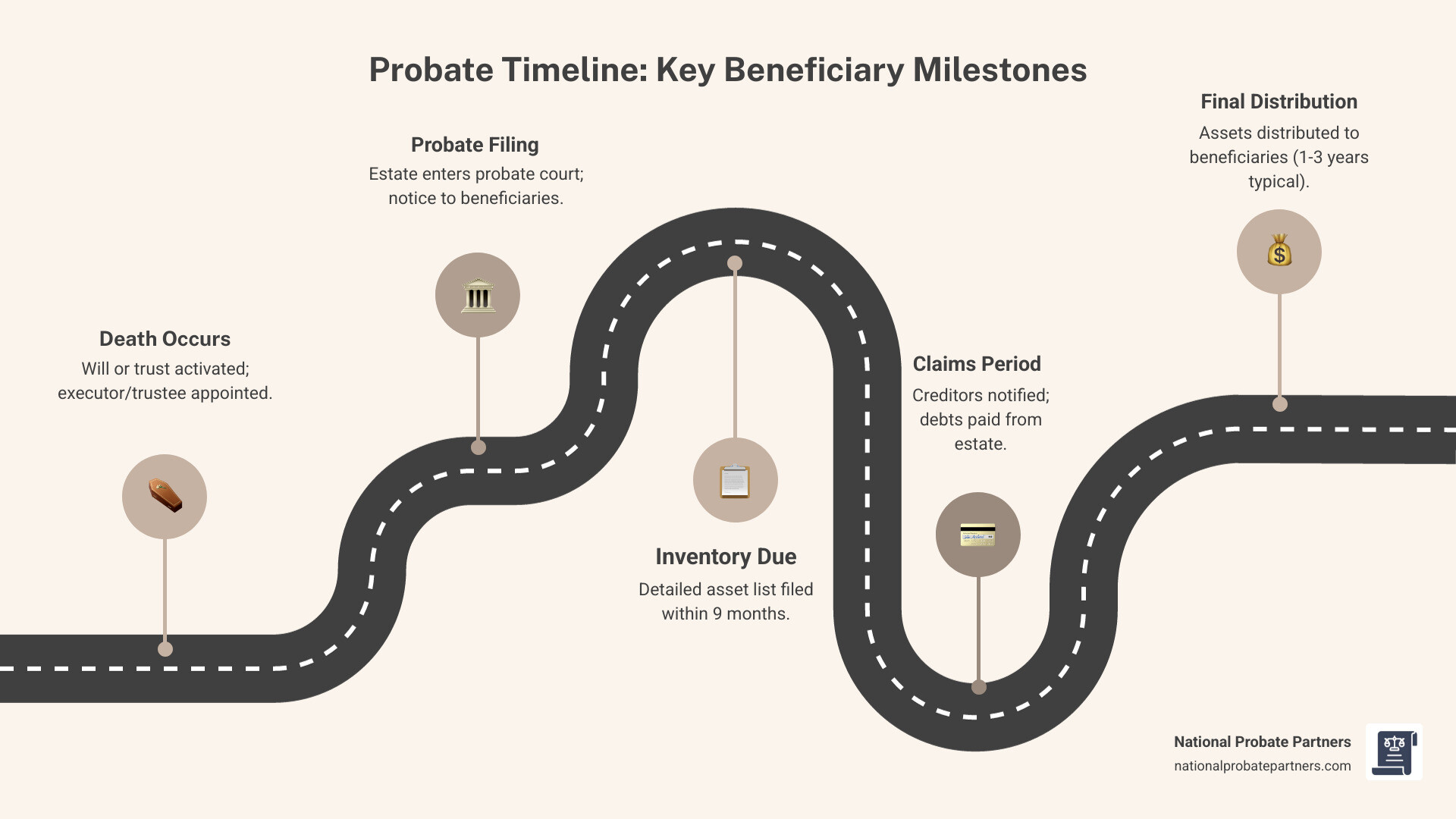
You cannot protect your rights if you don’t know what is in the estate. In many jurisdictions, such as New York or Texas, an executor is required to provide an inventory of assets within a specific timeframe—often nine months after their appointment.
If the executor refuses to show you the numbers, we can file a petition for a judicial accounting. This forces the executor to provide a detailed report of every penny that came in and every penny that went out. We can even request “vouchers” (receipts and bank statements) to prove that the “administrative expenses” they’re claiming are actually legitimate. For more on this, visit our Probate Lawyer FAQ: What You Need to Know When Hiring a Probate Lawyer.
Common Violations and When to Take Legal Action
When should you stop “asking nicely” and start taking legal action? Generally, if you’ve been met with silence or hostility for more than six months, it’s time to consult a beneficiary rights lawyer.
Common violations that require legal intervention include:
- Unreasonable Delays: While probate takes time, waiting three or four years for a simple distribution without a valid reason (like a complex tax audit) is often unacceptable.
- Lack of Communication: You are legally entitled to know the status of the probate or trust administration.
- Fraudulent Transfers: Finding out that assets were “gifted” to a caregiver or a specific family member just before death under suspicious circumstances.
If the will itself seems “off,” you may need to look into Is That Will Valid? Exploring the Grounds for a Contest.
Signs Your Rights Are Being Violated
Keep an eye out for these specific behaviors:
- The “HIPAA” Shield: The executor claims they can’t tell you anything because of “privacy laws.” While HIPAA is real, it shouldn’t be used to hide the financial status of an estate from its beneficiaries.
- Hostility: If the trustee treats your basic questions like an attack, they may be hiding something.
- Withheld Distributions: Using your inheritance as a “carrot” to force you to sign a release or agree to unfair terms.
The Process for Contesting a Will or Trust
Contesting a will isn’t just about being unhappy with your share; you must have legal grounds. The most common are:
- Undue Influence: Someone coerced or manipulated the deceased into changing their will.
- Lack of Capacity: The deceased didn’t understand what they were signing due to dementia or other illness.
- Improper Execution: The document wasn’t signed or witnessed according to state law.
In states like Arizona, you might file a “Notice of Objection” to stop the probate process until these issues are resolved. For a comprehensive list of what to expect, see The Ultimate Probate Lawyer FAQ 2025 Edition – National Probate Partners.
Remedies and Legal Recourse for Beneficiaries
If your rights have been violated, the law provides several powerful remedies.
| Feature | Mediation | Litigation |
|---|---|---|
| Control | Parties decide the outcome | Judge decides the outcome |
| Cost | Generally lower | Can be high |
| Speed | Faster (weeks/months) | Slower (months/years) |
| Privacy | Confidential | Public record |
| Relationship | Aims to preserve family ties | Often adversarial |
Forcing the Removal of an Unfit Trustee
You don’t have to sit idly by while an unfit trustee drains the estate. We can petition the court to remove them if we can prove:
- A serious breach of fiduciary duty.
- Insolvency or financial irresponsibility.
- Hostility toward beneficiaries that interferes with the administration.
In some cases, the court may appoint an Estate Trustee During Litigation (ETDL). This is a neutral professional who manages the assets while the legal battle continues, ensuring no more money is wasted.
Seeking Help from a Beneficiary Rights Lawyer Early
Wait too long, and the money might be gone. Statutes of limitations vary by state, but in probate, they can be incredibly short. Acting early allows us to preserve evidence, interview witnesses while their memories are fresh, and potentially resolve the issue through negotiation or mediation before things get expensive.
Many people worry about the cost of hiring a lawyer. However, in some cases involving clear misconduct, we can seek “cost awards” where the court orders the bad-acting executor to pay your legal fees. To explore your options near you, check Inheritance Attorney Near Me: Unlocking Your Best Legal Options.
Frequently Asked Questions about Beneficiary Rights
How long does it take to receive an inheritance?
In Texas and Arizona, a “reasonable” timeframe for a standard estate is typically 1 to 3 years. This allows time for the “creditor period” (where people the deceased owed money to can make claims), tax filings, and asset liquidation. If it’s been longer than two years and you haven’t received a clear update, it’s time to ask questions.
Can an executor withhold funds if I refuse to sign a release?
This is a tricky one. An executor can ask you to sign a release to protect themselves from future lawsuits before they hand over the check. However, they cannot use the inheritance as “ransom.” If you refuse to sign because you think the accounting is wrong, the executor must “pass their accounts” through the court to get a judge’s approval for the distribution.
What happens if a beneficiary is uncooperative?
If one beneficiary is blocking a sale of a house or refusing to respond to any mail, the executor can petition the court for “directions.” This might result in a court-ordered partition and sale of property. Uncooperative beneficiaries should be careful—if their delays cost the estate money, the court might deduct those costs directly from their share of the inheritance.
Conclusion

At National Probate Partners, we believe that your loved one’s legacy deserves to be protected. Whether you are in Scottsdale, Corpus Christi, or serving overseas in the Armed Forces, you deserve an advocate who understands the emotional and financial stakes of estate disputes.
With over 100 years of combined experience, our team provides nationwide probate solutions that prioritize transparency and fairness. Don’t let an uncooperative executor or a complex trust document stand between you and your rightful inheritance.
Secure your inheritance with a specialized probate lawyer today and ensure that your family’s legacy is preserved for the next generation.