
Understanding Your Legal Support During Estate Settlement
A probate and trust administration lawyer guides executors, trustees, and families through the complex legal processes of settling an estate, whether through court-supervised probate or private trust administration.
What a Probate and Trust Administration Lawyer Does:
- Guides executors through probate court proceedings, including filing documents and distributing assets
- Assists trustees in administering trusts according to the grantor’s wishes while avoiding personal liability
- Protects fiduciaries from costly mistakes, creditor claims, and beneficiary disputes
- Manages legal complexities like multi-state property and tax filings
- Resolves conflicts between heirs, beneficiaries, and creditors
Losing a loved one is devastating, and the immediate legal responsibilities can feel overwhelming. Newly appointed executors and trustees often feel fear and doubt as they face managing assets, dealing with creditors, and filing tax returns—all while grieving.
The stakes are high. A personal representative may be liable for mismanagement of a probate estate, and mistakes in trust administration can lead to beneficiary lawsuits. Even simple estates can have complications like out-of-state property or family disputes.
That’s where specialized legal help is essential. While some small estates can be handled without an attorney, probate and trust administration lawyers bring expertise that protects you from personal liability, prevents costly errors, and ensures the estate is settled efficiently.
The average cost of probate can be 3% to 10% of the estate’s value, with legal fees being a significant part. However, hiring an experienced lawyer often saves money by avoiding mistakes, managing creditor claims, and streamlining the process.
Whether you’re an executor or a trustee, understanding when to seek professional help can mean the difference between a smooth settlement and a legal nightmare.
Understanding the Landscape: Probate vs. Trust Administration
When a loved one passes away, their assets must be legally transferred to heirs. This process typically falls into two categories: probate or trust administration.
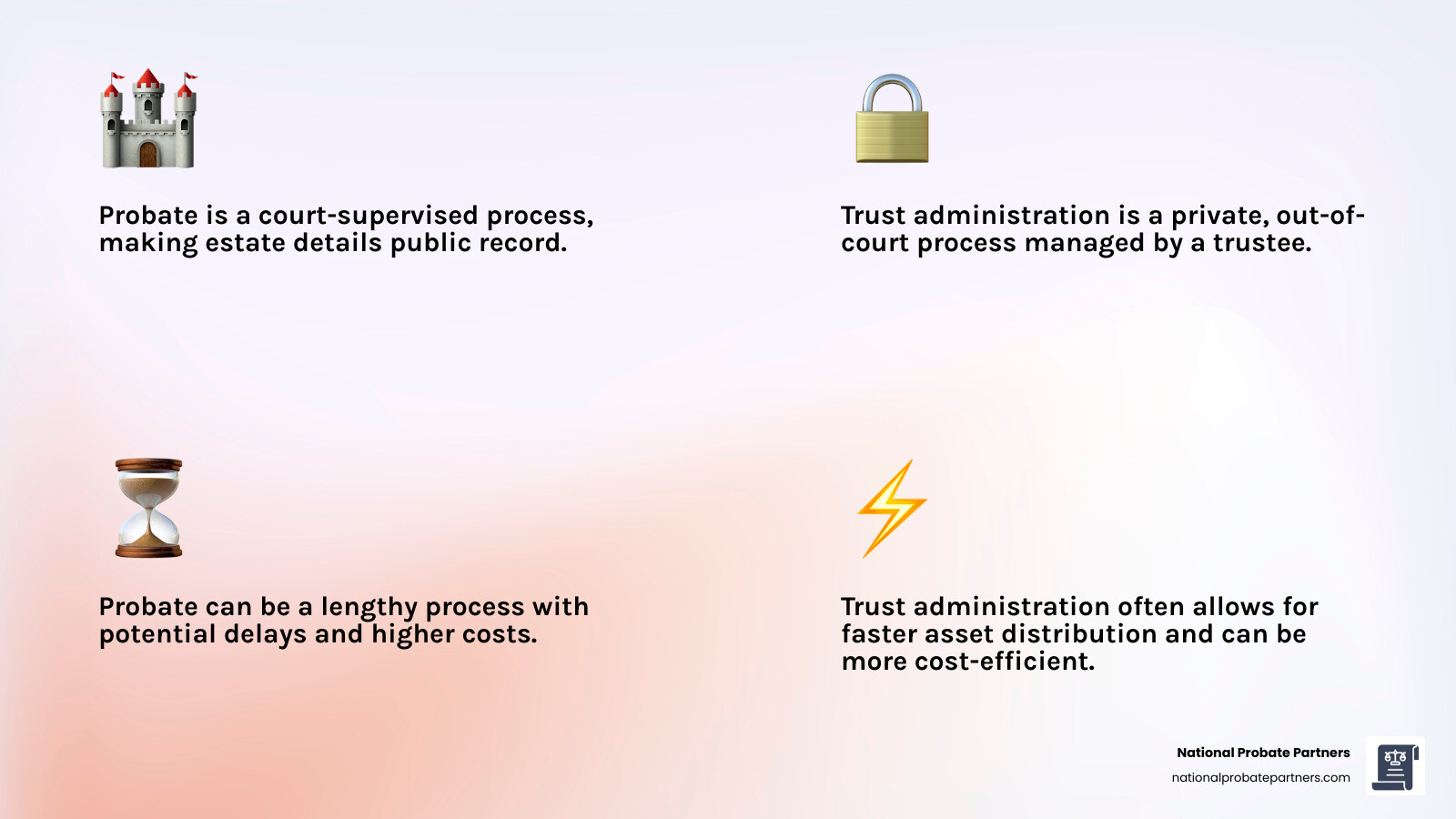
Probate is the court-supervised process of validating a will, inventorying property, paying debts and taxes, and distributing the remaining assets to beneficiaries. It is a public process, meaning court filings are generally accessible to the public.
Trust administration is a private process. If the deceased created a trust, the assets within it are managed and distributed by a named trustee outside of direct court supervision, following the instructions in the trust document.
The core difference is court involvement and privacy. Probate is public and court-driven, while trust administration is private and managed by the trustee. This distinction impacts the timeline, cost, and complexity of settling an estate.
| Feature | Probate Administration | Trust Administration |
|---|---|---|
| Court Involvement | Mandatory for probate assets | Generally minimal or none |
| Privacy | Public record | Private |
| Timeline | Can be lengthy (months to years) | Generally faster |
| Cost | Often higher (court fees, attorney fees, executor fees) | Typically lower, but depends on complexity |
| Asset Types | Solely owned assets, assets without beneficiary | Assets formally transferred into the trust |
What are Probate and Non-Probate Assets?
Understanding this distinction is crucial.
Probate assets are owned solely by the deceased without a designated beneficiary or automatic transfer mechanism. They require court involvement to transfer ownership. Examples include:
- Real estate held solely in the deceased’s name.
- Bank or investment accounts held solely in the deceased’s name without a “payable on death” (POD) designation.
- Personal property like jewelry, art, or vehicles.
Non-probate assets transfer directly to a beneficiary or co-owner upon death, bypassing probate. Examples include:
- Joint tenancy with right of survivorship: The surviving owner automatically inherits the property.
- Beneficiary designations: Life insurance, IRAs, and 401(k)s are paid directly to named beneficiaries.
- Payable-on-Death (POD) or Transfer-on-Death (TOD) accounts: Bank or brokerage accounts transfer automatically.
- Assets held in a trust: Property in a living trust is managed and distributed by the trustee outside of probate.
For more information on navigating these distinctions and understanding how assets are handled, you can explore our resources on More info about avoiding probate.
When is Probate Necessary and How Can It Be Avoided?
Probate is necessary when a deceased person owns probate assets, especially if they die intestate (without a will) or if a will needs court validation. Even with a will, probate assets require court oversight.
However, probate can often be avoided to save time, reduce costs, and maintain privacy. Key strategies include:
- Estate Planning: Strategically structuring asset ownership and creating legal documents to ensure a smooth transfer.
- Revocable Living Trusts: Transferring assets into a trust removes them from your probate estate.
- Transfer-on-Death (TOD) and Payable-on-Death (POD) Designations: These allow financial accounts to pass directly to beneficiaries without probate.
- Joint Ownership with Right of Survivorship: Titling property in this manner ensures the surviving owner automatically inherits the asset.
- Small Estate Affidavits: Some states offer a simplified process for small estates below a certain value threshold, avoiding full probate.
Consulting a probate and trust administration lawyer is crucial to ensure your planning is legally sound. For general guidance, resources like the Guide to wills, estates, and probate court can be helpful, but laws vary by state.
The Executor’s Role: Navigating the Probate Process

When an estate goes through probate, an executor (or personal representative) is appointed to manage the process. This individual, often named in the will, has a significant responsibility with strict legal obligations.
The executor’s primary fiduciary duty is to act in the best interests of the estate and its beneficiaries. This requires honesty, prudence, and adherence to legal requirements, including numerous court filings and tight legal deadlines. Missing deadlines or filing incorrect documents can lead to delays, extra costs, and personal liability.
Key Steps in Probate and Estate Administration
The probate process, while varying by state, generally follows these key steps:
- Validating the Will: The executor submits the will to the probate court for validation. If there is no will, the court appoints an administrator to distribute assets according to state intestacy laws.
- Inventorying and Valuing Assets: The executor must identify, locate, and create a detailed inventory of all probate assets, often requiring appraisals.
- Notifying Creditors: The executor formally notifies potential creditors, who have a specific period to file claims against the estate.
- Paying Debts and Taxes: Valid debts, funeral expenses, and administrative costs are paid from estate assets. The executor also files the deceased’s final tax returns.
- Distributing Assets to Heirs: After all debts and taxes are settled, the remaining assets are distributed to beneficiaries as directed by the will or state law.
- Closing the Estate: The executor files a final accounting with the court, which then formally closes the estate.
This detailed process is why many executors hire a probate and trust administration lawyer. For general information on the probate process, you can consult resources like Probate Information: Probate & Estate Administration .
Potential Complications in Probate
Probate can present numerous challenges:
- Will Contests: Parties may challenge a will’s validity due to undue influence, lack of capacity, or improper execution, leading to litigation.
- Ancillary Probate: If the deceased owned property in another state (e.g., a Texas resident with a home in Arizona), a separate ancillary probate is required there, adding complexity and cost.
- Insolvent Estates: If debts exceed assets, the estate is insolvent. This requires a specific legal process to pay creditors, often leaving little for beneficiaries.
- Beneficiary Disputes: Disagreements over asset distribution or the executor’s actions can escalate and require mediation or litigation.
- Jurisdiction-Specific Rules: Each state has unique probate laws. For example, states like Nevada, Florida, and New York have different procedures, thresholds, and liability rules. Navigating these varied requirements, especially across states like Texas and Arizona where we serve clients, demands specialized legal knowledge.
An experienced probate and trust administration lawyer can anticipate and resolve these issues, ensuring the estate is settled smoothly.
The Trustee’s Role: Administering a Trust

If your loved one created a trust, you might be named the successor trustee. While trust administration avoids the public probate process, it is a complex task with significant legal duties.
The successor trustee manages the assets held within the trust and distributes them to beneficiaries according to the grantor’s wishes. Like an executor, a trustee has a profound fiduciary responsibility to act with loyalty and care, always prioritizing the beneficiaries’ interests. This role involves careful asset management and transparent beneficiary communication.
Fiduciary Duties and the Risk of Personal Liability
A trustee’s legally binding fiduciary duties include:
- Duty of Loyalty: Acting solely in the beneficiaries’ best interests and avoiding conflicts of interest.
- Duty of Prudence: Managing trust assets with the care a reasonably prudent person would, including making sound investments.
- Duty to Inform and Account: Keeping beneficiaries informed and providing detailed accountings of all transactions.
- Investment Management: Investing trust assets to balance income and growth according to the trust and state law.
- Accounting Requirements: Maintaining meticulous records of all income, expenses, and distributions.
Failure to uphold these duties can lead to significant trustee liability. Mismanagement, improper distributions, or delays can result in lawsuits where the trustee is held personally responsible for losses. The role can be “thankless and dangerous” due to this risk. Many trusts permit trustees to hire legal counsel using trust assets. For insights on specific trust assets, you can listen to A Trustee’s Perspective on Trust-Owned Life Insurance.
How a Lawyer Simplifies Trust Administration
A probate and trust administration lawyer is an invaluable asset for any trustee. We simplify the process by:
- Interpreting Trust Provisions: Helping trustees understand complex trust documents, their powers, and the grantor’s intent.
- Guiding Asset Distribution: Ensuring distributions comply with the trust and state law to prevent errors.
- Ensuring Tax Compliance: Assisting with preparing and filing necessary tax returns to minimize liabilities.
- Limiting Trustee Liability: Providing counsel to help trustees fulfill their duties correctly, reducing their risk of personal liability.
- Handling Beneficiary Complaints: Mediating conflicts and providing legal representation to resolve disputes.
If you’re a trustee, consider the complexities and potential pitfalls. Understanding your legal obligations is critical. You can learn more by visiting How Do I Know If I Need a Probate Lawyer?.
Why You Need an Expert Probate and Trust Administration Lawyer
Settling an estate is fraught with legal complexities, emotional stress, and potential pitfalls. This is why an expert probate and trust administration lawyer is often essential.
The complexity of laws governing estates is immense, with unique statutes and deadlines in each state. An experienced lawyer understands these nuances, preventing costly mistakes. Beyond the legalities, there’s the emotional burden of grief, which makes focusing on administrative tasks difficult. A lawyer handles the legal heavy lifting so you can focus on healing.
Most critically, a lawyer provides error prevention and helps protect beneficiaries. Mistakes can reduce inheritances and expose fiduciaries to personal liability. An attorney ensures compliance, safeguards assets, and protects the interests of all beneficiaries. While the average cost of probate can range from 3% to 10% of the estate’s value, a lawyer’s fee is an investment in cost management, often saving the estate money by streamlining the process and preventing litigation.
Services Provided by a Probate and Trust Administration Lawyer
At National Probate Partners, our probate and trust administration lawyers offer a comprehensive suite of services to guide you through estate settlement:
- Legal Guidance: Clear advice on your duties as an executor or trustee.
- Court Document Preparation and Filing: Preparing all necessary petitions, inventories, and accountings for probate court.
- Asset Inventory and Valuation: Assisting in identifying and valuing all estate assets.
- Creditor Claim Management: Handling the process of notifying creditors and paying valid debts.
- Tax Return Filing: Helping prepare and file final income tax returns and any estate or trust tax returns.
- Dispute Resolution: Mediating disagreements and representing the estate or trust in litigation if needed.
- Final Accounting and Asset Distribution: Overseeing the final accounting and proper distribution of assets.
How a Lawyer Manages Costs and Minimizes Liability
While legal costs are a concern, a probate and trust administration lawyer can manage costs effectively and protect you from far greater financial liabilities.
- Fee Structures: Lawyers may charge flat fees, hourly rates, or statutory fees paid from the estate’s assets. We strive for transparency, ensuring you understand the costs upfront.
- Preventing Costly Mistakes: A lawyer’s expertise prevents errors that can lead to financial penalties or extended court proceedings, which are far more expensive than legal fees.
- Protecting Fiduciaries from Personal Liability: This is a critical role. As a fiduciary, you can be sued for breaching your duty, even unintentionally. We provide the counsel needed to fulfill your duties correctly, shielding you from such liabilities.
- Efficient Process Management: Our experience streamlines the probate or trust administration process, reducing delays and associated administrative costs for a less stressful experience.
Understanding the costs involved is important. We encourage you to learn more about how legal fees are structured in estate matters by visiting How Much Does a Probate Lawyer Cost?.
Finding the Right Counsel and Resolving Disputes
Even with the best planning, disputes can arise during estate and trust administration. These conflicts can be emotionally charged and legally complex, making the guidance of an experienced probate and trust administration lawyer indispensable.
Common types of disputes we help resolve include:
- Will Validity Challenges: Beneficiaries or heirs may contest a will, claiming it was not properly executed, the deceased lacked mental capacity, or was under undue influence.
- Allegations of Undue Influence: This occurs when someone asserts that the deceased was coerced or manipulated into creating or changing their will or trust.
- Breach of Fiduciary Duty: Beneficiaries might accuse an executor or trustee of mismanaging assets, failing to provide proper accountings, or acting in their own self-interest.
- Interpretation of Will or Trust Language: Ambiguous wording in estate documents can lead to disagreements over how assets should be distributed.
Our team is skilled in both mediation and litigation. We often seek to resolve disputes amicably to preserve family relationships and minimize costs. However, when necessary, we are prepared to represent your interests vigorously in court. For more insights into handling conflicts, refer to Probate Disputes: What You Need to Know From a Probate Lawyer.
Qualifications of a Top Probate and Trust Administration Lawyer
When seeking a probate and trust administration lawyer, look for someone with the right expertise and a proven track record. Here’s what to look for:
- State Bar License: Ensure the attorney is licensed to practice in your relevant state (e.g., Texas or Arizona), as estate laws are state-specific.
- Years of Experience: Look for a lawyer with substantial experience in probate and trust administration. For example, Fellows of The American College of Trust and Estate Counsel (ACTEC) must have more than 10 years of experience.
- ACTEC Fellowship: Membership in ACTEC, a prestigious organization of peer-elected trust and estate lawyers, signifies an outstanding reputation and exceptional skill. You can learn more about this esteemed organization at The American College of Trust and Estate Counsel (ACTEC).
- Client Testimonials and Reputation: Reviews and testimonials can offer valuable insights into a lawyer’s approach and client satisfaction.
- Specialization in Estate Law: Choosing a specialist ensures they have an in-depth understanding of the intricate laws and common challenges.
Choosing the right legal partner can make all the difference. For further guidance on selecting legal counsel, explore Hiring a Probate Lawyer in 2026: What You Need to Know.
Conclusion
The roles of an executor in probate and a trustee in trust administration are distinct yet equally vital. While an executor steers the court-supervised process of distributing a deceased person’s probate assets, a trustee privately manages and distributes assets held within a trust, adhering strictly to the grantor’s wishes. Both roles carry significant legal responsibilities, particularly fiduciary duties, and the potential for personal liability if not handled correctly.
The value of legal expertise from a seasoned probate and trust administration lawyer cannot be overstated. We help reduce stress for grieving families, ensure legal compliance with complex state and federal laws, and play a crucial role in protecting family harmony by resolving disputes efficiently. Our goal is to streamline what can be an overwhelming process, safeguarding assets and ensuring your loved one’s final wishes are honored.
At National Probate Partners, we pride ourselves on providing experienced, personalized, and compassionate service to clients nationwide, with a strong base in Texas and Arizona. Our team is dedicated to resolving complex probate challenges efficiently and helping families plan to avoid future probate issues.
If you find yourself in the position of an executor or trustee, or if you are planning your own estate, you don’t have to steer these complexities alone.
Contact our team of experienced probate lawyers for guidance