
When Family and the Law Collide: What You Need to Know About Guardianship Disputes
A guardianship dispute attorney is a lawyer who represents families, wards, or other interested parties when there is a legal conflict over who should be appointed as guardian — or how an existing guardian is managing their role.
Here’s a quick overview of what a guardianship dispute attorney does:
- Challenges appointments — contests who is named as guardian when family members disagree
- Files removal petitions — seeks to remove a guardian who is abusing their position or failing in their duties
- Disputes accountings — challenges financial reports when mismanagement or exploitation is suspected
- Advocates for the ward — ensures the incapacitated person’s wishes and best interests are heard in court
- Explores alternatives — advises on options like powers of attorney or limited guardianship to avoid full litigation
Guardianship is supposed to protect the people who need it most. But when families disagree — over who should serve as guardian, how a loved one’s finances are being managed, or whether guardianship is even necessary — what starts as a care decision can quickly become a full-blown legal battle.
This happens more often than most people expect. Approximately 1.3 million adults in the United States are currently under guardianship or conservatorship. Studies suggest that up to 10% of those cases involve some form of dispute or litigation.
The stakes are real. We’re talking about where someone lives, who makes their medical decisions, and who controls their money. When those decisions are contested, the emotional and financial toll on families can be enormous — and the consequences for the person at the center of it all can be life-altering.
This guide explains exactly how guardianship disputes work, what drives them, and how the right legal support can make a critical difference.
Quick Guardianship dispute attorney definitions:
What is a Guardianship Dispute and Why Does It Arise?
At its core, a guardianship dispute is a legal battle over the personal and financial autonomy of an individual who is alleged to lack the capacity to make their own decisions. When a court steps in to appoint a guardian, it is taking away some or all of that person’s fundamental civil liberties and handing them to someone else.
Because the stakes are so high, these proceedings can trigger intense family conflict. Disputes typically arise in a few common scenarios:
- The Question of Capacity: The individual (often an aging parent or a family member recovering from a traumatic event) insists they can take care of themselves, while their family believes otherwise.
- Sibling Rivalry and Control: Multiple children or relatives step forward, each claiming that they are the only one qualified to make decisions.
- Suspected Elder Abuse or Exploitation: Family members suspect that a caregiver, neighbor, or even another relative is taking advantage of their loved one’s vulnerability.
When these situations escalate, they move out of the living room and into the courtroom. This is where the guidance of an experienced legal team is crucial. If you are trying to understand how these dynamics unfold under the law, our Elder Law and Guardianship Guide provides an excellent foundation.
Common Causes of Contested Guardianship
While every family dynamic is unique, the triggers that turn a standard guardianship application into a contested legal battle are surprisingly consistent.
- Family Disagreements Over Care: One sibling might believe Mom belongs in an assisted living facility in Scottsdale, while another insists she should remain in her Corpus Christi home with 24/7 private care.
- Accounting and Financial Issues: Money is a frequent catalyst for litigation. When a guardian or conservator fails to provide clear, transparent financial reports, other family members may suspect financial exploitation.
- Petitions for Removal: If an active guardian is neglecting their duties, isolating the ward, or mismanaging assets, family members may file a petition to have them removed.
- Sudden Capacity Changes: A sudden medical event, such as a stroke or advanced cognitive decline, can catch a family off guard. Without prior planning, the rush to secure legal decision-making authority often sparks a race to the courthouse.
For those navigating these complex dynamics in Texas, understanding state-specific requirements is essential. Our article on Navigating Elder Guardianship in Texas: A Compass for Caregivers offers highly relevant insights into how Texas probate courts evaluate these sensitive family disputes.
Guardianship vs. Conservatorship: Key Differences in Litigation
The terminology surrounding these legal concepts can be incredibly confusing, and the vocabulary changes depending on where the legal battle is taking place. In many states, “guardianship” and “conservatorship” are treated as two distinct roles, whereas in others, they are combined under the umbrella of guardianship.
For example:
- In Arizona: The law draws a clear line. A guardian is appointed to make personal and medical decisions (where the person lives, healthcare, daily care). A conservator is appointed to manage the person’s estate, assets, and financial affairs.
- In Texas: The state uses “guardianship” for both roles but splits them into Guardianship of the Person (medical and lifestyle decisions) and Guardianship of the Estate (financial management).
Understanding these regional definitions is crucial because a dispute might only involve one side of the equation. A family might agree on who should manage Dad’s medical care but fight bitterly over who should control his bank accounts.
| Legal Role | Primary Responsibilities | Common Litigated Disputes |
|---|---|---|
| Guardianship (of the Person) | Living arrangements, medical decisions, daily care, education, and general welfare. | Visitation rights, choice of care facility, medical treatment choices, isolation of the ward. |
| Conservatorship (of the Estate) | Managing bank accounts, selling real estate, paying bills, investing assets, and tax filings. | Unapproved spending, failure to file annual accountings, conflicts of interest, selling family homes against the ward’s wishes. |
Understanding the Legal Distinctions
When litigation begins, the court evaluates the specific needs of the ward. If a person can still manage their own money but can no longer safely drive or manage their medications, the court may only appoint a guardian of the person.
Conversely, if an individual has severe dementia but owns a complex business portfolio, a conservator of the estate is vital to prevent financial ruin. If you are facing a dispute in Arizona, working with specialized counsel who understands these distinctions is highly recommended to protect your loved one’s rights.
Legal Standards, Alternatives, and the Role of a Guardianship Dispute Attorney

Courts do not hand over a person’s rights lightly. Because establishing a guardianship or conservatorship strips away fundamental liberties, judges treat it as a remedy of last resort. The legal standard is incredibly high: the petitioner must prove by clear and convincing evidence that the individual is incapacitated and that no less restrictive alternative can sufficiently protect them.
Before a judge signs an order, they will ask a critical question: Could this have been handled without a court-ordered guardianship?
Least Restrictive Alternatives Considered by Courts
A skilled guardianship dispute attorney will always evaluate whether a less intrusive legal tool can resolve the issue. Some of the most common alternatives include:
- Durable Financial Power of Attorney (POA): A document signed when the individual had capacity, authorizing a trusted agent to handle financial matters.
- Medical Power of Attorney / Healthcare Surrogate: Designates someone to make healthcare decisions if the individual becomes incapacitated.
- Supported Decision-Making Agreements: A formal framework where the individual retains their decision-making rights but utilizes a trusted team to help them understand and make choices.
- Limited Guardianship: Instead of granting a guardian total control (plenary guardianship), the court only grants authority over specific, limited areas of life.
If these documents exist and are valid, a court will often dismiss a guardianship petition entirely. However, these documents are frequently challenged during litigation. One party might argue that Mom was already suffering from cognitive decline when she signed a new Power of Attorney, rendering it invalid due to lack of capacity or undue influence.
Finding the right legal advocate to guide you through these complex validity challenges is crucial. For practical advice on selecting an advocate, see our guide on 5 Smart Ways to Find a Guardianship Attorney You’ll Wish You Knew Sooner.
How a Guardianship Dispute Attorney Protects the Ward’s Best Interests
In any contested proceeding, the court’s primary objective is to safeguard the ward. However, family members often get so caught up in their personal conflicts that they lose sight of what the ward actually wants and needs.
A guardianship dispute attorney acts as a vital shield. They ensure that:
- The ward’s voice and preferences are not drowned out by shouting family members.
- Any medical evaluations used to determine capacity are thorough, objective, and conducted by qualified professionals.
- The proposed guardian is genuinely qualified and does not have a conflict of interest.
- The legal process is not being weaponized by a family member seeking financial control.
The Guardianship Litigation Process and Court Evaluations
If a guardianship petition is contested, the case proceeds to litigation. This is not a simple administrative meeting; it is a formal court process that involves strict evidentiary rules, witness testimonies, and judicial evaluation.
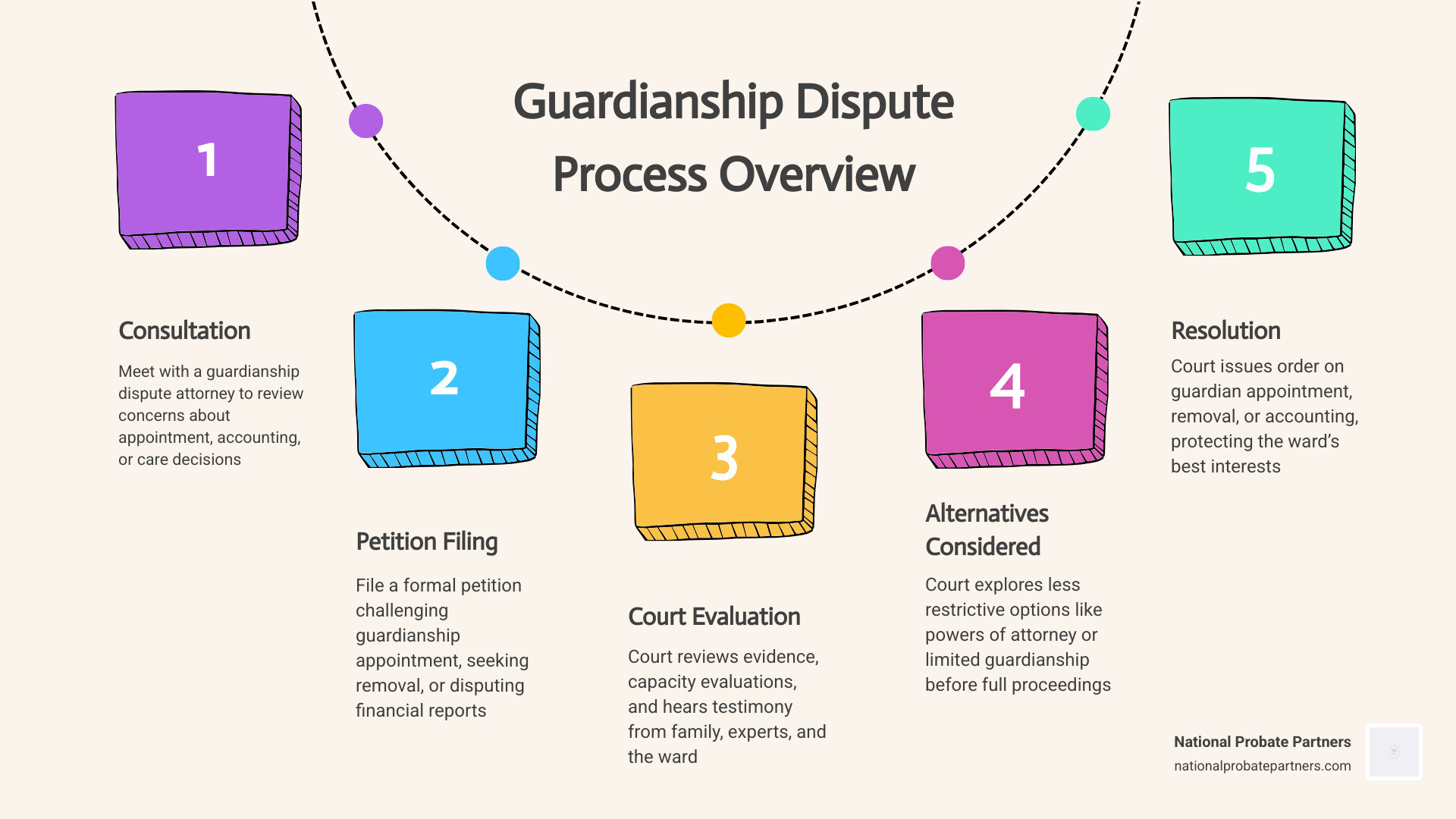
The process generally follows these steps:
- The Filing of the Petition: An interested party files a petition alleging incapacity and requesting the appointment of a guardian or conservator.
- Notice and Court-Appointed Professionals: The court appoints an independent investigator (often called a Guardian Ad Litem or Court Investigator) to interview the alleged incapacitated person, review their living conditions, and submit a report to the court.
- The Capacity Evaluation: Medical professionals, such as geriatric psychiatrists or psychologists, conduct formal evaluations to determine the individual’s cognitive and functional abilities.
- Discovery and Depositions: Opposing attorneys gather evidence, request financial records, and interview family members under oath.
- The Evidentiary Hearing: Both sides present their arguments, cross-examine witnesses, and introduce expert medical testimony before a judge, who then makes the final determination.
Types of Guardianship Litigation
Guardianship litigation isn’t always about establishing a new guardianship. It can take several different forms depending on the stage of the case:
- Challenges to Appointments: Contesting who should be named as the guardian.
- Removal Petitions: Asking the court to strip an existing guardian of their powers due to neglect, abuse, or financial mismanagement.
- Accounting Disputes: Demanding a detailed audit of how a conservator has spent the ward’s money.
- Visitation and Care Conflicts: Litigating when a guardian unfairly prevents family members from visiting or communicating with the ward.
For families in Texas, working with a local attorney who knows the local probate courts can make a massive difference in navigating these complex requirements.
Factors Courts Evaluate for Guardian Selection
If the court determines that guardianship is indeed necessary, it must then decide who should fill the role. Judges do not simply pick the person who filed the petition first. Instead, they carefully weigh several factors:
- The Ward’s Expressed Wishes: If the ward has a clear preference, the court will heavily weigh it, provided the ward has the capacity to express it.
- Pre-Need Designations: Did the ward formally name a preferred guardian in their estate planning documents before they lost capacity?
- Family Relationships: Courts generally prefer close family members (spouses, adult children, siblings) over professional fiduciaries, provided those family members are qualified and harmonious.
- Qualifications and Character: The court will look at the proposed guardian’s financial stability, criminal history, and overall ability to manage the ward’s care.
If the dispute involves a minor child, the legal standards and guardian selection criteria shift to focus entirely on parental fitness and the child’s long-term stability. For a detailed breakdown of these specific situations, refer to our Guardianship for Children Attorney Corpus Christi Guide.
Additionally, if your family has ties to the military, specific federal resources and programs may assist with legal matters. Service members and their families can access support through Legal Assistance for Service Members and Families or contact the Navy Judge Advocate General’s Corps via Legal Assistance — – jag.navy.mil.
Fiduciary Duties, Breaches, and Preventing Disputes
Once a guardian or conservator is appointed, their job has only just begun. They are bound by strict fiduciary duties—the highest standard of care recognized under the law.
A fiduciary must always act in the absolute best interests of the ward, completely setting aside their own personal or financial interests.
Fiduciary Obligations of a Guardian
A guardian’s core duties include:
- The Duty of Loyalty: Acting solely for the benefit of the ward, avoiding any self-dealing or conflicts of interest.
- Meticulous Record-Keeping: Keeping every receipt, bank statement, and invoice.
- Annual Reporting: Filing annual personal status reports and detailed financial accountings with the probate court.
- Encouraging Independence: Allowing the ward to make as many of their own decisions as their capacity safely permits.
When a guardian breaches these duties—such as using the ward’s funds to pay for personal expenses or failing to provide adequate medical care—they can be held personally liable. The court can order them to return the funds, remove them from their role, and in severe cases, refer the matter for criminal prosecution.
To understand the broader implications of family decision-making and what happens when clear boundaries aren’t established, read our guide: Who Gets the Kids and the Cash If You Can’t Decide?.
Proactive Planning and Pre-Need Designations
The absolute best way to resolve a guardianship dispute is to prevent it from ever happening in the first place. Proactive estate planning allows you to dictate who will care for you and your assets if you ever lose capacity, completely bypassing the need for a contested court battle.
By establishing a robust estate plan that includes Pre-Need Guardian Designations, Durable Powers of Attorney, and Living Trusts, you leave no room for family interpretation or sibling rivalry. You make the decisions, so your family doesn’t have to fight over them later.
When selecting a firm to help you draft these crucial preventive documents, making an informed choice is paramount. Our resource on Guardianship Law Firm Selection: Don’t Leave Your Legacy to Chance can help you find a qualified partner to secure your future.
Frequently Asked Questions about Guardianship Disputes
What is the difference between limited and plenary guardianship?
A limited guardianship restricts the guardian’s authority to specific areas of the ward’s life (such as managing medical care or choosing a residence) while allowing the ward to retain other rights, such as voting or marrying. A plenary guardianship grants the guardian complete, unrestricted authority over all personal and financial decisions because the ward is found to be entirely unable to care for themselves.
How can a family member challenge a guardian’s actions?
If you believe an active guardian is breaching their duties, you can file a formal petition with the probate court requesting an accounting audit, a limitation of their powers, or their complete removal. The court will review the evidence, and if a breach of fiduciary duty is found, the judge can remove the guardian and appoint a successor.
When should you hire a guardianship dispute attorney?
You should consult a guardianship dispute attorney immediately if you suspect a loved one is being financially exploited, if a family member has filed a guardianship petition that you believe is unnecessary, or if there is active conflict among relatives regarding who should manage an incapacitated person’s care.
Get Legal Help from National Probate Lawyers

Guardianship disputes are among the most emotionally trying and legally complex challenges a family can face. When the autonomy of a loved one is on the line, family disagreements can quickly spiral into costly, painful litigation.
At National Probate Partners, we specialize in helping families navigate these difficult legal waters with clarity, compassion, and unwavering advocacy. Whether you need to establish a protective guardianship, challenge an abusive fiduciary, or secure your own future through proactive estate planning, we are here to help you find a peaceful resolution.
Let us help you protect what matters most. Protect Your Family’s Future with National Probate Partners and schedule a consultation with our experienced legal team today.