
When You Need a Probate Litigation Lawyer: What to Know First
A probate litigation lawyer is a specialized attorney who represents clients in legal disputes over wills, trusts, estates, guardianships, and fiduciary misconduct — stepping in when a loved one’s estate becomes contested territory.
Here’s what a probate litigation lawyer can help you do:
- Contest a will based on undue influence, lack of mental capacity, or fraud
- Remove or sue an executor or trustee who has breached their fiduciary duty
- Recover estate assets that were misappropriated or fraudulently transferred
- Resolve trust disputes over distribution, interpretation, or modifications
- Challenge or defend a guardianship or conservatorship
- Stop elder financial abuse and recover stolen funds
- Appeal unfavorable probate court decisions
The death of a loved one is already one of the hardest experiences a family can face. Add a disputed will, a median-value home, or an executor who isn’t doing their job — and that grief turns into a legal crisis fast.
Estate disputes are more common than most people expect. They range from million-dollar will contests to smaller family conflicts over undue influence or accounting irregularities. And they don’t resolve themselves.
Probate litigation can take anywhere from six months to two or more years, depending on the complexity of the case. The financial and emotional stakes are high for everyone involved.
The good news? Most probate disputes do settle before trial — often through mediation or negotiation. But getting there still requires knowing your rights, understanding the process, and having the right legal advocate in your corner.
This guide walks you through everything you need to know: what probate litigation actually involves, when you need a specialist, how the process works, and how to choose the right attorney for your situation.
Probate litigation lawyer terms to remember:
Understanding Probate Litigation vs. Standard Administration

When we talk about “probate,” most people think of the standard administrative process. Standard probate administration is the court-supervised procedure of authenticating a Last Will and Testament, identifying the deceased person’s assets, paying their final debts, and distributing what remains to the rightful heirs. In an ideal world, this is a procedural “paperwork” exercise.
However, probate litigation is a different animal entirely. It is adversarial, meaning it involves a legal battle between two or more parties. While standard administration focuses on following the instructions in a will, litigation focuses on challenging those instructions or the person carrying them out.
Defining the Legal Conflict
Probate litigation occurs when a dispute arises that the probate court must resolve through a formal legal proceeding. This isn’t just a “disagreement” at the dinner table; it’s a lawsuit filed within the probate system. Whether the issue is the validity of the will itself or the way a trustee is handling money, Probate Disputes: What You Need to Know from a Probate Lawyer is that these conflicts require a lawyer who knows how to fight in a courtroom, not just fill out forms.
| Feature | Standard Probate Administration | Probate Litigation |
|---|---|---|
| Primary Goal | Asset transfer and debt payment | Resolving legal disputes and claims |
| Nature | Procedural and administrative | Adversarial and litigious |
| Timeline | Generally 6–12 months | 6 months to 2+ years |
| Typical Costs | Statutory fees and court costs | Hourly legal fees and expert costs |
| Court Role | Oversight and approval | Fact-finding and adjudication |
When to Consult a Probate Litigation Lawyer
You might be wondering, “Do I really need a litigator, or can my regular probate attorney handle this?” If you suspect unfair disinheritance, or if you believe an executor is “shirking” their duties, you need a specialist. A standard probate lawyer handles the filing of the will and asset gathering. A probate litigation lawyer steps in when someone says, “Wait, that will isn’t valid,” or “The executor is stealing from the estate.”
If you are a beneficiary who isn’t getting information, or an heir who was suddenly cut out of a will while the decedent was in hospice, How Do I Know If I Need a Probate Lawyer? The answer is usually the moment you realize the “peaceful” process has turned into a fight.
Common Grounds for Contesting a Will or Trust

Contesting a will isn’t as simple as being unhappy with your inheritance. You must have “standing” (a financial interest in the outcome) and valid legal grounds. The most frequent reasons we see in April 2026 involve the mental state of the person who signed the document or the influence of those around them. For more details on these scenarios, check out The Ultimate Probate Lawyer FAQ – 2025 Edition.
Identifying Fraud and Forgery
Fraud occurs when the decedent is tricked into signing a document. For example, a caregiver might tell an elderly person they are signing a “medical release” when it is actually a new will. Forgery, on the other hand, involves someone else signing the decedent’s name or altering the text after it was signed.
When assessing Is That Will Valid? Exploring the Grounds for a Contest, we look for technical defects. Did the witnesses actually see the signing? Was the document notarized correctly according to Texas or Arizona law? Even a small technical error can be enough to invalidate a suspicious document.
Elder Financial Abuse and Guardianship Challenges
Sadly, elder financial abuse is a growing segment of probate litigation. This often involves a “vulnerable adult” being pressured by a family member or caregiver to transfer life savings or change beneficiary designations.
Guardianship and conservatorship disputes also fall under this umbrella. We often represent families in Scottsdale or Corpus Christi who need to remove a guardian who has breached their duties or defend an elderly client against an unnecessary guardianship petition. These cases are emotionally charged because they involve the liberty and well-being of a loved one. Probate Disputes: What You Need to Know is that early intervention is key to stopping the “bleeding” of estate assets.
The Probate Litigation Process and Timeline
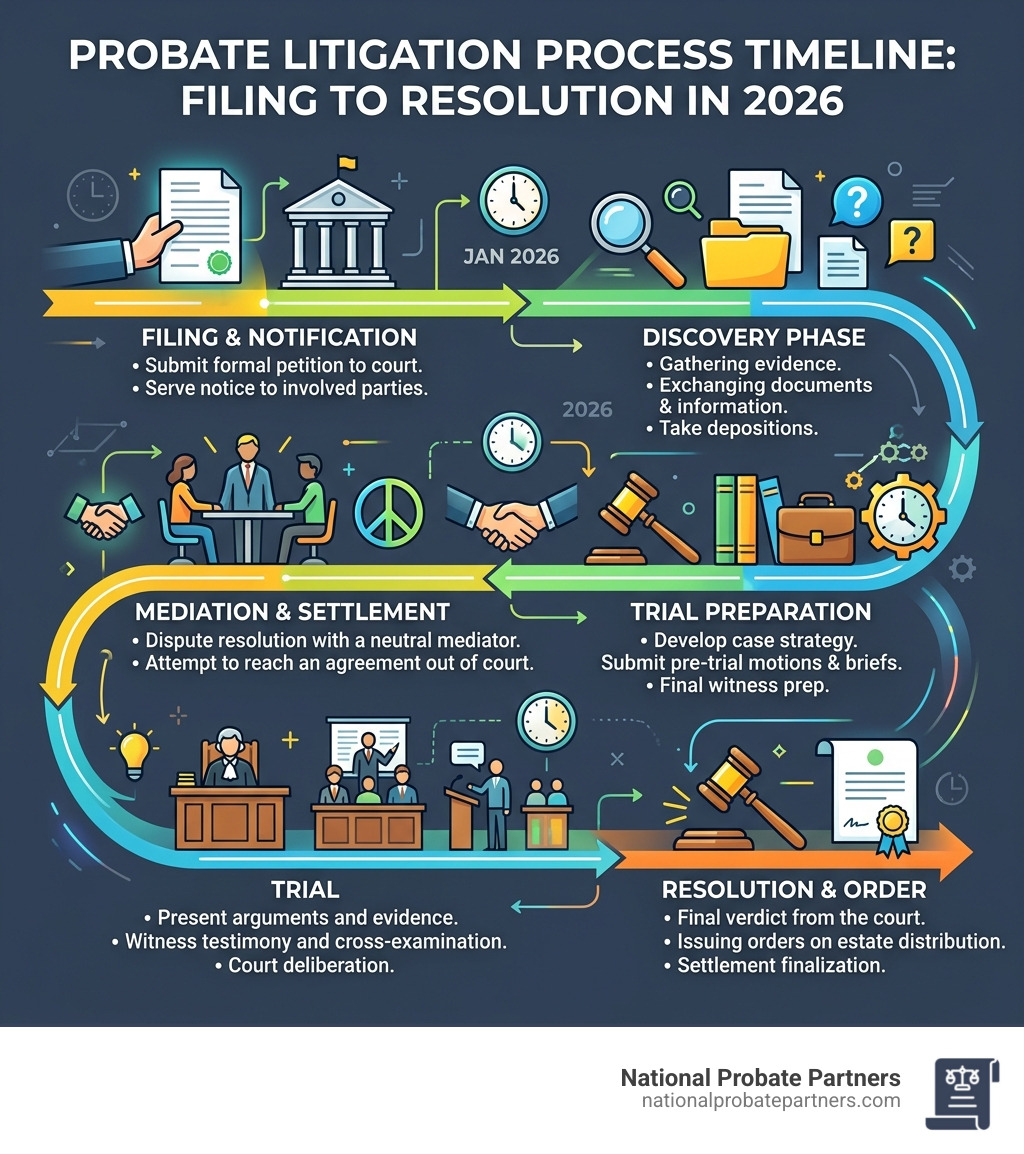
If you decide to move forward, the process follows a specific legal path. It begins with filing a petition or a “caveat” in the probate court (such as the Clark County Court in Nevada or the probate courts in Harris County, Texas). Once the lawsuit is filed, we enter the discovery phase. This is where we gather evidence: medical records, bank statements, and depositions (interviews under oath) from witnesses and family members.
According to Probate Lawyer FAQ: What You Need to Know When Hiring a Probate Lawyer, the timeline is heavily influenced by the court’s calendar and the volume of evidence. A case involving decades of financial records will naturally take longer than a dispute over a single bank account.
Mediation and Out-of-Court Settlements
Not every fight ends in a courtroom. In fact, many courts now require mediation before a trial date is set. Mediation is a confidential process where a neutral third party (often a retired judge or senior probate litigation lawyer) helps the parties reach a compromise.
This is often the preferred route because it allows for “creative” solutions that a judge might not have the power to order. For example, one sibling might keep the family home while the other takes a larger share of the investment accounts. As noted in The Named Beneficiary in a Will: Your Essential Guide, reaching an early settlement can save the estate thousands of dollars in legal fees.
Trial and Appellate Procedures
If mediation fails, we go to trial. This can be a bench trial (where a judge decides) or a jury trial. In some states like Ohio, a will contest might result in a 7-1 or unanimous jury verdict. These trials can last anywhere from a few days to several weeks.
If the judge or jury makes a legal error, the case can be appealed. This adds significant time to the process—sometimes another year or more—but it is a vital safeguard to ensure justice is served. We have seen cases where 80-year-old case law was overturned on appeal to protect a client’s inheritance rights.
Fiduciary Misconduct and Asset Recovery
Executors, trustees, and administrators are “fiduciaries.” This means they have a legal duty to act in the best interest of the beneficiaries, not themselves. When they fail, it’s called a breach of fiduciary duty.
Common breaches include:
- Self-dealing: The executor sells estate property to themselves at a discount.
- Negligence: The trustee fails to invest trust funds, causing them to lose value.
- Commingling: Mixing estate money with their personal bank accounts.
- Failure to Account: Refusing to show beneficiaries where the money is going.
Understanding Understanding Breach of Trust and How to Protect Your Assets is essential for anyone who suspects a “dishonest individual” is at the helm.
Surcharge and Damages
When a breach is proven, the court can issue a “surcharge.” This is a fancy legal term for making the fiduciary pay back the estate out of their own pocket. If a trustee “borrowed” $50,000 for a personal vacation, the court will surcharge them that amount plus interest and potentially the legal fees incurred to catch them.
The Role of the Personal Representative
The personal representative (executor) has a heavy burden. They must adhere to strict timelines, file inventories, and pay creditors in a specific order. If they miss a deadline or ignore a valid creditor claim, they can be held personally liable. The Ultimate Probate Lawyer FAQ – 2025 Edition | National Probate Partners explains that being an executor isn’t just an honor; it’s a job with high accountability.
Choosing the Right Probate Litigation Lawyer for Your Case
Choosing an attorney is the most important decision you’ll make. You don’t want a “generalist” who handles divorces and traffic tickets. You want a specialist who spends their days in probate court.
Evaluating Track Records and Credentials
Look for attorneys with significant courtroom experience. Recognition like “Rising Star” (given to less than 2.5% of lawyers in certain states) or a “Certified Specialist” designation from the State Bar indicates a high level of peer-recognized expertise. We recommend asking, “How many cases similar to mine have you taken to trial?” A lawyer with 30+ years of experience has likely seen your specific situation before and knows the best “proactive legal tactics” to use.
Fee Structures for a Probate Litigation Lawyer
Litigation is expensive, but there are different ways to pay.
- Hourly Rates: You pay for the time spent on the case.
- Flat Fees: Rare in litigation, but sometimes used for specific phases.
- Paid from the Estate: In many jurisdictions, if you are defending the estate or if your actions benefit the estate as a whole, the court may approve your attorney’s fees to be paid out of the estate assets.
Always discuss fee structures openly during your initial consultation. According to Probate Lawyer FAQ: What You Need to Know When Hiring a Probate Lawyer, transparency in billing is a hallmark of a trustworthy firm.
Frequently Asked Questions About Probate Disputes
How long does probate litigation typically take?
As of April 2026, most cases take between six months and two years. Factors that influence this include the number of parties involved, the volume of financial records (discovery), and the court’s current backlog. If the case goes to a full jury trial and then an appeal, it can stretch beyond 30 months.
Can a trust be contested after the grantor dies?
Yes. Just like a will, a trust can be challenged for lack of capacity, undue influence, or fraud. Common trust disputes also involve “instrument interpretation”—where the language is so vague that the trustee and beneficiaries can’t agree on what it means.
Who pays the legal fees in a probate contest?
It depends on the outcome and the state law (e.g., Texas vs. Arizona). Generally, each party pays their own lawyer. However, if a beneficiary successfully sues a trustee for a breach of duty, the court may order the trustee to pay the beneficiary’s legal fees. Conversely, an executor defending a will is usually entitled to have their fees paid by the estate.
Conclusion
Navigating an estate dispute is like walking through a legal maze while carrying a heavy emotional burden. Whether you are in Scottsdale, Arizona, Corpus Christi, Texas, or anywhere else across the United States, you don’t have to do it alone.
At National Probate Partners, we specialize in turning chaos into clarity. We represent trustees, beneficiaries, and heirs with the compassion they deserve and the “vigorous representation” their case requires. From million-dollar will contests to complex fiduciary audits, our goal is to protect your inheritance and your loved one’s legacy.
If you are facing a dispute, don’t wait for the situation to get worse. How to Navigate Complex Estate Disputes with a Litigation Attorney starts with a conversation. Contact us today to schedule a consultation and take the first step toward a resolution.
Helpful Resources for Your Journey: