
Why a Testamentary Trust Attorney Is Essential for Your Estate Plan
A testamentary trust attorney helps you create a legally sound trust inside your will — one that protects your loved ones and controls how your assets are distributed after you die.
Quick answer: What does a testamentary trust attorney do?
- Drafts trust language inside your last will and testament
- Helps you choose the right type of trust for your family’s needs
- Names trustees and sets clear distribution rules for beneficiaries
- Guides your executor and trustee through the probate process
- Protects vulnerable beneficiaries — including minor children, people with disabilities, and spendthrift heirs
A testamentary trust is different from a living trust. It does not exist until you die. It only comes to life after your will passes through probate court. That delay — which can take 6 to 18 months or longer — is one reason getting the legal language right from the start matters so much.
If the trust terms in your will are unclear or improperly drafted, a court may not be able to enforce them. Your beneficiaries could end up with less protection than you intended.
That is a painful outcome for any family to face — especially one already dealing with grief.
Terms related to testamentary trust attorney:
What is a Testamentary Trust and How Does It Work?
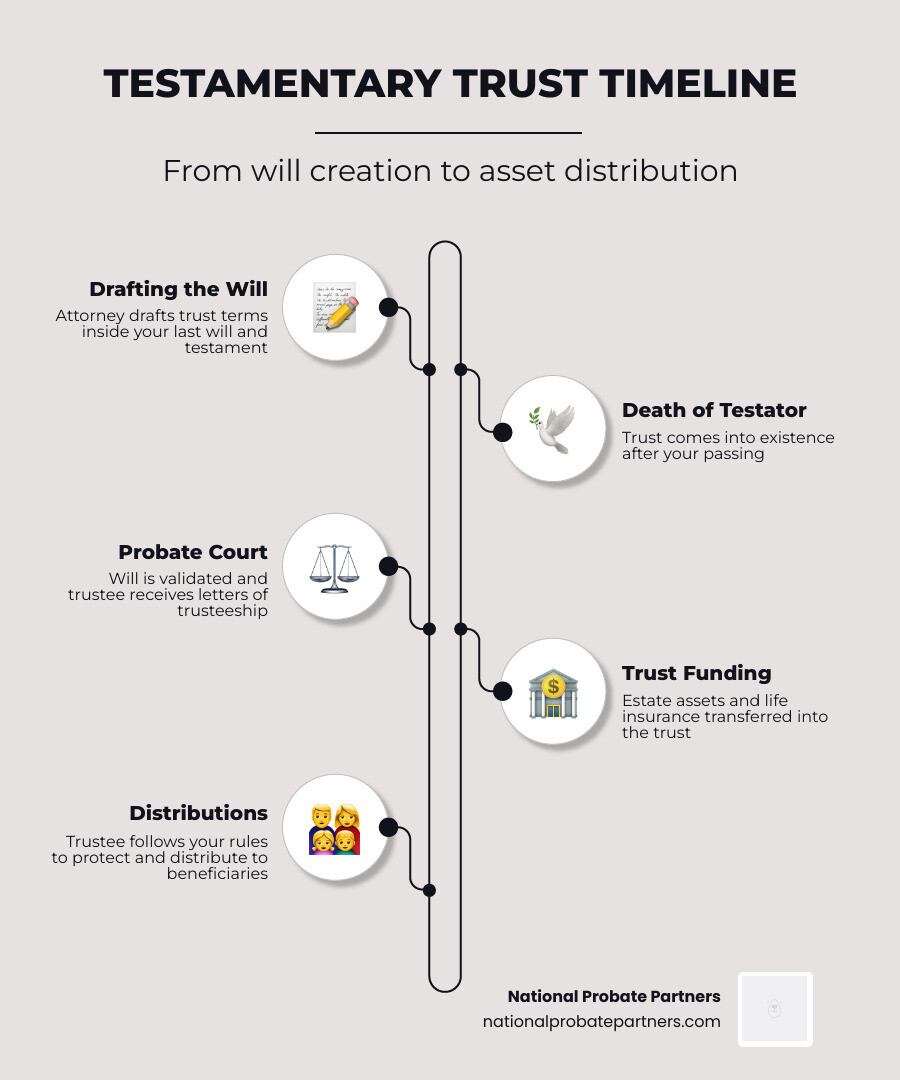
To understand how a testamentary trust works, it helps to look at its timeline. Unlike a living (revocable) trust, which is established and funded while you are still alive, a testamentary trust is written directly into your Last Will and Testament. It remains completely dormant while you are alive. You do not fund it, transfer property to it, or appoint an active trustee during your lifetime.
The moment you pass away, the probate process begins. Your will must be validated by a probate court—such as the court in Scottsdale, Arizona, or Corpus Christi, Texas. Once the court admits the will to probate, the executor coordinates with your chosen trustee to fund the trust using your estate’s assets (like real estate, life insurance payouts, or investment accounts).
Because the trust is created by the will, it officially becomes irrevocable upon your death. From that point forward, the trust terms generally cannot be changed or revoked.
To help you decide which path makes the most sense for your estate planning goals, we have outlined the core differences in the table below:
| Feature | Testamentary Trust | Living (Revocable) Trust |
|---|---|---|
| When is it created? | Upon your death, after your will goes through probate. | During your lifetime, as soon as you sign the trust agreement. |
| When is it funded? | After death, through the probate court process. | During your lifetime (and potentially completed at death). |
| Upfront setup cost | Generally lower, as it is part of your standard will. | Higher, as it requires draft agreements and asset transfers. |
| Does it avoid probate? | No. The will must go through probate to activate the trust. | Yes, for all assets properly transferred into the trust. |
| Privacy level | Public record (once the will is admitted to probate). | Private (does not go through court). |
Understanding these distinctions is crucial. If your primary goal is to bypass the court system entirely, a living trust might be your best route. However, if you want a budget-friendly, highly controlled way to distribute your wealth over time, establishing a testamentary trust through your will is an excellent option. For a deeper look into how these strategies compare, read our guide on Trust vs Probate: What’s the Difference and Why It Matters.
Key Roles: Testator, Trustee, and Beneficiary
A testamentary trust relies on three primary roles to function correctly:
- The Testator (or Grantor): This is you—the person writing the will and outlining how the trust should operate.
- The Trustee: This is the individual, group, or corporate entity you appoint to manage the trust assets after your death. The trustee is bound by a strict fiduciary duty, meaning they must manage the trust’s investments, file tax returns, and make distributions solely in the best interests of your beneficiaries.
- The Beneficiary (or Beneficiaries): These are the loved ones, charities, or even pets who will receive the income or principal from the trust according to your instructions.
Managing these moving parts requires diligence. If you are appointed to step into this management role, we highly recommend reading A Comprehensive Guide to Trust Administration for Every Trustee to understand your legal responsibilities.
Types of Testamentary Trusts
Because a testamentary trust is highly customizable, an experienced testamentary trust attorney can draft it to serve a variety of unique family dynamics:
- Spendthrift Trust: If you worry that a beneficiary might quickly mismanage their inheritance, a spendthrift trust restricts their direct access to the funds. The trustee distributes money gradually, protecting the assets from the beneficiary’s creditors, lawsuits, or divorces.
- Special Needs Trust: This trust is designed to provide financial support to a disabled beneficiary without disqualifying them from essential government programs like Medicaid or Supplemental Security Income (SSI).
- Credit Shelter Trust (Bypass Trust): Often used by married couples to minimize federal estate taxes, this trust allows assets up to the estate tax exemption limit to pass into a trust for the surviving spouse without being taxed upon the second spouse’s death.
- Charitable Trust: You can specify that a portion of your estate goes into a trust to support a favorite charity, providing ongoing financial support over years or decades.
- Pet Trusts: Yes, you can even establish a trust to ensure your beloved pets are housed, fed, and cared for by a designated guardian after you are gone.
Why You Should Hire a Testamentary Trust Attorney to Establish Your Trust
While there are plenty of do-it-yourself estate planning kits online, attempting to draft a testamentary trust without professional guidance is a major risk. A single ambiguous phrase or missing signature can invalidate the entire trust provision, leaving your estate to be distributed according to default state laws.
When you hire a dedicated testamentary trust attorney, they ensure your trust is legally airtight, tailored to your exact family situation, and structured to maximize asset protection. An attorney knows how to write clear, enforceable distribution rules—such as releasing funds only when a child graduates from college or reaches specific age milestones (e.g., ages 25, 30, and 35).
Additionally, a skilled attorney can help structure the trust to minimize tax burdens for your beneficiaries and shield their inheritance from external threats like divorces or bankruptcy. If you are preparing to speak with a professional about your plan, review these 10 Questions Before Hiring a Trust Attorney to make the most of your consultation.
Protecting Minor Children and Special Needs Beneficiaries
Under Texas and Arizona laws, minor children cannot directly inherit significant sums of money or real estate without court-appointed guardianship. If you pass away without a trust, the court will appoint a guardian to manage the funds until your child turns 18—at which point the child receives the entire inheritance in a single lump sum.
A testamentary trust prevents this. By naming a trustee to manage the money, you ensure your children are supported through their formative years without giving an 18-year-old unrestricted access to a large bank account.
Furthermore, if you have a family member with special needs, a direct inheritance could immediately disqualify them from government benefit programs like Medicaid. A testamentary special needs trust allows the trustee to pay for “extra” quality-of-life items (like travel, technology, or specialized therapy) while keeping their government benefits completely intact. This is also a critical planning tool for military families who want to coordinate their benefits with private inheritances. You can learn more about these protections via the Estate Planning Information for the Military.
What to Look for in a Testamentary Trust Attorney

When selecting a lawyer to draft your trust, look for a specialist who focuses exclusively on estate planning and probate law rather than a general practitioner.
Ideally, you want an attorney with recognized credentials, such as membership in the American College of Trust and Estate Counsel (ACTEC) or board certification in estate planning. They should have deep familiarity with the local probate courts in your area (such as Scottsdale, Arizona, or Corpus Christi, Texas) to ensure your will is written to pass through those specific courts as smoothly as possible. For a comprehensive overview of how to select the right legal representative, read our Probate Trust Attorneys Guide.
The Step-by-Step Probate Process for a Testamentary Trust
Because a testamentary trust is built into your will, it must go through the public probate court process before it can be funded. This process typically takes anywhere from 6 to 18 months, depending on the complexity of your estate and the backlog of the local court.
Here is how the transition from a will to an active trust generally unfolds:
- Filing the Will: Following your death, your executor files your Last Will and Testament with the local probate court.
- Court Validation: The court reviews the will to verify its authenticity and officially appoints the executor.
- Appointing the Trustee: The court issues “Letters of Trusteeship,” which formally authorize your chosen trustee to begin managing the trust.
- Valuing the Estate: The executor inventories all your assets, pays off outstanding debts, and files your final tax returns.
- Funding the Trust: Once debts are settled, the remaining assets earmarked for the trust are officially transferred into a new bank or investment account opened in the name of the trust.
- Ongoing Administration: The trustee begins managing the assets and distributing them to your beneficiaries according to the instructions you left in your will.
This journey requires careful legal navigation. To understand how an estate planning professional helps manage these steps, read about Beyond Probate: The Role of a Trust Administration Lawyer.
How a Testamentary Trust Attorney Guides You Through Court Oversight
Because a testamentary trust is born in a probate court, the court may require ongoing check-ins to ensure the trustee is doing their job correctly. Depending on your state’s laws, the trustee may have to submit regular accountings to the court, detailing every dollar earned, spent, or distributed.
A testamentary trust attorney is invaluable during this phase. They will represent your trustee in court, help prepare and file the required legal paperwork, and ensure the trust remains in complete compliance with local laws, saving your family from costly administrative errors.
Funding the Trust and Trustee Responsibilities
Once the court authorizes the trust, the real work of asset management begins. The trustee must consolidate the trust’s assets. This can include transferring real estate titles, moving investment portfolios, or coordinating life insurance policies that name the testamentary trust as the primary beneficiary.
Once funded, the trustee must keep meticulous records. They are responsible for managing investments prudently, filing annual fiduciary tax returns, and keeping the beneficiaries informed. Fiduciaries can refer to The Essential Trust Administration Accounting Handbook for Modern Fiduciaries for a detailed, step-by-step breakdown of how to manage these financial records.
Frequently Asked Questions about Testamentary Trusts
Can a testamentary trust be changed or revoked?
Yes, but only while you are still alive. Because the trust does not exist until your death, you can alter, update, or completely revoke the trust terms at any point during your lifetime by drafting a codicil (amendment) or writing an entirely new Last Will and Testament. However, the moment you pass away, the will becomes final and the trust becomes completely irrevocable.
What are the main disadvantages of a testamentary trust?
The primary disadvantages are:
- The Probate Requirement: Unlike a living trust, a testamentary trust cannot avoid probate. Your assets will be tied up in court for months before the trust can be funded.
- Lack of Privacy: Once your will enters probate, it becomes a matter of public record. Anyone can view the terms of your trust and see exactly what your beneficiaries are inheriting.
- Ongoing Court Fees: If your local court requires regular accounting reviews, the legal and administrative fees can eat into the trust’s assets over time.
How do I choose the right trustee?
Choosing a trustee is one of the most important decisions in the estate planning process. You need someone who is highly organized, financially responsible, and capable of managing family dynamics neutrally.
It is always wise to name at least one successor trustee in case your primary choice is unable or unwilling to serve when the time comes. If your estate is complex, you might also consider appointing a corporate trustee (like a bank or professional trust company) to handle the daily administrative burden.
Conclusion
A testamentary trust is a powerful, highly customizable tool that allows you to protect your family, support your minor children, and control your legacy long after you are gone. While it does not avoid the probate process, it offers a cost-effective way to integrate robust asset protection directly into your Last Will and Testament.
At National Probate Partners, we specialize in helping families throughout Texas and Arizona navigate the complexities of probate, estate administration, and estate planning. Whether you need to draft a new will with built-in trust protections or require guidance administering an existing trust, our compassionate legal team is here to help you every step of the way.
Do not leave your family’s financial security to chance. Contact us at National Probate Partners today to Secure Your Family’s Future Today and gain the peace of mind that comes with a professionally crafted estate plan.