
When a Loved One Can’t Speak for Themselves, a Guardianship Law Firm Becomes Essential
A guardianship law firm specializes in the legal process of appointing a court-supervised guardian to make decisions for someone who can no longer make them on their own. Here’s what you need to know at a glance:
What a guardianship law firm does:
- Prepares and files petitions with the appropriate court
- Represents petitioners, families, or the incapacitated person at hearings
- Guides guardians through ongoing legal duties after appointment
- Handles contested cases, guardian removal, and accountings
- Advises on alternatives like Power of Attorney or conservatorship
Who typically needs one:
- Families of elderly adults with dementia or Alzheimer’s
- Parents of adults with developmental disabilities turning 18
- Hospitals or care facilities seeking legal authority to treat a patient
- Families facing disputes over who should serve as guardian
Few legal situations are more emotionally charged than watching a parent, spouse, or sibling lose the ability to make decisions for themselves. The legal system offers protection through guardianship — but the process is anything but simple.
Courts, filing deadlines, medical evidence, and competing family interests can all pile up fast. That’s exactly where the right legal team makes the difference between a smooth process and a prolonged, painful ordeal.
The stakes are high. Choosing the wrong representation — or none at all — can leave your loved one unprotected or expose you to personal legal liability as a guardian.
Related content about guardianship law firm:
Understanding Guardianship and When It Becomes Necessary
At its core, guardianship is a legal relationship created by a court. It allows one person (the guardian) to make essential life decisions for another person (the ward) who is deemed “incapacitated.” This isn’t a decision the court takes lightly; it essentially involves stripping an adult of their legal rights to provide for their own safety and well-being.
Incapacity is the legal threshold we must meet. It is defined as an individual’s inability to provide for their own food, clothing, or shelter, or to manage their own financial affairs. This often stems from a physical or mental condition. For instance, an elderly parent battling advanced dementia may no longer recognize the need for medical care or may become a victim of financial exploitation. In other cases, a young adult with a developmental disability may be “aging out” of the school system, requiring their parents to seek legal authority to continue making medical and educational decisions once the child turns 18.
Proving incapacity requires clear and convincing medical evidence. This usually involves testimony or written evaluations from physicians or psychologists. The court needs to see that the person is truly a “vulnerable adult” who requires legal intervention.
Sometimes, the need is immediate. If a loved one is in a medical crisis and cannot consent to life-saving treatment, or if they are actively being exploited by a neighbor or “friend,” we can file emergency petitions. These are temporary measures designed to stabilize the situation while a permanent solution is sought. According to the Florida Guardianship Monitoring reports, states with large elderly populations see thousands of these cases annually, emphasizing the critical need for structured legal oversight.
Navigating the Different Types of Guardianship
Not every situation requires the same level of control. A skilled guardianship law firm will help you determine which “size” of guardianship fits your family’s needs. The goal is always to use the “least restrictive alternative” possible.
- Guardian of the Person: This role focuses on the ward’s physical well-being. The guardian decides where the ward lives, what medical treatment they receive, and manages their daily care.
- Guardian of the Estate: This role is strictly financial. The guardian manages the ward’s income, pays bills, handles investments, and protects assets from being wasted or stolen.
- Plenary Guardianship: This is a “full” guardianship where the guardian has authority over both the person and the estate. This is typically reserved for cases where the ward is completely unable to care for themselves.
- Limited Authority: If an individual can still handle some parts of their life—perhaps they can decide where to live but cannot manage a checkbook—the court can grant a limited guardianship. This preserves as much of the ward’s independence as possible.
In Texas, for example, the law is very specific about these distinctions. You can learn more about these nuances in our guide on Navigating Elder Guardianship in Texas: A Compass for Caregivers. Whether you are dealing with minor children who have inherited property or an elderly relative in a state like Florida—which has one of the highest rates of guardianship due to its demographics—understanding these categories is the first step toward protection.
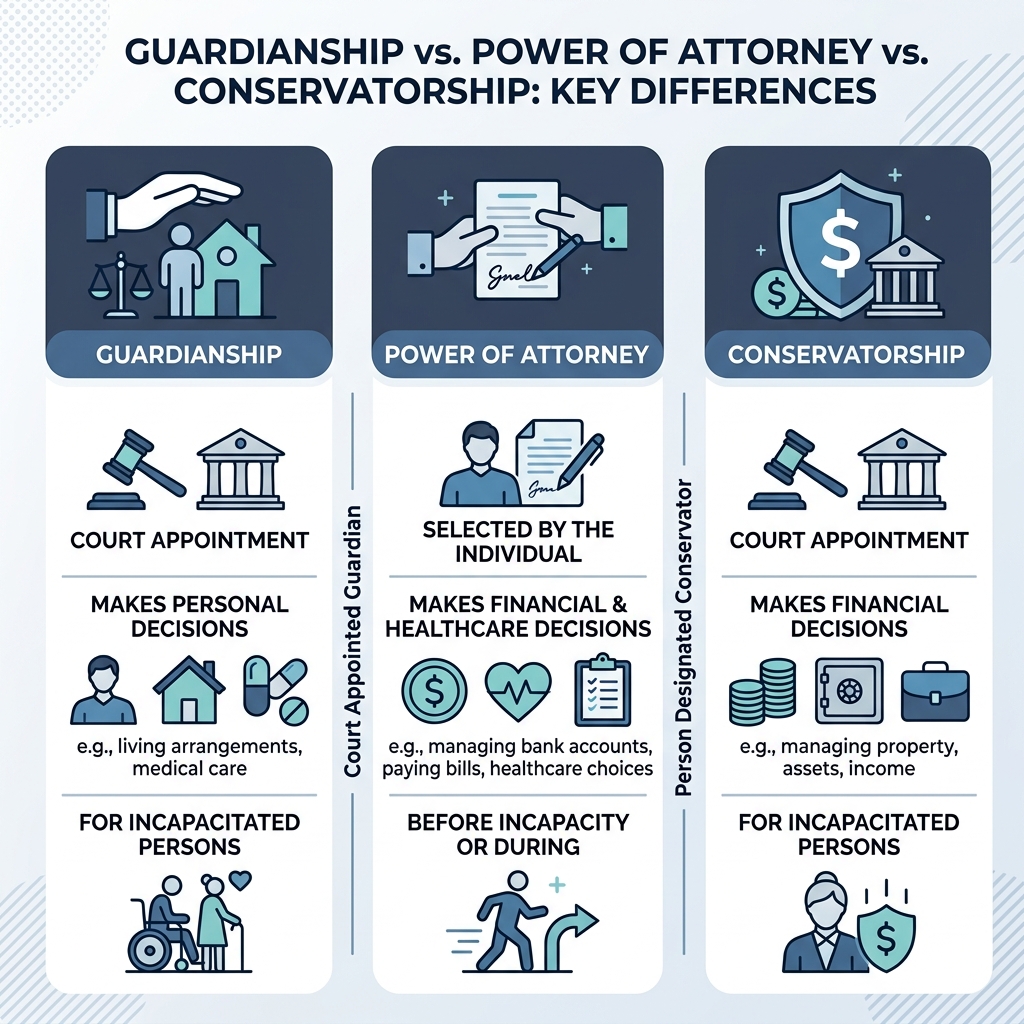
Guardianship vs. Alternatives: Making the Right Choice
Before we ever set foot in a courtroom, we always ask: “Is there a better way?” Guardianship is often considered the “nuclear option” because it is public, expensive, and restrictive. Whenever possible, we look for less restrictive alternatives.
| Feature | Guardianship | Power of Attorney (POA) | Conservatorship |
|---|---|---|---|
| Who Chooses? | The Judge | The Individual (while capable) | The Judge |
| Court Oversight | High (Annual reports) | Low (Private) | High (Financial audits) |
| When it Starts | After incapacity is proven | Can be immediate or “springing” | Upon court order |
| Cost | Expensive (Legal/Court fees) | Low (Document prep) | Moderate to High |
A Durable Power of Attorney or a Patient Advocate Designation (sometimes called a Healthcare Proxy) allows an individual to choose who they trust to handle their affairs before a crisis hits. These are private contracts that stay out of the courtroom. Similarly, a Revocable Living Trust can manage assets seamlessly if the grantor becomes ill.
However, these alternatives only work if the person was of “sound mind” when they signed them. If a loved one already has dementia and never signed a POA, guardianship may be the only path left. Organizations like the National Elder Law Foundation advocate for these advance directives as the gold standard for incapacity planning.
The Legal Process: What to Expect from Your Guardianship Law Firm

If guardianship is necessary, the process begins with a formal petition filed in the county where the proposed ward lives. This is a technical legal document that must detail the person’s condition, their assets, and why a guardian is needed.
Once the petition is filed, the court takes several steps to protect the proposed ward’s rights:
- Court Evaluator/Visitor: The court often appoints a neutral third party to visit the individual, interview family members, and report back to the judge on whether the guardianship is actually needed.
- Guardian ad Litem: In many jurisdictions, the court appoints an attorney to represent the proposed ward’s interests specifically, ensuring their “due process” rights are respected.
- The Hearing: This is essentially a mini-trial. We present medical evidence and testimony to prove incapacity. The judge will then decide if a guardian is needed and, if so, who is best suited to serve.
Why Experience Matters in a Guardianship Law Firm
You shouldn’t hire just any lawyer for this. Guardianship law is a specialized field that blends medical knowledge, probate law, and family litigation. An experienced guardianship law firm provides more than just paperwork; they provide a strategy.
Board certification is a key indicator of expertise. For example, in Texas, very few attorneys are board-certified in Estate Planning and Probate. Working with a firm that holds these credentials—or is recognized by the National Elder Law Foundation—ensures you are getting advice from someone who “eats, sleeps, and breathes” this area of law. We offer more info about guardianship services to help you vet your options.
Selecting a Guardianship Law Firm for Complex Litigation
Not all guardianships are “friendly.” Sometimes, siblings disagree on who should be in charge, or a family member suspects that the current guardian is stealing from the estate.
These cases require a firm with litigation “teeth.” We handle:
- Contested Appointments: When multiple parties petition to be the guardian.
- Challenging Unfit Guardians: Filing motions to remove a guardian who is neglectful or abusive.
- Accountings: Demanding a transparent look at the books when money goes missing.
- Asset Recovery: Suing to bring stolen money or property back into the ward’s estate.
Responsibilities, Challenges, and Ongoing Duties
Winning the court case is just the beginning. Being a guardian is a “fiduciary” role, meaning you are held to the highest legal standard of care. You are not just a “helper”; you are an officer of the court.
Your ongoing duties will include:
- Annual Accountings: You must file a report every year showing every penny that came in and every penny that went out of the ward’s accounts.
- Reports on the Condition of the Ward: The court wants to know where the ward is living and how their health is faring.
- Healthcare Decisions: You will be the one talking to doctors, consenting to surgeries, and managing medications.
- Bond Requirements: Most courts require “estate” guardians to post a bond—a type of insurance policy that protects the ward’s assets if the guardian makes a mistake or commits fraud.
The biggest challenge is often the emotional toll. Balancing the ward’s desire for independence with the need for safety is a constant tightrope walk. Family disputes are also common; a brother might think Mom should stay at home with 24/7 care, while a sister thinks a specialized memory care facility is safer. We provide the post-appointment guidance to help you navigate these hurdles without landing back in hot water with the judge.
Frequently Asked Questions about Guardianship
How long does the guardianship process typically take and what are the associated costs?
A typical, uncontested guardianship takes between 60 to 90 days from the initial filing to the final hearing. However, if the case is contested or if there are delays in getting medical evaluations, it can drag on for six months or more.
Costs vary significantly based on the complexity. You will face court filing fees, fees for the court-appointed evaluator, and attorney fees. In many cases, if the guardianship is granted, the court allows the attorney’s fees to be paid out of the ward’s assets, rather than the petitioner’s pocket.
Who is eligible to serve as a guardian in states like Florida or Texas?
Most states prioritize family members—spouses, adult children, or parents. However, there are strict disqualifiers:
- Felony Convictions: In Florida and Texas, a person with a felony record is generally barred from serving.
- Incapacity: You cannot be a guardian if you are incapacitated yourself.
- Professional Guardians: If no family is available or if the family is too conflicted, the court may appoint a professional guardian or a trust company.
How can a family contest or oppose a guardianship appointment?
If you believe a guardianship is unnecessary—or that the person applying to be the guardian is the wrong choice—you have the right to file a “cross-petition.” You can present your own medical evidence showing the person still has capacity, or you can provide evidence that the petitioner has a conflict of interest (such as a history of borrowing money from the elderly relative).
Conclusion
Navigating guardianship is a heavy lift, but you don’t have to do it alone. At National Probate Partners, we specialize in providing the compassionate, expert guidance families need during their most difficult chapters. Whether you are in Scottsdale, Corpus Christi, or anywhere across the United States, our team is built to resolve complex probate and guardianship challenges efficiently.
We are Texas-based specialists with a nationwide reach, ensuring that your loved one’s legacy and well-being are never left to chance. If you’re feeling overwhelmed by the legal requirements or family dynamics of a potential guardianship, reach out to us.
To help you get started, we’ve put together a guide on 5 Smart Ways to Find a Guardianship Attorney You’ll Wish You Knew Sooner. Let us help you protect what matters most.