
When a Loved One Dies in Texas: What You Need to Know First
Texas probate advice starts with one simple truth: settling an estate here does not have to be as complicated as it sounds — but you do need to know the rules.
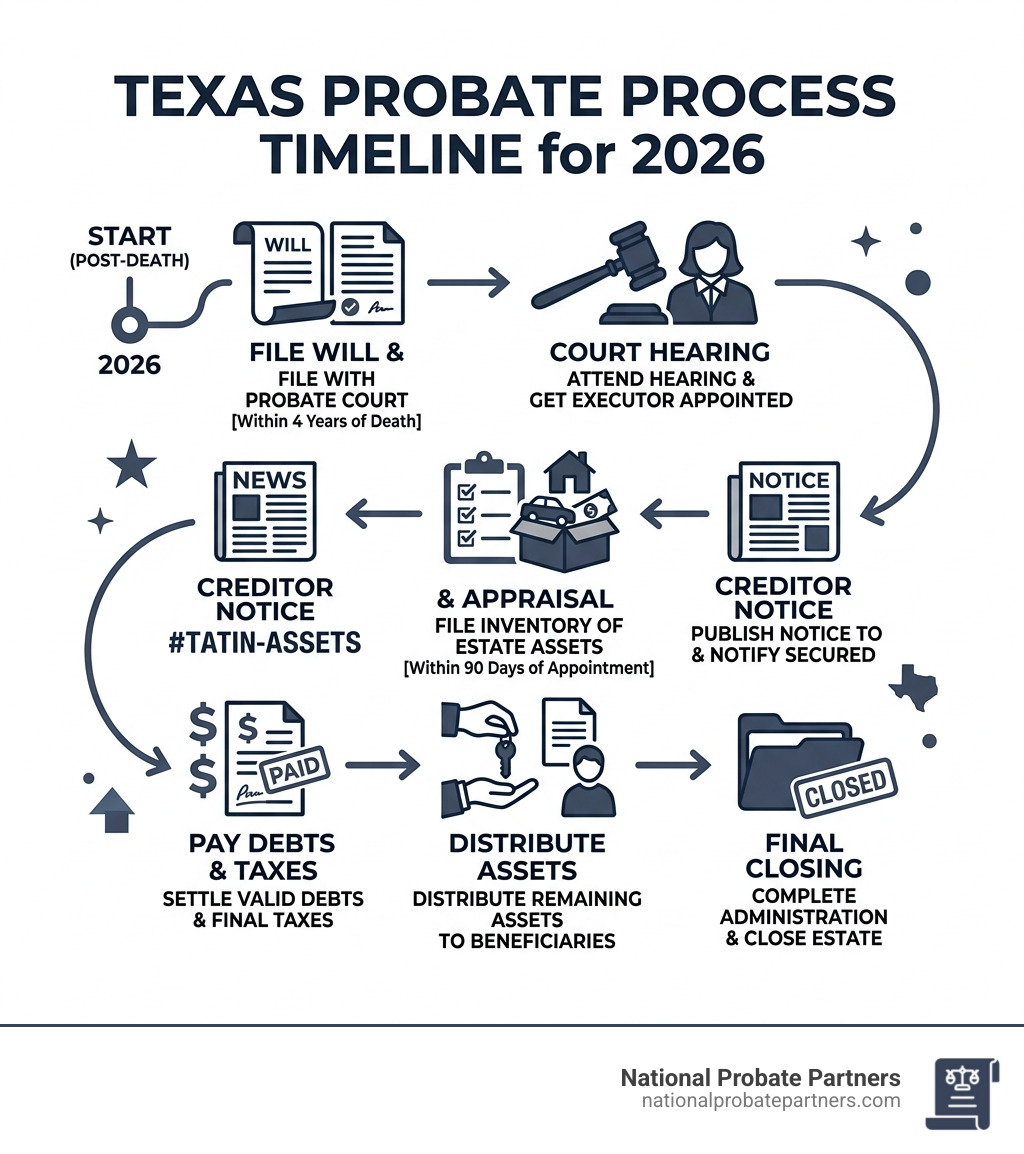
Here is a quick overview of the Texas probate process:
- File the will with the probate court within 4 years of the date of death
- Attend a court hearing to have the will validated and an executor appointed
- Publish notice to creditors and notify secured creditors directly
- File an inventory of all estate assets within 90 days
- Pay valid debts using estate funds
- Distribute remaining assets to beneficiaries per the will or Texas law
Not every estate needs full probate. Small estates under $75,000 (excluding the home) may qualify for a simpler Small Estate Affidavit process.
When a loved one passes away, grief hits hard. Then comes the paperwork. Most families are not prepared for the legal steps that follow a death — and Texas has its own specific rules that can catch people off guard.
Texas probate is governed by the Texas Estates Code, a detailed set of laws covering everything from how a will is validated to how property is split when someone dies without one. The process exists for a clear reason: to make sure debts get paid and assets go to the right people, in the right order, under court supervision.
The good news? Texas actually has one of the more flexible probate systems in the country. With options like independent administration, muniment of title, and simplified affidavit procedures, many estates can be settled without constant court involvement.
But the process still has real deadlines, legal requirements, and potential pitfalls — especially for executors handling an estate for the first time.
This guide walks you through everything you need to know.
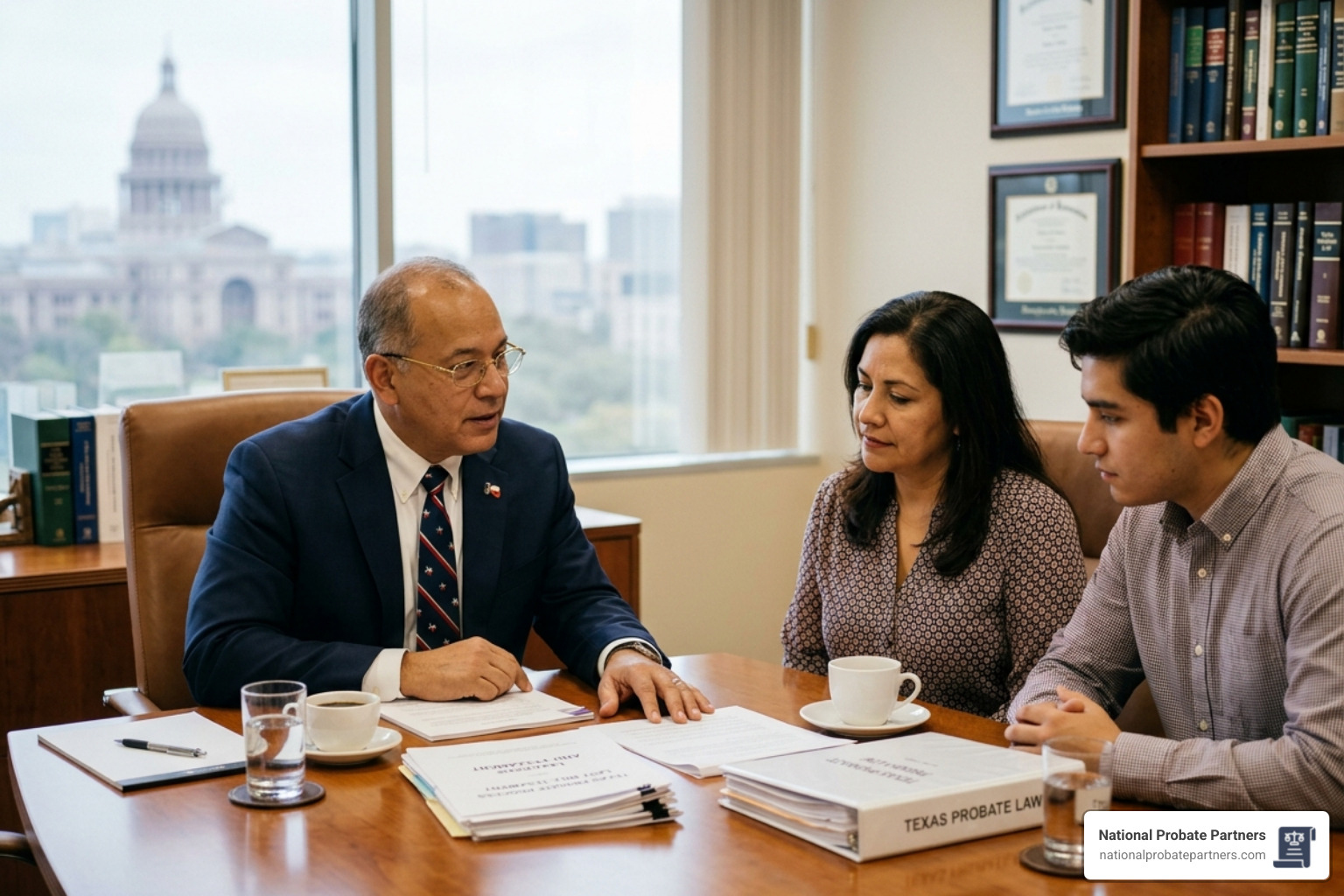
The Lone Star State Essentials: What is Probate in Texas?

In simple terms, probate is the court-supervised process of “proving” that a will is valid and ensuring the deceased person’s affairs are wrapped up correctly. Think of it as a formal transfer of title. Until the court steps in, a will is just a piece of paper; probate gives that paper the power to move houses, empty bank accounts, and pay off final bills.
In Texas, this process is governed by the Texas Estates Code. One of the most critical pieces of Texas probate advice we can give is to watch the clock. Under Texas Estates Code 256.003, you generally have exactly four years from the date of death to file a will for probate. If you miss this window, the will may be considered invalid, and the estate might be treated as if the person died without a will at all, which can lead to assets going to people the deceased never intended.
During the process, the court issues specific documents that act as “golden tickets” for the person in charge:
- Letters Testamentary: Issued when there is a valid will and an executor is named.
- Letters of Administration: Issued when there is no will or no named executor, and the court appoints an administrator.
These letters allow the personal representative to talk to banks, sell real estate, and handle the IRS. For more detailed information on the legal framework, you can refer to the Texas Bar Free Legal Information.
Choosing Your Path: Types of Texas Probate Administration
Texas is unique because it offers several different “flavors” of probate. Choosing the right one can save you thousands of dollars and months of headaches.
Independent vs. Dependent Administration
This is the biggest fork in the road. In a Dependent Administration, the court is like a helicopter parent. The administrator must ask the judge for permission to do almost anything—sell a car, pay a bill, or distribute a check. This is common when heirs are fighting or the will is unclear.
In contrast, Independent Administration is the crown jewel of Texas probate. If the will requests it, or if all beneficiaries agree, the executor can handle the estate with very little court supervision. This is faster, cheaper, and much more private.
Muniment of Title
This is a “probate lite” option used specifically when there are no unpaid debts (except for a mortgage on the home). It essentially asks the court to admit the will to probate solely to show who owns the property, without appointing an official executor. It is a fantastic way to transfer a house to a surviving spouse or child quickly.
Small Estate Affidavit
If the total value of the estate (not counting the homestead) is less than $75,000, you might be able to skip the courtroom entirely. The Small Estate Affidavit allows heirs to collect assets by simply filing a sworn document. However, be careful: this cannot be used to transfer real estate unless it is the decedent’s homestead and is being transferred to a surviving spouse or minor child. For a deeper dive into these simplified procedures, check out Handling an Estate | Texas Law Help.
Step-by-Step Texas Probate Advice for Success
Navigating probate is a marathon, not a sprint. Here is how the journey typically looks in 2026:
- Filing the Application: Your attorney files an application in the county where the deceased lived.
- Posting Notice: The county clerk posts a notice at the courthouse (or online) for about 10 days to see if anyone wants to contest the will.
- The Hearing: You’ll attend a brief hearing where a judge confirms the person has passed and that the will is valid.
- The Oath: You’ll sign a constitutional oath promising to fulfill your duties faithfully.
- Inventory and Appraisement: Within 90 days of being appointed, you must file an “Inventory, Appraisement, and List of Claims” showing exactly what the estate owns and owes.
- Asset Distribution: Once debts are settled and the inventory is approved, you can finally distribute the inheritance to the beneficiaries.
If you are feeling overwhelmed by these steps, you are not alone. Understanding the nuances of Hiring a Probate Lawyer in 2026: What You Need to Know can help you find the right partner for this journey.
Essential Texas Probate Advice for Filing a Will
To get started, you will need the original will (not a copy, if possible) and a death certificate. If you only have a holographic will (one that is entirely in the deceased’s handwriting), Texas will still honor it, but you will need witnesses to testify that the handwriting is indeed theirs.
Many modern Texas wills include a “self-proving affidavit,” which is a fancy way of saying the witnesses already signed a notarized statement at the time the will was made. This saves you from having to track down those witnesses years later. If you have questions about specific document requirements, The Ultimate Probate Lawyer FAQ – 2025 Edition | National Probate Partners is an excellent resource.
Professional Texas Probate Advice for Managing Creditors
One of the executor’s most important jobs is dealing with the people the deceased owed money to. You are required to publish a notice in a local newspaper within 30 days of your appointment to alert “unsecured” creditors (like credit card companies). You must also send direct notice to “secured” creditors (like mortgage lenders).
In Texas, unsecured creditors generally have a four-month window to file a claim after receiving notice. As the executor, you have a fiduciary duty—a high legal standard—to settle these debts using estate funds before you give away a single cent to beneficiaries. If you’re unsure whether you need professional help to handle these claims, ask yourself, How Do I Know If I Need a Probate Lawyer?
Handling Estates Without a Will: Intestacy and Heirship
When someone dies without a will, it’s called “intestacy.” In these cases, the State of Texas has a “default will” for you, but you might not like what it says.
Texas divides property based on whether it is community property (stuff bought during the marriage) or separate property (stuff owned before marriage or received as a gift/inheritance).
- Blended Families: If a person dies with children from a previous marriage, the surviving spouse might only keep their half of the community property, while the deceased person’s half goes to their children. This often leads to the spouse and stepchildren co-owning a house together—a recipe for conflict.
- Attorney Ad Litem: Because the court doesn’t know who the heirs are, they will appoint an outside lawyer (an Attorney Ad Litem) to investigate the family tree and ensure no long-lost children are being left out.
This process requires a formal “Determination of Heirship,” which is generally more expensive and time-consuming than probating a simple will.
Frequently Asked Questions about Texas Probate
How long does the probate process typically take in Texas?
While every case is different, a straightforward, uncontested probate in Texas usually takes between 6 to 12 months. The absolute minimum is around 3 months due to mandatory notice periods. If there is a will contest, complex business assets, or a fight with the IRS, it can easily stretch into two or three years.
Can I avoid probate in Texas using a Transfer on Death Deed?
Yes! As of 2015, Texas allows Transfer on Death Deeds (TODDs) for real estate. This allows you to name a beneficiary on your home today, and the title transfers automatically when you pass, completely bypassing the probate court. Other ways to avoid probate include:
- POD/TOD Accounts: “Payable on Death” designations for bank accounts.
- Joint Tenancy with Right of Survivorship: Ensuring that when one owner dies, the other automatically owns the whole property.
- Living Trusts: A more robust way to manage assets outside of court supervision.
What are the most common mistakes to avoid after a loved one’s death?
We see the same errors time and again:
- Losing the original will: The court really wants the original, not a photocopy.
- Spending estate money too soon: Never pay off a credit card or give away jewelry until the court has officially appointed you and you’ve checked the estate’s total debt.
- Missing the 4-year window: Don’t wait. If you miss this deadline, the legal hurdles become much higher.
- Failing to secure property: If a house sits empty, you need to change the locks and ensure the insurance policy is still active.
Conclusion
Probate in Texas doesn’t have to be a nightmare, but it does require a steady hand and a clear map. Whether you are dealing with a complex estate in Corpus Christi or a simple will in Scottsdale, the key is to act early and follow the statutes closely.
At National Probate Partners, we specialize in taking the weight off your shoulders. We provide compassionate, personalized legal guidance to help you resolve even the most complex probate challenges efficiently. Our goal is to help you honor your loved one’s wishes while protecting your own future.
If you’re feeling lost in the “Wild West” of the Texas Estates Code, we are here to help. Contact Us for a Free Consultation today, and let’s get your family back on the right trail.